GREECE
 PELOPONNESE
ACHAIA
PATRAS
MUSEUM
PELOPONNESE
ACHAIA
PATRAS
MUSEUM

2024-11-13
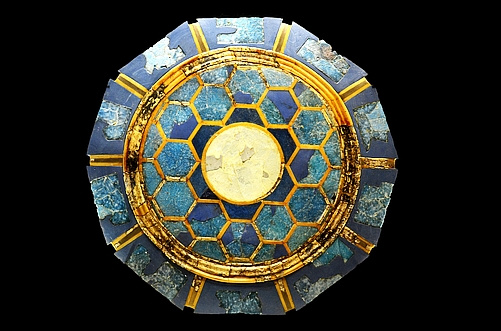
Above left: Polygonal glass panel, consisting of an ivory frame with honeycomb form and trapezoid intersections, which are covered by opaque blue and white glass. A decorative feature in a house, it was probably placed in a window or doorframe. Patras, Roman Period (1st - 2nd century AD).
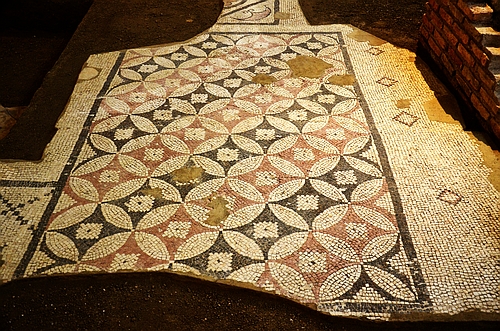
Above right: Mosaic from the "villa urbana", a luxurious Roman town house dating from the 1st century AD that was found in Germanou Street, Patras, with rooms around the courtyard (atrium) in a good state of preservation. On the wall, part of a mural decorated with geometrical motifs has been preserved. Similar motifs also appear on the mosaic floors, and were common in the luxury houses of Roman Patras.
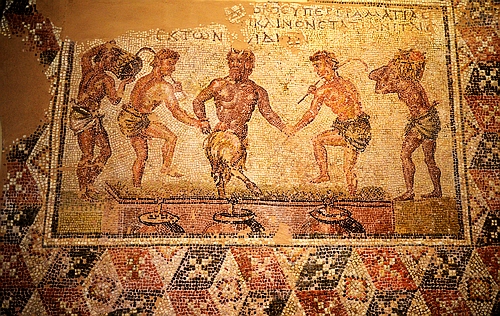
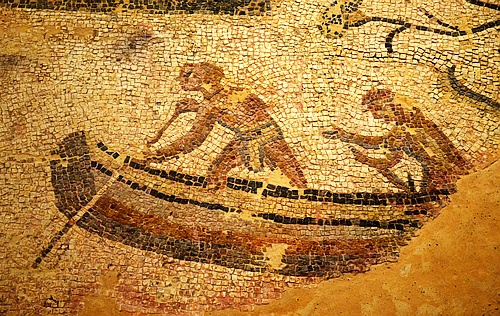
Above left: Mosaic floor with a scene of a wine press and the god Panas treading grapes. From a Roman building in Patras. An inscription is preserved on the upper part. Above the central image there are three smaller square sections. Only one of these, with a depiction of a face, has been preserved. The scene is surrounded by geometric decoration. Dated to the 3rd century AD. - Above right: Part of a mosaic with two men in a boat.
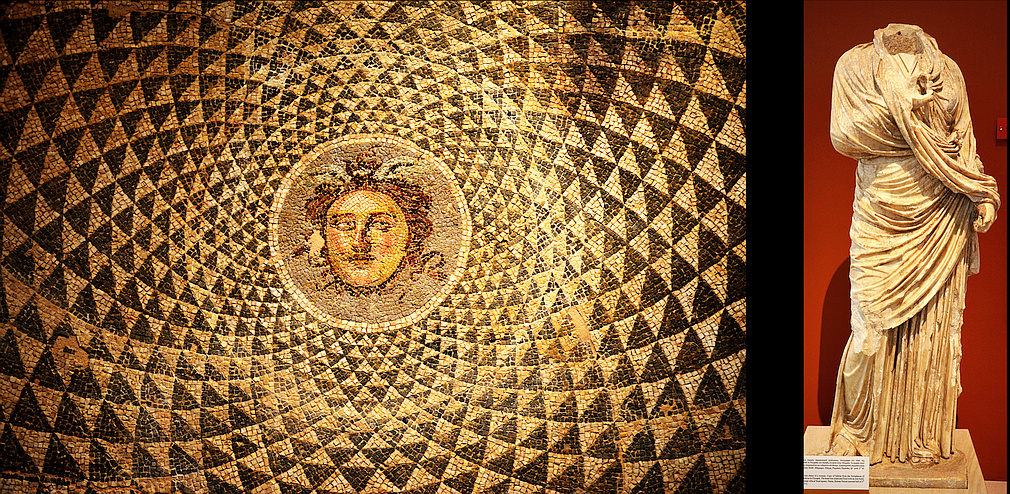
Above left: Mosaic floor with Medusa's head, from a room in a large building in Patras. In the middle of the mosaic there is a medaillon with Medusa's head. Medusa is averting her gaze from the spectator. The geometric pattern creates a circle, which is in a square frame and surrounded by a chain of diamond shapes. Ivy leaves can be seen in the inner corners of the frame. Dated to the 2nd century AD.
Above right: Over-life-size statue of a woman, copy of Sabina from the Nymphaion of Herodes Atticus in Olympia. The head was inlaid and fixed with an iron bond. From a Roman villa at Voud square in Patras, Roman Period (second half of the second century AD).
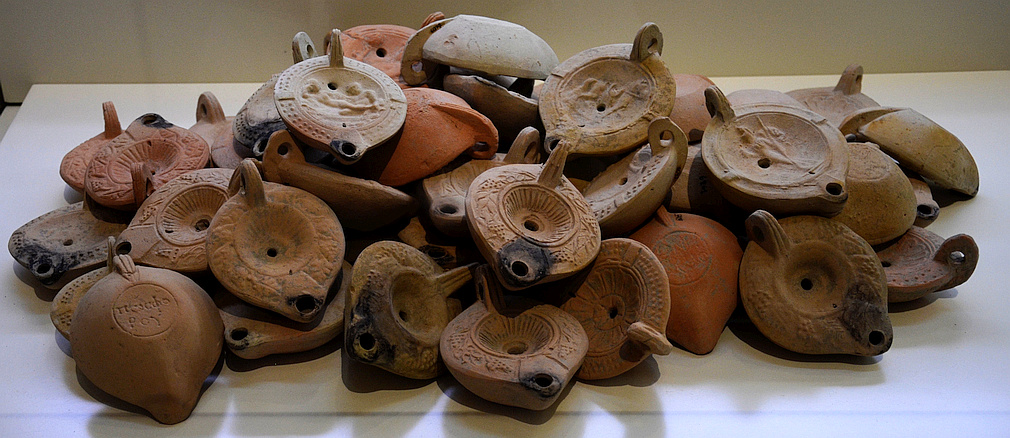
Below: Clay oil lamps found in a deposit of the Lychnomanteion (oil lamp oracle) of Patras. They have relief decoration and bear the craftsmen's signature, 2nd - 3rd century AD.
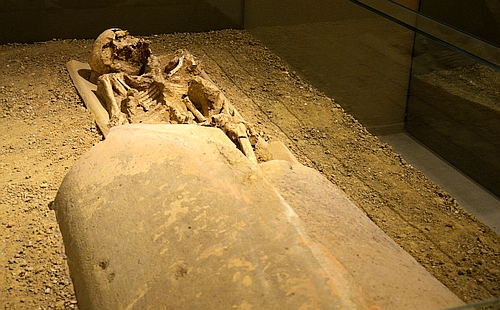
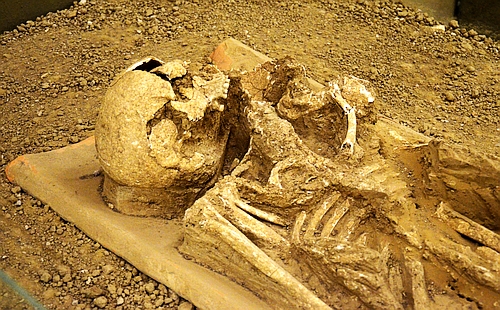
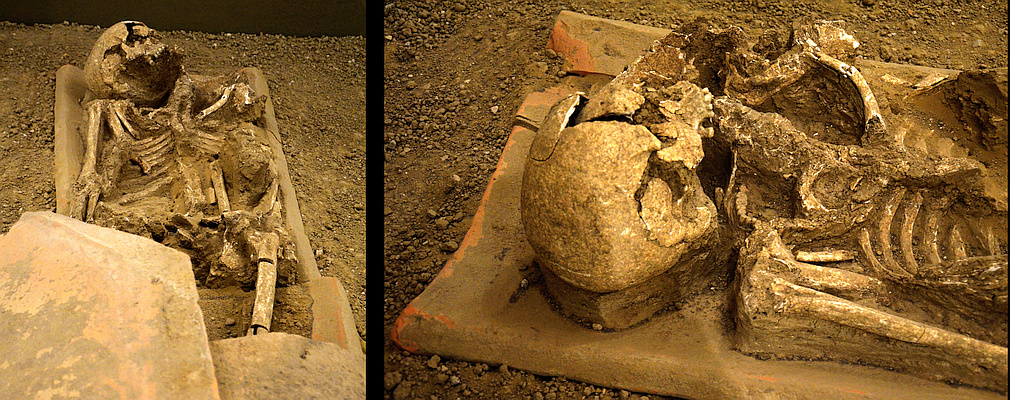
Above and below: Tile-covered grave. Revealed in 2000 during rescue excavations in the Northern Cemetery of the ancient city which extended along both sides of the ancient road that led from Patras to Aigion. The grave contained two dead bodies in a supine position and was not accompanied by grave offerings. Along with other graves, it was part of a funerary perivolos of the Late Roman Period.