GREECE
 PELOPONNESE
ACHAIA
PATRAS
MUSEUM
PELOPONNESE
ACHAIA
PATRAS
MUSEUM

2024-12-29
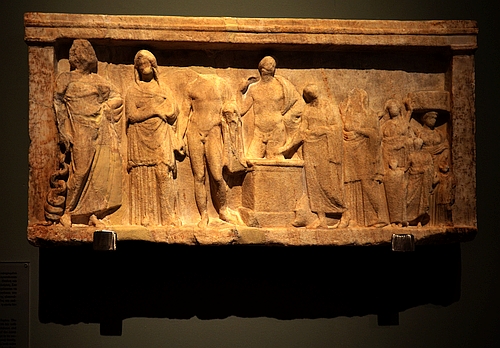
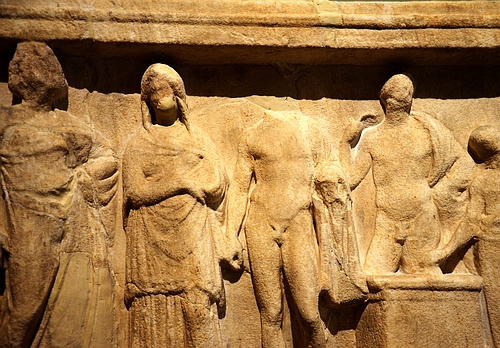
Above: Marble votive relief, dedicated to Asklepios. The god is depicted on the extreme left, with his wife Hipione and possibly his two sons, Mahaon and Podaleirios beside him. In the center of the scene is an altar and a pig that is about to be sacrificed, follwed by the hekete's (suppliant) family. The scene's eleven figures are flanked on both sides by antae and by an epistyle (architrave) above them with an inscription that has not been preserved. Patras, 4th century BC.
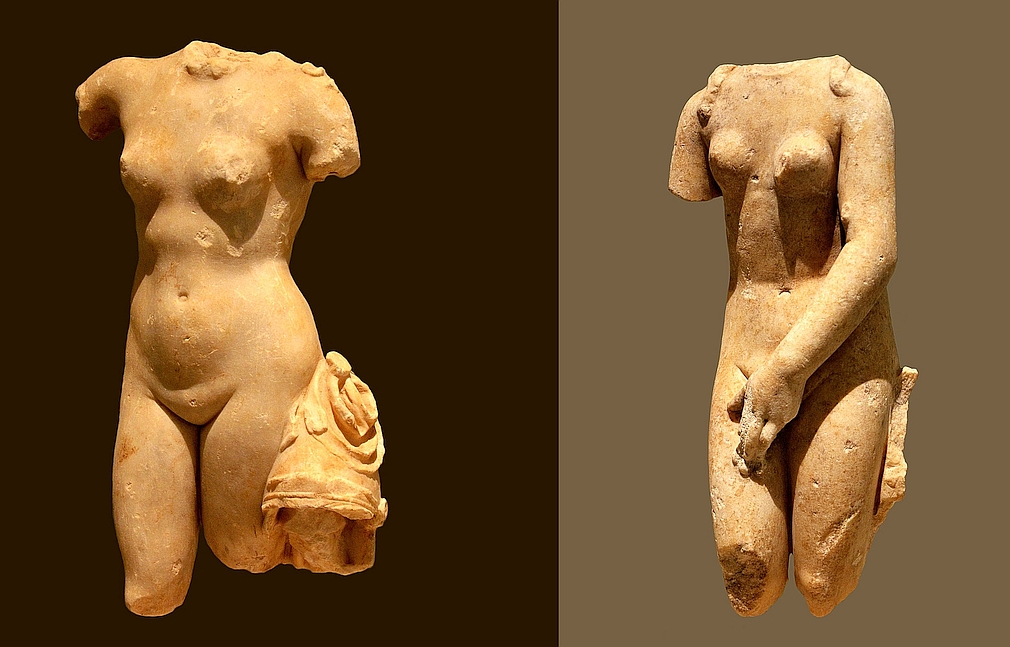
Above left: Marble headless statuette of naked Aphrodite. Her left thigh is in contact with a corinthian type helmet, on which falls part of her himation. The type of Aphrodite depicted in this statuette resembles a similar one in the Louvre. Patras, Roman period. - Above right: Marble headless statuette of naked Aphrodite, of the Medici type. The goddess holds her left hand in front of her pubice, trying to hide her nudity, while the right hand must have touched her left breast. Patras, Roman period.
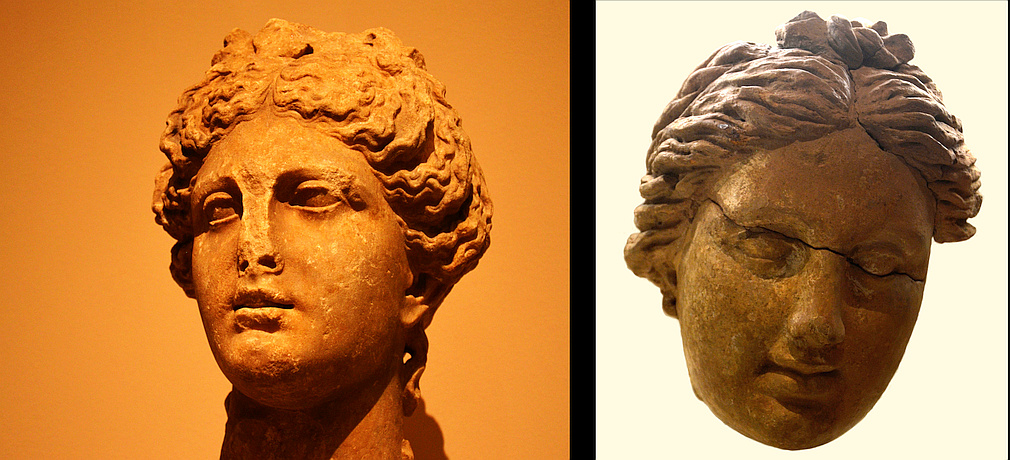
Above left: Marble female head. Patras, 4th century BC. - Above right: Clay head of a statue from the 'bothros' of a sanctuary at Ermou street; Classical - Hellenistic period (5th - 3rd century BC).
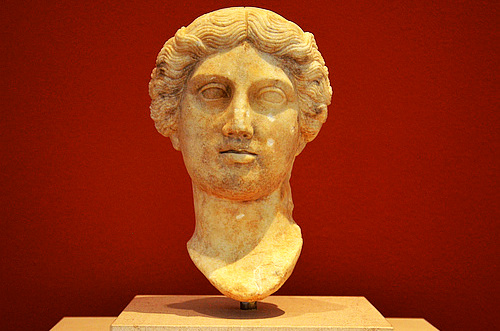
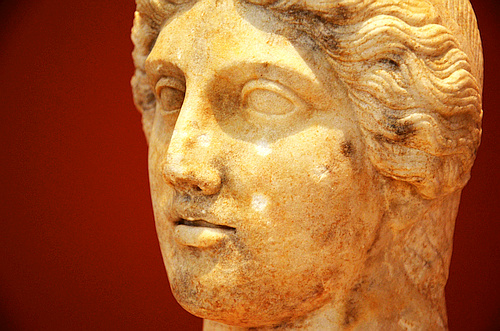
Above: Portrait head of a young woman. It was found in a family funerary monument and according to an inscription it represents Marcia Maxima. The young woman was Pavia's daughter, member of a veteran's family, who owned the funerary monument in Samos Street, Patras. Marble, Roman Period (Augustan Period, 27 BC - 14 AD).
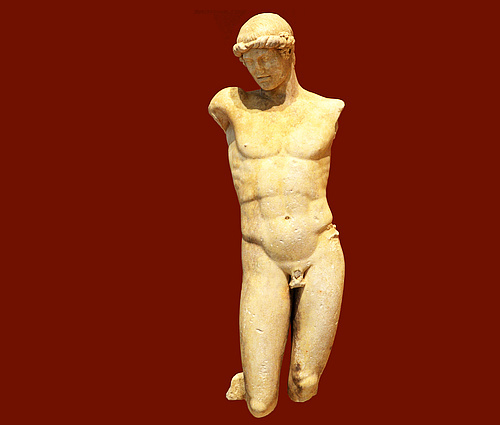
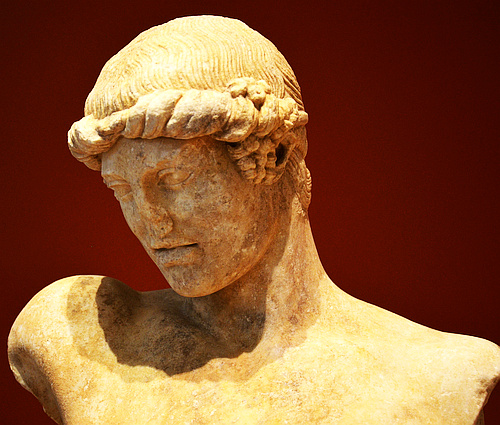
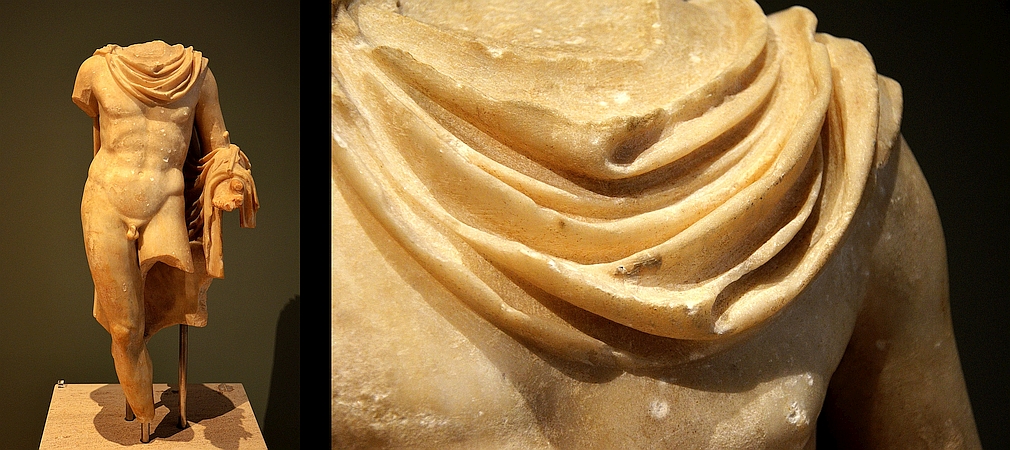
Above: Marble torso of the statue of a young man (Apollo?). Part of the decoration of a Roman villa in Patras. Roman copy of a Greek original (middle of 1st century BC).
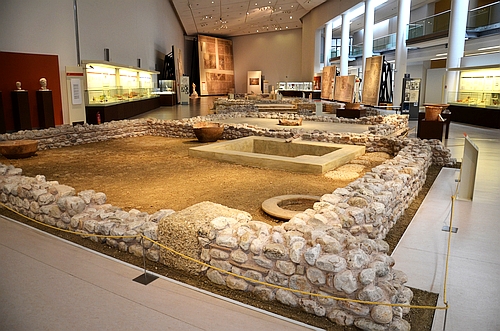
Farmhouses in the Roman era were building complexes with suitable areas and equipment for the processing and storage of agricultural products. They were found set apart on the outer limits of urban centers and settlements and usually near ancient roads. - The farmhouse at Thermopylon Street (Ayia, Patras) had 14 rooms for the storage and the processing of agrarian products (wine, oil, cereals). Two of the processing areas have been rebuilt and are presented in the museum.
Left: Villa rustica. - The first room (on the right) includes a large rectangular cistern or wine press (linos), in which grapes were crushed. Beside that, and attached to it, there is another smaller rectangular cistern (ypolinio) at a lower level. On the wall between them there was a terracotta pipe, through which the must was chanelled from the wine press and gathered in the ypolinio.
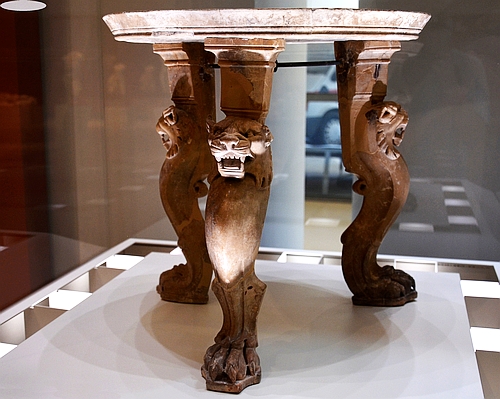
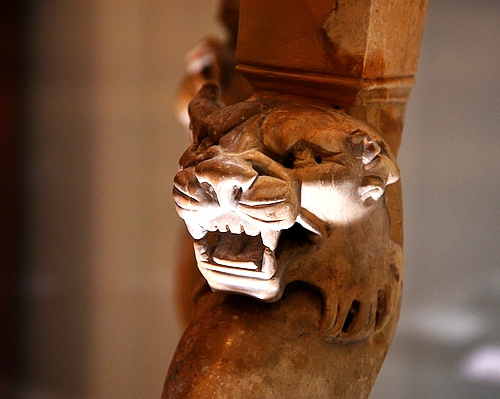
Above: Circular marble table with three legs. The short legs are decorated with a relief of felids' heads and end in lions' paws. It is a work of exceptional artistry and preservation and it was found during the 1950s in the water tank of Patras' fortress. It dates from the Imperial years of the Roman conquest (end of 1st century BC - end of 3rd century AD).
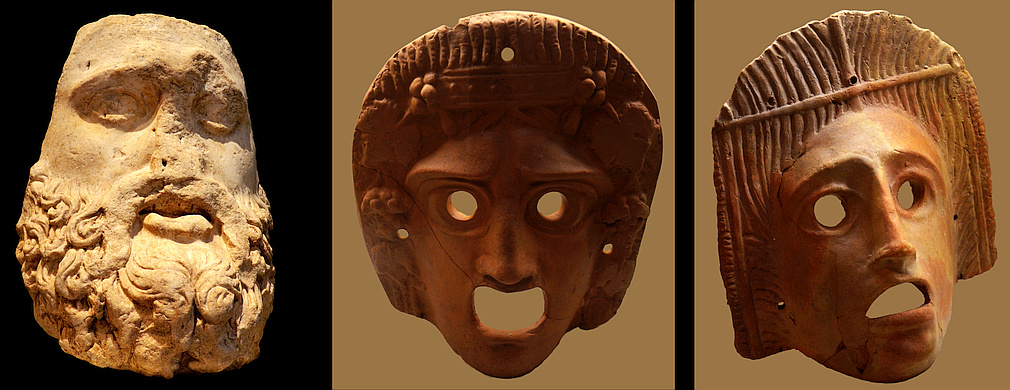
Above left: Marble head of a colossal statue of Serapis. The upper part of the head is missing and is horizontally cut off, possibly to facilitate the installation of the modion (a basket used to measure cereals), a typical attribute of the god. Patras, 2nd century AD.
Terracotta models of masks from Patras. 3rd century AD (above center) and 1st - mid 2nd century AD (above right).
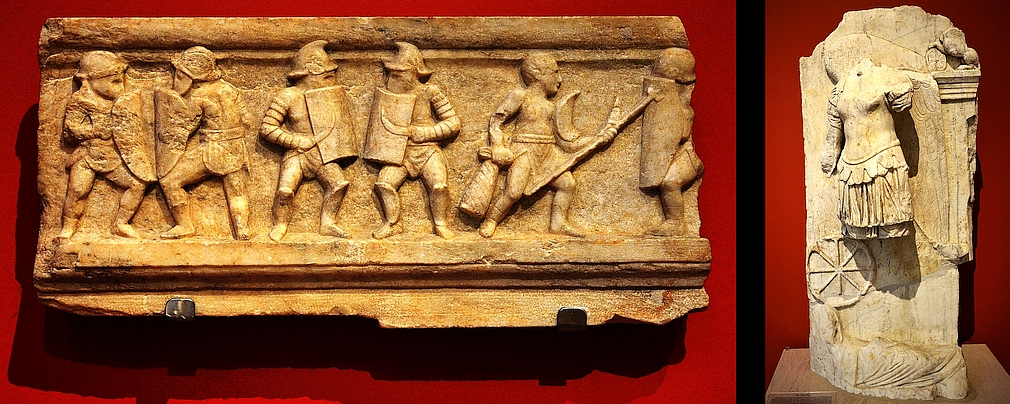
Above left: Marble plaque with a relief frieze, depicting three pairs of gladiators during their training. From the left, two heavily armed gladiators, in the center a pair of Thracian gladiators and to the right a pair of gladiators, one holding a net (retiarius) and one heavily armed, probably a murmillo. Probably from the monument of a gladiator contest sponsor. Patras, late 1st - early 2nd century AD.
Above right: Votive relief of a marble dating to the 2nd century AD, depicting Nemesis as the patron deity of gladiators. Nemesis is represented fully armed, with a cuirass and wings, treadig on a human figure, the personification of Hybris. To her right a wheel is depicted and to her left a pillar with a griffin and another, small wheel on top. The relief probably comes from Nemesis' sanctuary, which according to Pausanias, was situated near the theatre (probably the Stadium) and was probably dedicated by a munerarius (organizer of gladiatorical games).
Below: Marble statuette of Hermes. The god is depicted standing in a resting posture with his right leg set and the left one relaxed. He wears a chlamys (mantle) covering his back, its one end folding in front of the neck and being fastened on his right shoulder. The other end covers the bending left forearm that preserves part of the kyrikeion, symbol of the god. Patras, Roman period.