GREECE
 PELOPONNESE
ACHAIA
PATRAS
MUSEUM
PELOPONNESE
ACHAIA
PATRAS
MUSEUM

2024-11-12
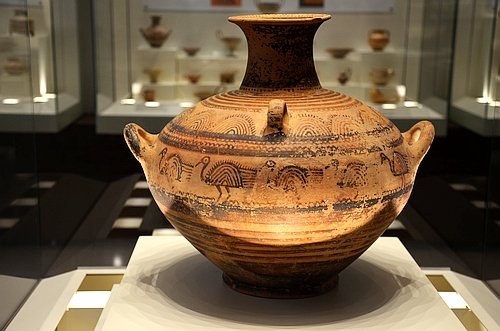
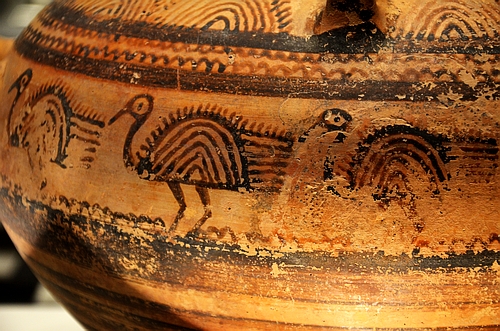
Above: Large four-handled Mycenaean jar, used for the transportation and preservation of liquids (oil, wine, water, etc.). It bears a pictorial scene with birds that are rendered in a unique combination of the most popular Achaean motifs, fringed semi-circles, to which the details of the birds have been added. The vessel was produced in the Voudeni workshop, whose products were distributed throughout the entire region of Achaea, Central Greece (Thermos, Delphi, Elateia), the north-eastern Peloponnese (Corinth, Argolid) and Elis, towards the end of the Mycenaean Period. - Voudeni, Mycenaean Period (first half of the 11th century BC).
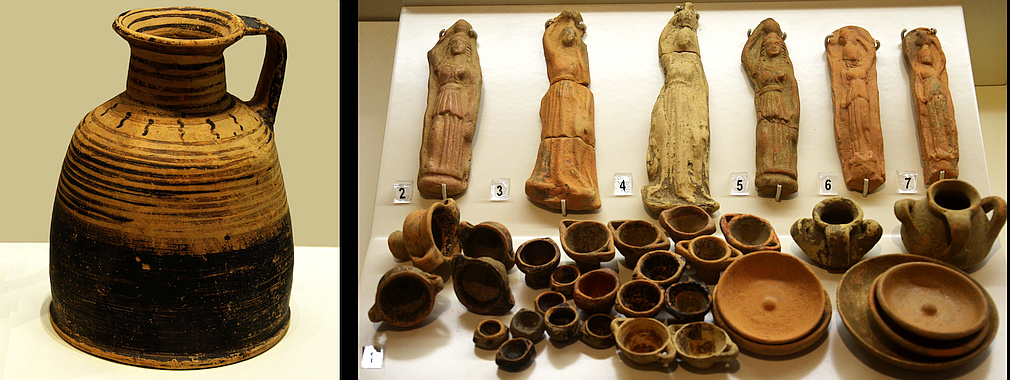
Above left: Large oinochoe, a vessel for pouring liquids. It was found in Chalandritsa and dated to the Late Geometric Period (750 - 700 BC). - Above right: Finds from the Sanctuary of Demeter in Patras, Late Archaic - Classical period (6th - 4th c. BC): Miniature clay vases and clay figurines of women with jugs on their heads.
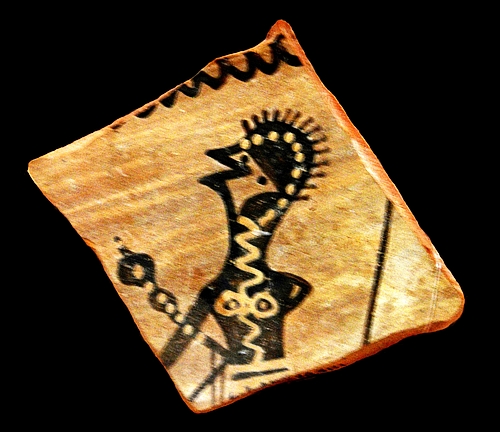
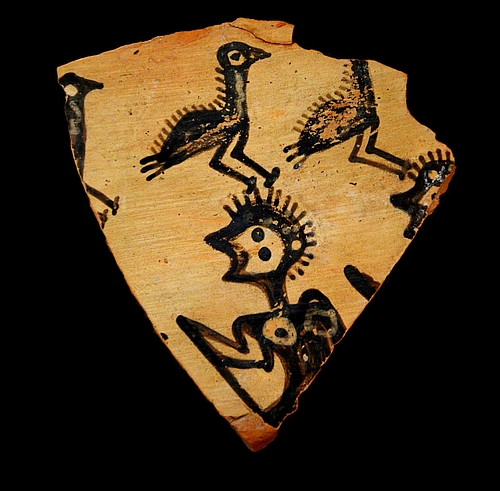
Above: Sherds of Mycenaean kraters. The details are rendered with added white paint on a dark background in the Silhouette Style. They come from Voudeni, Mycenaean Period (first half of the 11th century BC). - The one on the left depicts a warrior on a chariot (the reins are preserved). He is wearing a helmet made of straw and decorated with studs, and at his waist he is carrying a long sword inside a fringed case. It is the rare representation of an Achaean warrior in formal appearance. - The sherd on the right shows remnants of a scene with warriors rowing. They are wearing helmets made of straw and holding the oar with both hands. Wild birds fly above their heads.
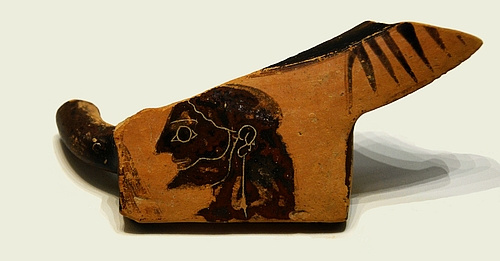
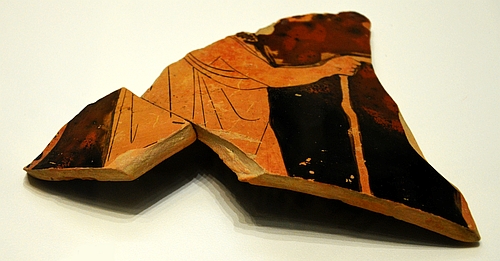
Above left: Fragment from the lip and the handle of a column krater (vessel for mixing liquids) showing the head of a bearded man. Kato Achaea, Archaic Period (middle of the 6th century BC). - Above right: Fragment of an open red-figure vessel (krater?) showing a standing dressed male figure. Patras, Classical Period (middle 5th century BC).
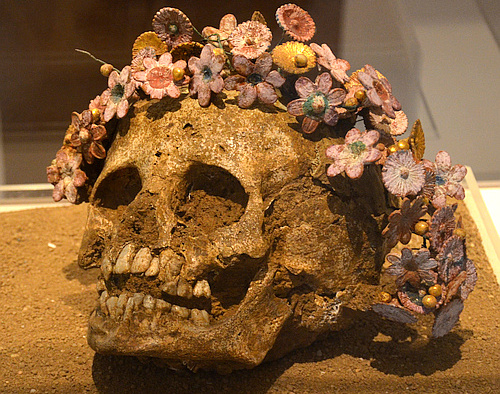
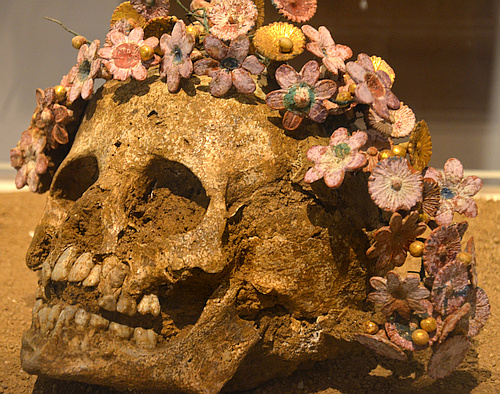
Above: Skull of a girl with a wreath of fruits and myrtle flowers. The flowers are earthen, some gilded and others in a variety of colours. Patras, North Cemetery (late 4th - 3rd century BC). - Below: Skull of a girl with a wreath of gilded myrtle fruits. The deceased wore golden earrings. Patras, North Cemetery, Hellenistic Period (300-275 BC).
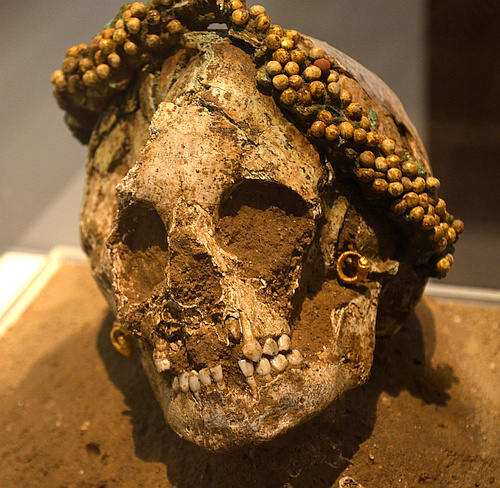
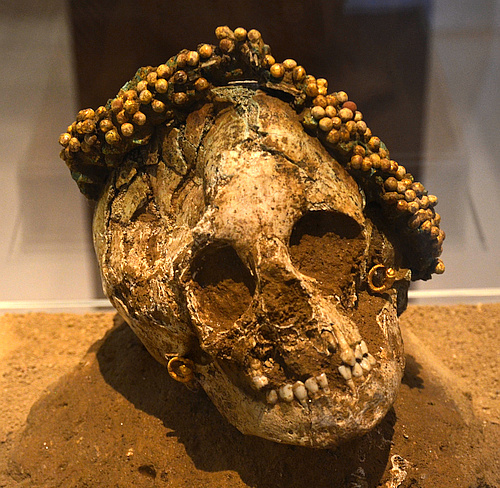
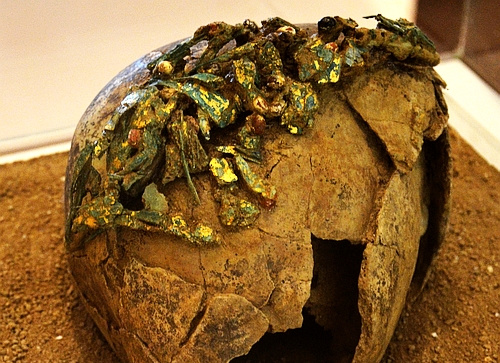
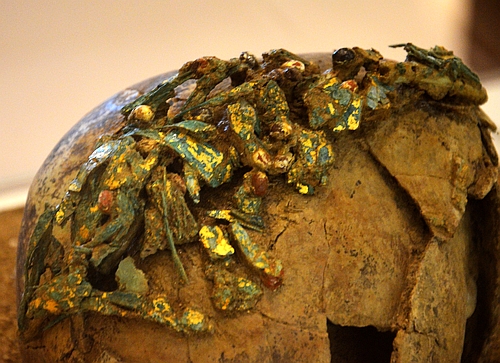
Above: Crowned female skull decorated with a gilded myrtle wreath. The shaft is of lead and perforated. Gilded bronze leaves and earthen fruits were attached to the small holes. It was found in the North Cemetery, Patras, Hellenistic Period.
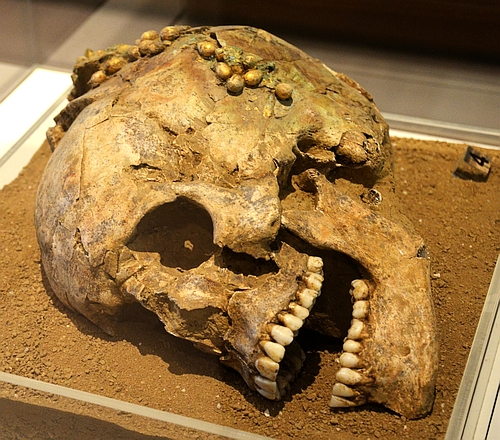
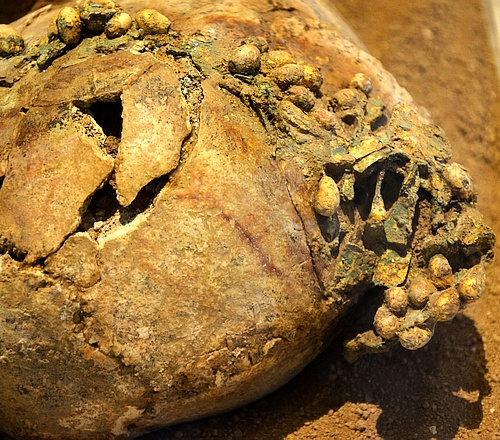
Above: Crowned female skull with a gilded myrtle wreath. Patras, North Cemetery, Hellenistic Period.

Above and below: Offerings from a cist grave within the limits of the Northern Cemetery, Patras, of a female burial. Female beauty care items and jewellery, mostly of a symbolic nature, accompanied the young woman on her journey to the Underworld. Dated to the Hellenistic Period (150-125 BC).