GREECE
 PELOPONNESE
ACHAIA
VOUDENI
PELOPONNESE
ACHAIA
VOUDENI

2024-10-28
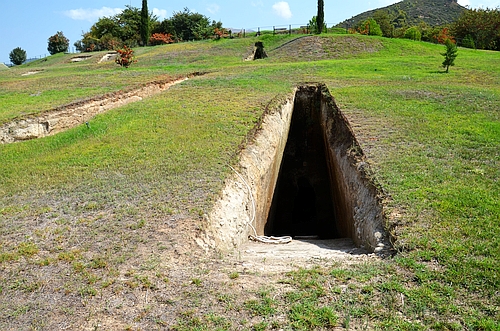
It is not quite easy to find the correct way out of Patras to Voudeni, but in the end it is clearly signposted. And what awaits you at the site is one of the most impressive Mycenaean cemeteries I have seen, equalled only by that of Aidonia. The site is fenced and guarded and has a moderate entrance fee but it is worth every cent. More than 65 chamber tombs have been excavated so far, dating from the Late Helladic II to the Sub-Mycenaean period (16th - 11th century BC).
As you walk along the visitor's path you are probably alone on the site which is quite unknown - I only met a French couple somehow ended up here. And then there is the kind guard who turns on the lights that have been installed in some of the grave chambers. Most of them can be entered - and it's worth a visit. The chamber tombs follow the usual tripartite design of Mycenaean funerary architecture (for more information: see here).
The first investigations in the area were carried out by N. Kyparissis, who noted the existence of an "enourmous" Mycenaean cemetery. Only a small number of rescue excavations followed until another chamber tomb was found in 1987. Since then, the research has taken a more systematic character, including the excavation and promotion of the entire site.
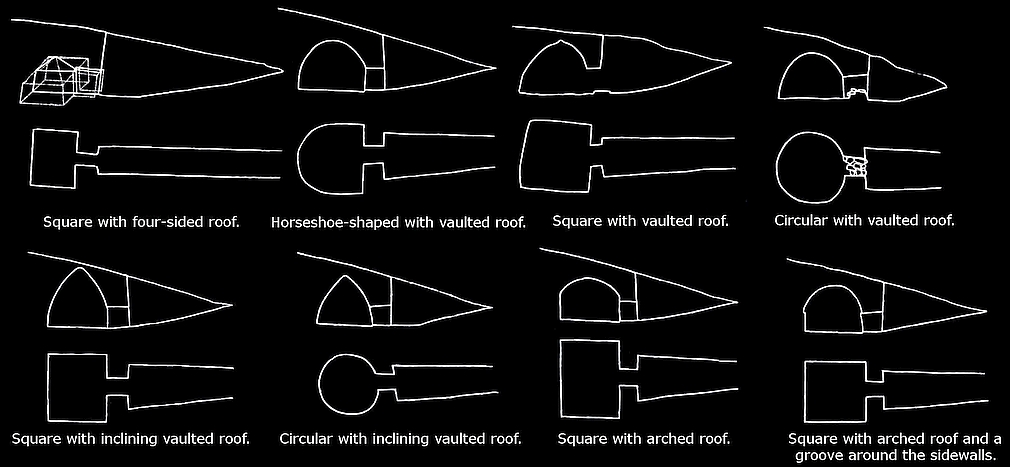
The architectural details and the wealth of the artefacts found in the tombs indicate the importance and prosperity of the settlement in Voudeni. Remarkable is the variety of chamber tomb shapes in Voundeni's cemetery that reflect the artistic imagination of the craftsmen, but also the particular preferences of their prospective users.
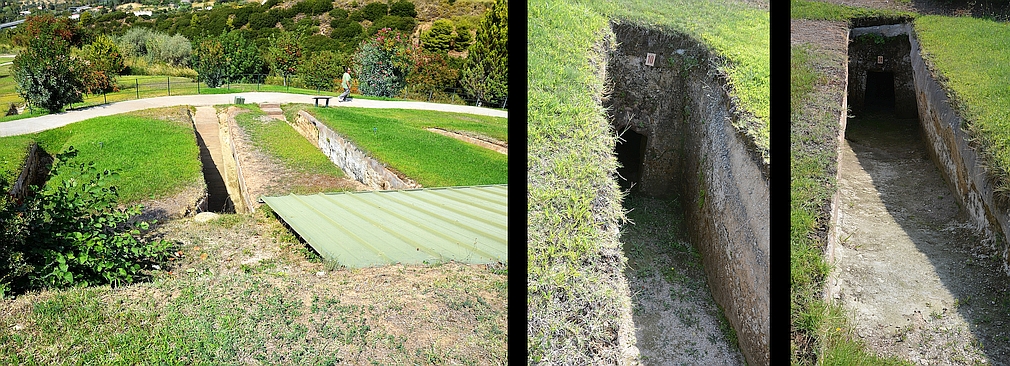
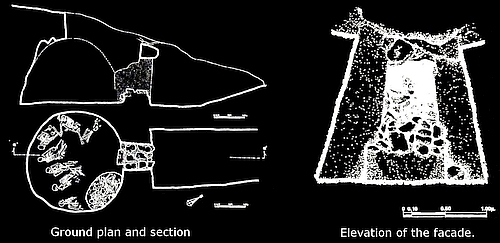

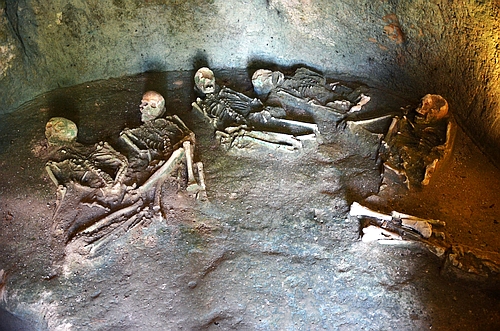
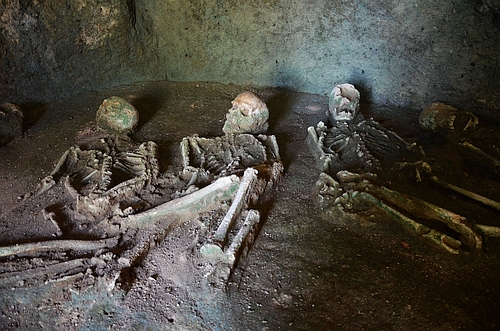
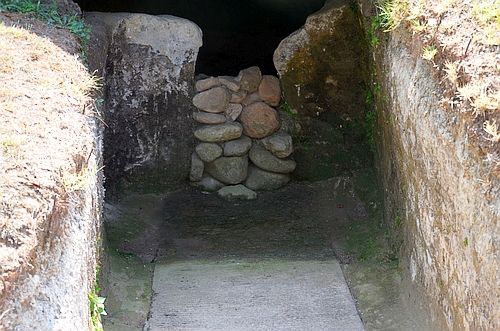
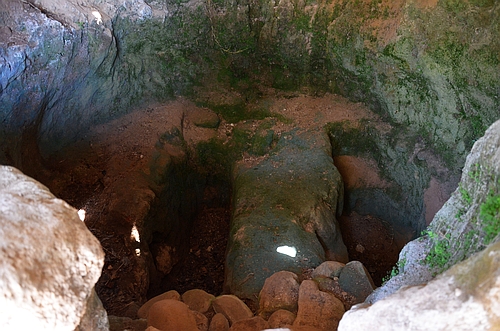
Above and below: Chamber tomb 5 is a medium-sized tomb with a circular chamber of 3.17m diameter, which was blocked by a well-built dry masonry wall made of river stones. What makes this tomb particularly important is that it contained both primary and secondary burials in two layers separated by a thin layer of earth. On the lower layer are six primary burials placed directly on the floor - and these can be seen in their original position (which appears to me a bit macabre und impious). There is also an ovoid deep burial pit that contained the bones of five secondary burials. - All burials were accompanied by valuable offerings, such as clay vases, bronze weapons, and clothing gear, beads and buttons, showing that the tomb was used between the Late Helladic IIb/IIIA and Late Helladic IIIC phase (early 14th - late 11th century BC).