GREECE
 PELOPONNESE
ACHAIA
PATRAS
MUSEUM
PELOPONNESE
ACHAIA
PATRAS
MUSEUM

2024-11-12
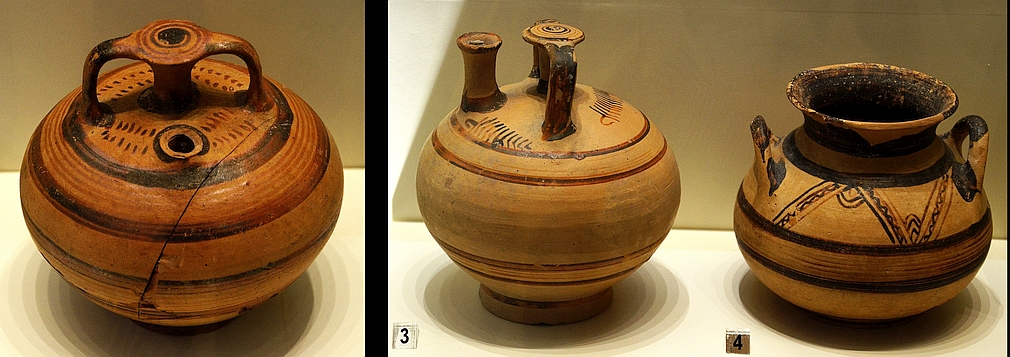
Above left: Small stirrup jar, used for preserving, mixing and transporting liquids (oil, wine, unguents). Tychos Dymaion, Mycenaean Period (early 12th century BC). - Above right: Small stirrup jar on the left, vessel for liquids or perfumed oils. Chalandritsa, Mycenaean Period, early 12th century BC. - On the right a small amphora, belly-handled, with depressed body. Mycenaean Period, first half 12th century BC).
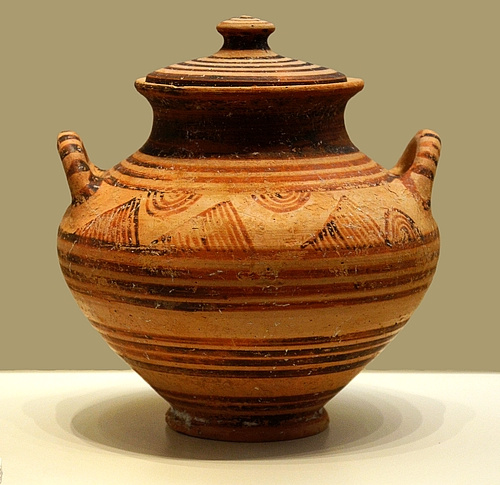
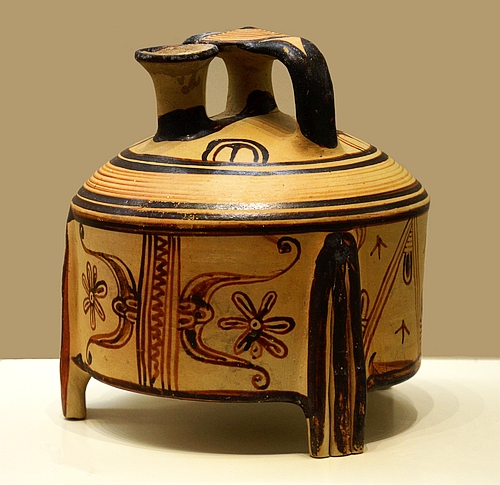
Above left: Small amphora with lid; vessel for transporting and storing liquids. Voudeni, Mycenaean Period (second half 12th century BC). - Above right: Cylindrical stirrup jar with three legs. The cylindrical shape of the stirrup jars is rare in mainland Greece. A beautifully made vessel, richly decorated with plant and other stylized motifs. Portes, Mycenaean Period (second half of the 12th century BC).
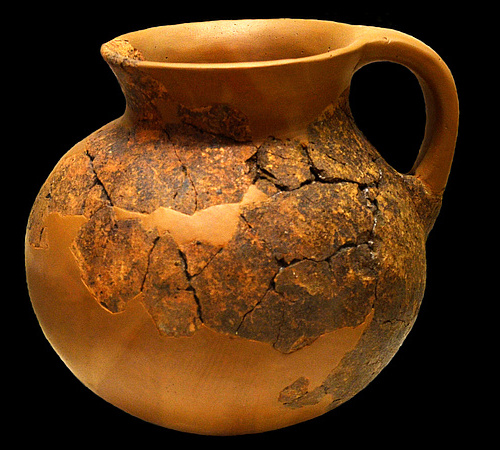
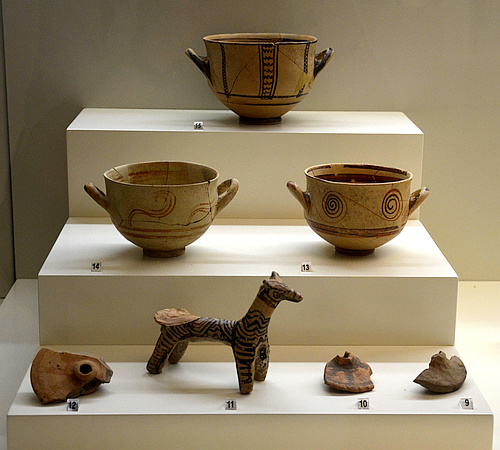
Above left: Handcrafted vase with one handle (cooking pot). Chalandritsa, Mycenaean Period (12th - middle 11th century BC). - Above right: At the bottom a terracotta horse figurine from a chariot group, Portes, tomb 19, Mycenaean period, and partly preserved terracotta models of chariot wheels from Teichos Dymaion, also Mycenaean period. Above three deep bowls with two handles from Teichos Dymaion, late 13th - early 12th century BC.
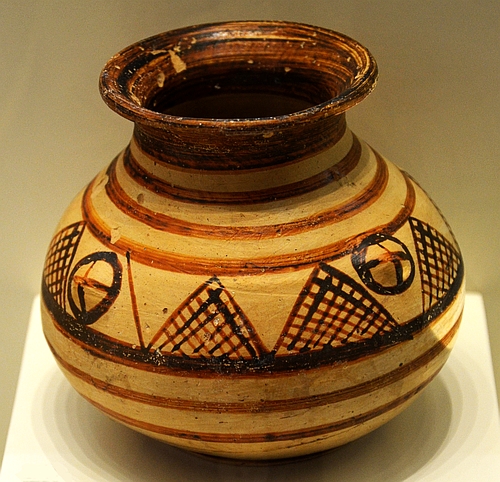
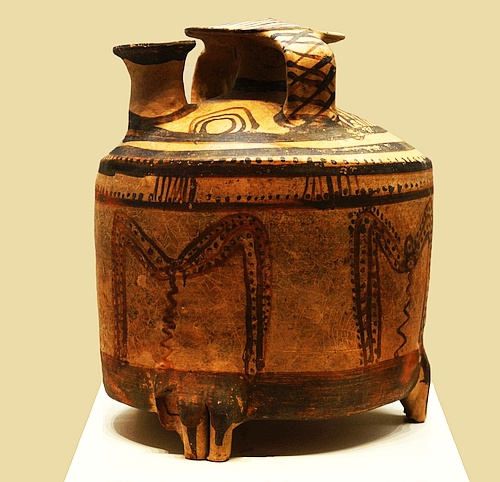
Above left: Small amphora with three nipples instead of handles; variation of the rounded alabastron. Portes, Mycenaean Period (second half of the 12th century BC). - Above right: Cylindrical stirrup jar with three legs; vessel for preserving liquids. It is one of the biggest to have been manufactured in Achaea. Klauss, Mycenaean Period (second half of the 12th century BC).
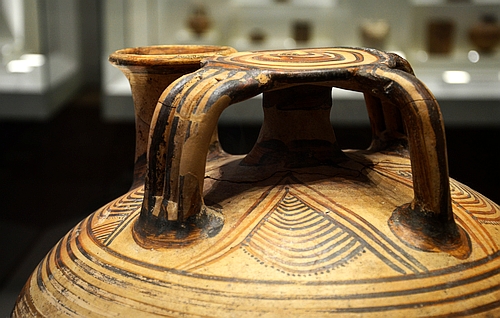
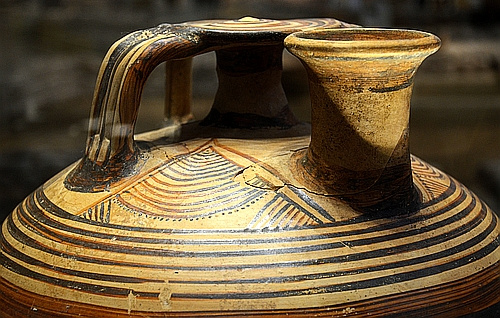
Above: Large Mycenaean stirrup jar, used for the transportation and preservation of liquids. The three handles on the shoulder are a feature of local pottery, demonstrating a clear Minoan influence. It is the product of a workshop in the Dyme region, which distributed similar jars to western Achaea, northern Elis and north-eastern Arcadia. The shape became temporarily popular and was copied by other local workshops. - Portes, Mycenaean Period (second half of the 12th century BC).
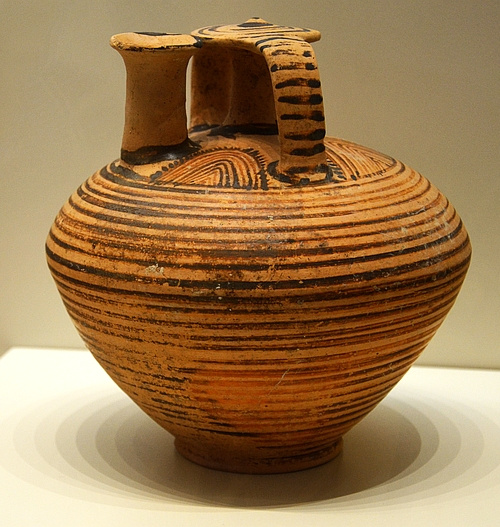
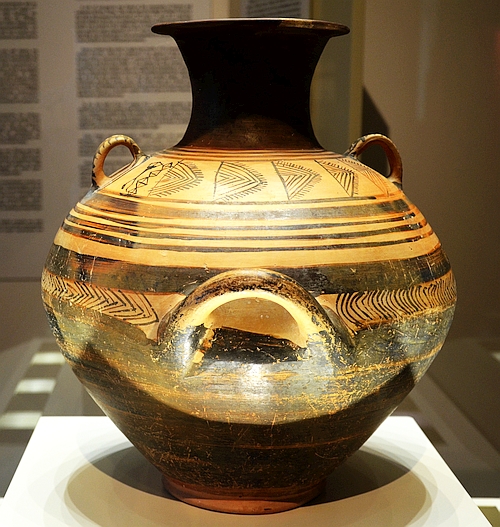
Above left: Stirrup jar. Manufactured by the local workshop at Voudeni, it is a typical example of the pottery of Achaea. It is very probable that the local characteristics of the pottery of the 12th and 11th century BC were consolidated in this workshop. Voudeni, Mycenaean period (first half of the 11th century BC).
Above right: Large four-handled Mycenaean amphora, vessel used for the transportation and storage mainly of liquid products (oil, wine, water, etc.). Manufactured in the local pottery workshop of Voudeni, it is decorated with typical Achaean motifs. What makes this vessel unique for Mycenaean times is the fact that it portrays stylized scenes of birth and lamentation in the Silhouette Style. These scenes are placed opposite each other on the shoulder of the vessel. They are actually a symbolic representation of life and death in a never-ending circle that is indicated by the direction of the compressed arches. It is an abstract work with multiple and diverse meanings to be interpreted from the apparently simply drawn lines. A work of excellent conception and execution, it is a masterpiece of Mycenaean art in Achaea and equal to the works of great artists. - Voudeni, Mycenaean chamber tomb cemetery (mid 11th century BC).
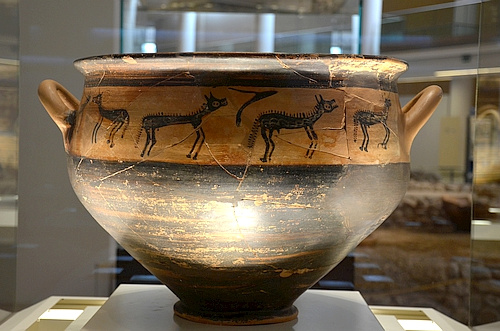
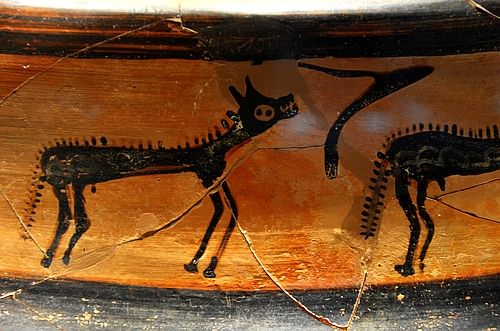
Above: Large Mycenaean krater with horizontal handles, used for the transportation and preservation of liquid and solid products. Manufactured by the Voudeni workshop, it is one of the largest vessels found so far in Achaea. It is decorated with a pictorial scene of wild carnivorous animals in the Silhouette Style, then making its first appearance in the north-western Peloponnese. Thick white paint was used to depict details on the dark bodies of the animals. The scene is thought to represent part of a hunt, which would have taken place during a funeral, in honour of the deceased. The vessel accompanied the body to the cemetery and was placed as a marker on the grave. - Voudeni, Mycenaean Period (first half of the 11th century BC).
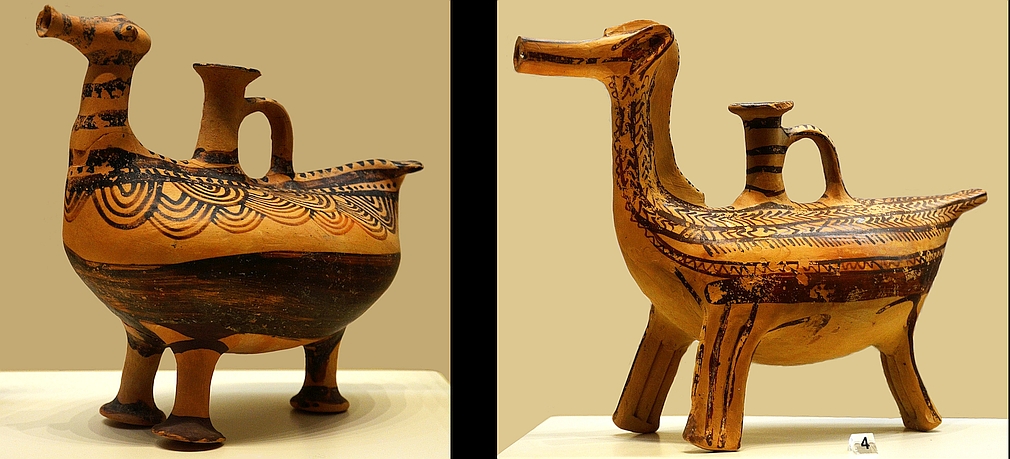
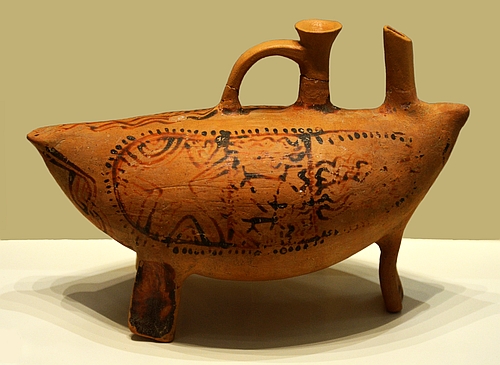
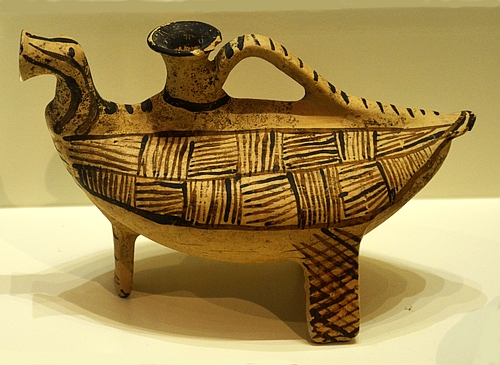
Above left: Duck askos, vessel for liquids. Klauss, Mycenaean Period (late 12th - early 11th century BC). - Above right: Animal askos, probably for libations or used as a feeding bottle. It has the body of a duck with three legs and the head of a horse (with some imagination), which is why it is considered to be almost unique among vases of this type. Klauss, Mycenaean Period (first half of the 11th century BC).
Below left: Duck askos. It is decorated with linear motifs and a pictorial scene in the Silhouette Style, where a hunting or bucolic scene is depicted. Kangadhi, Submycenaean Period (middle of the 11th century BC). - Below right: Duck askos decorated with lines inside a rectangular frame, representing the bird's plumage. Voudeni, Mycenaean chamber tomb cemetery (middle of the 11th century BC).