GREECE
 PELOPONNESE
ACHAIA
PATRAS
MUSEUM
PELOPONNESE
ACHAIA
PATRAS
MUSEUM

2024-11-12
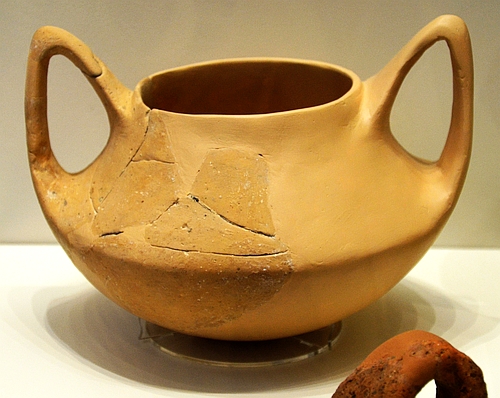
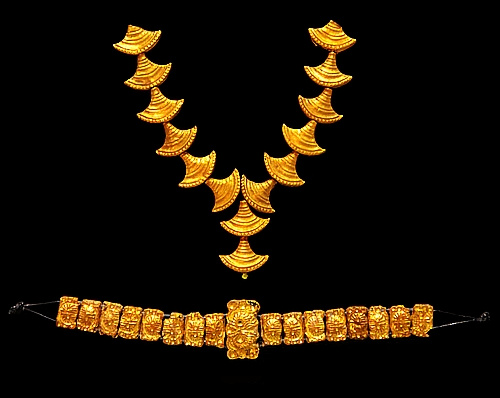
Above left: Biconical kantharos (drinking vessel). Katarraktis, Fares, Late Middle Helladic - Early Mycenaean Period (first half of the 17th century BC). - Above right: Gold necklaces, found at the cemetery of Voudeni and dated to the Mycenaean Period (late 15th - 14th century BC). They are very similar to those found at Aidonia.
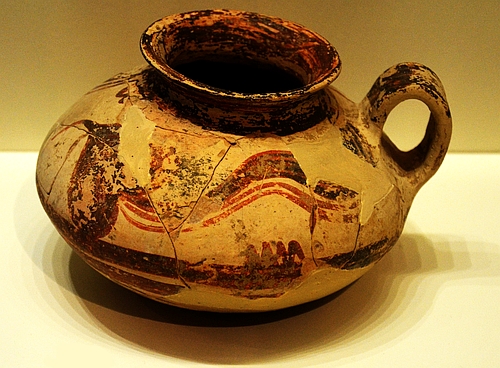
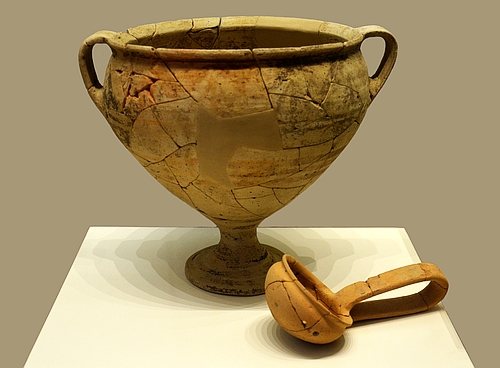
Above left: Jug with one handle and squat body. It is decorated with ivy leaves. Petroto tholos tomb (16th-middle 15th century BC). - Above right: Goblet (in the rear), of a shape which is very rare in Achaia. It was used for transporting and preserving liquid and solid products. Pagona, Patras, Mycenaean Period (15th century BC). Clay ladle (in front), used for the transfusion of liquids. Pagona, Patras, Mycenaean Period (13th century BC).
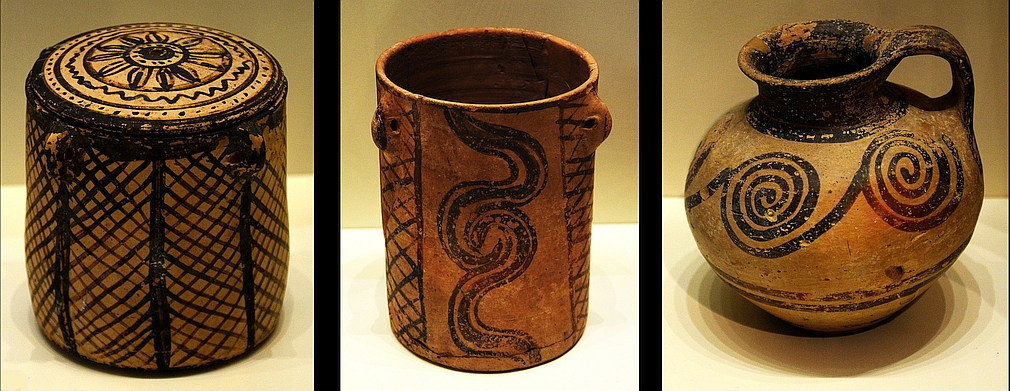
Above from left to right: Cylindrical pyxis with lid (jewellery box). Voudeni, Mycenaean Period (late 15th - 14th century BC). - Cylindrical clay pyxis which would have a lid. Kallithea, Mycenaean Period (15th century BC). - Globular jug with one handle. Petroto tholos tomb (late 15th - early 14th century BC).
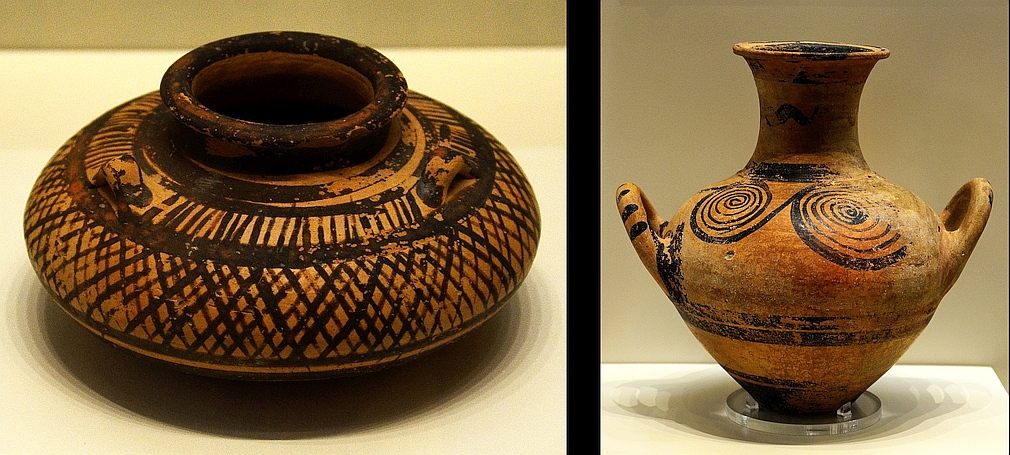
Above left: Rounded alabastron for storing perfume, with three handles, decorated with stylized foliate band and net pattern. Voudeni, Mycenaean Period (late 15th - early 14th century BC). - Above right: Hydria, a vessel for transporting and preserving liquids. Portes, Mycenaean Period (14th century BC).
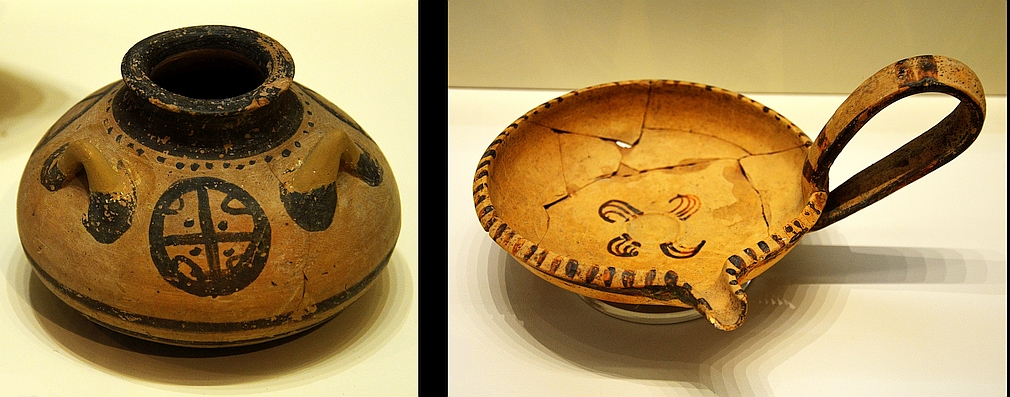
Above left: Rounded alabastron with three handles and a decoration of sea anemones or a wheel. Mycenaean chamber tomb cemetery of Voudeni (14th century BC). - Above right: Spouted bowl with high handle, used as a ladle. Kallithea, Mycenaean Period (14th century BC).
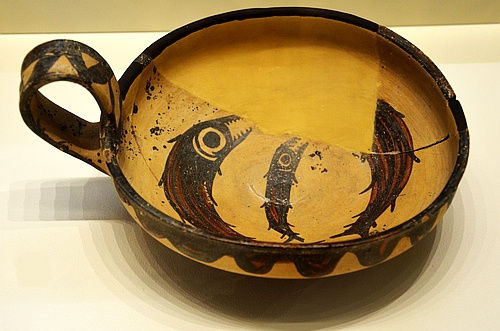
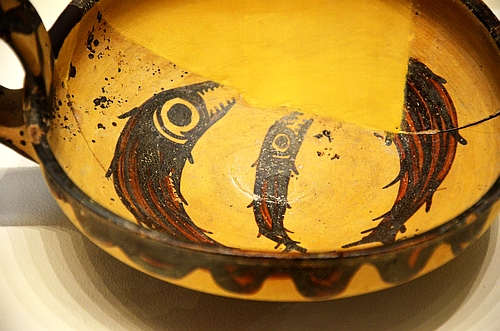
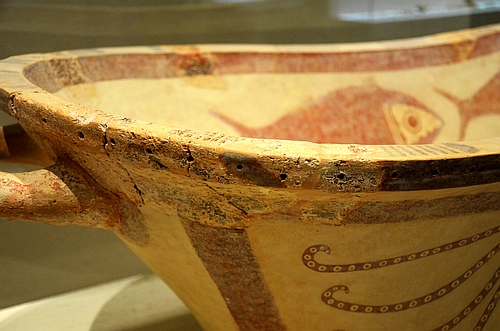
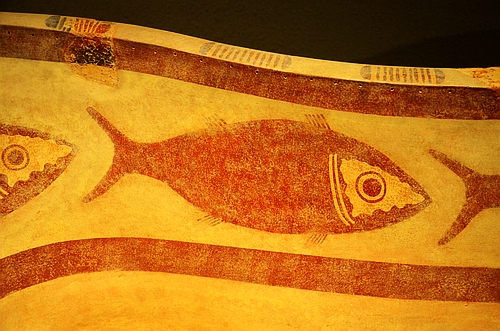
Above: Shallow cup, decorated on the inside with three fish. When filled with water it would have created the illusion of the sea bottom. It was found at the Klauss cemetery and is dated to the Mycenaean Period (14th century BC).
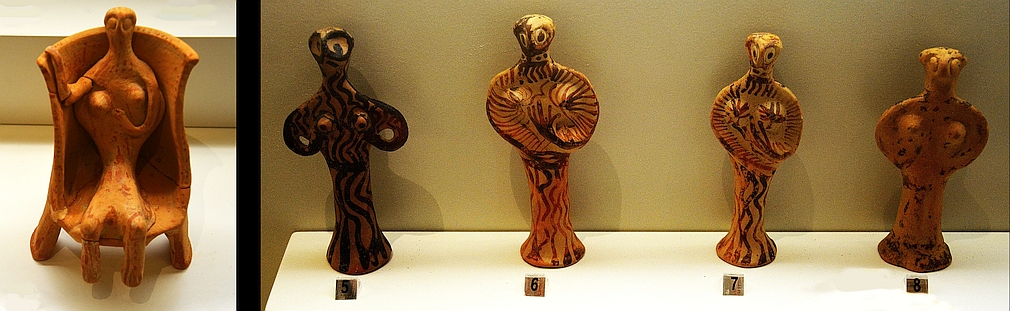
Above from left to right: Clay female figurine seated on a throne. Spaliareika, 14th - 13th century BC. - Clay naturalistic female figurine. Portes. 14th century BC. - 6.-7. Clay proto-phi type female figurines. Mitopolis. 14th century BC. - 8. Clay phi type female figurine. Katarraktis, 14th century BC.
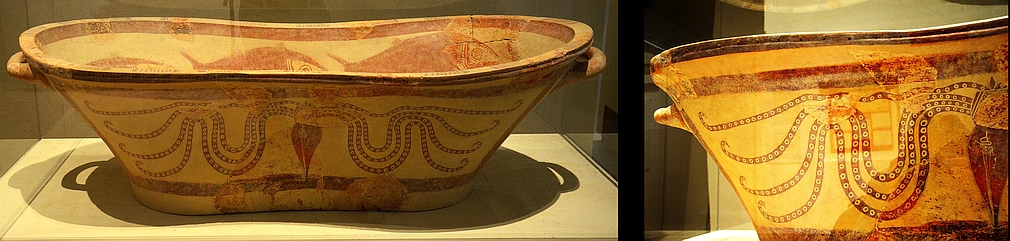
Above and below: Terracotta burial larnax (asaminthos) that resembles the Minoan equivalent, but differs in that it has two handles instead of four. The decoration with an octopus on the exterior and fish on the interior is Minoan in style. Found in Voudeni, it had been used as a container for a burial. On the rim there is a row of small holes where lead fastenings were placed in order to hold the leather or textile cover. - It is an extremely rare find in Mainland Greece. Mycenaean Period (13th century BC).