
GREECE
 PELOPONNESE
ELEIA
OLYMPIA
SANCTUARY
PELOPONNESE
ELEIA
OLYMPIA
SANCTUARY

2024-12-19
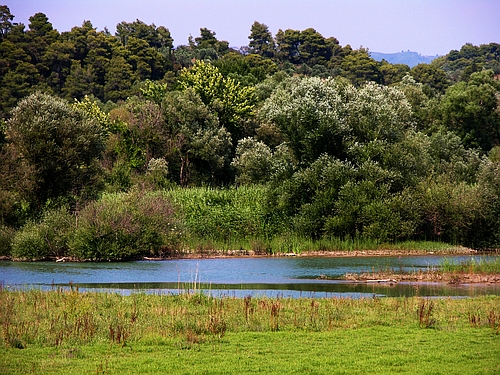
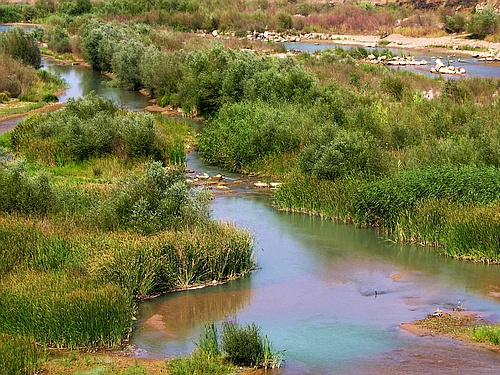
Where the rivers Alpheios and Kladeos meet, in the northwestern part of the Peloponnese, the area of Olympia is a green oasis with shady oak trees, pine-clad hills and of course olive groves. Constantly inhabited since the third millenium BC, it became one of the most important centres of Greek cult and culture.
Myths about Olympia are as old as the hills. It is known that a pre-hellenic oracle of Kronos - one of the twelve Titans and mythical father of Zeus - existed here, but it was already forgotten by the time of the first Olympiad held in 776 BC to honour Zeus.
According to one legend, Pelops, son of Tantalos and the king after whom the Peloponnese was named, founded the Olympic Games to commemorate his victorious (although devious) chariot race against Oinomaos.
Until the 6th / 5th century BC, the fame of the sanctuary grew and the Olympic Games were established as the great panhellenic festival held every four years. Athletes and spectators came from all Greek colonies around the Mediterranean Sea - those not represented were no Greeks, i.e. barbarians.
The Olympiads preserved their spiritual character until the Roman period, on the other side they were always the stage for political affairs. They constituted the main panhellenic element, demonstrating a feeling of fellowship of all Greek city-states in the ancient world. And despite all rivalries and local wars, the Olympic Truce (Ekecheiria) to guarantee the safety of the visitors, was almost never violated in the thousand years of the history of the Olympic Games (776 BC - 393 AD).
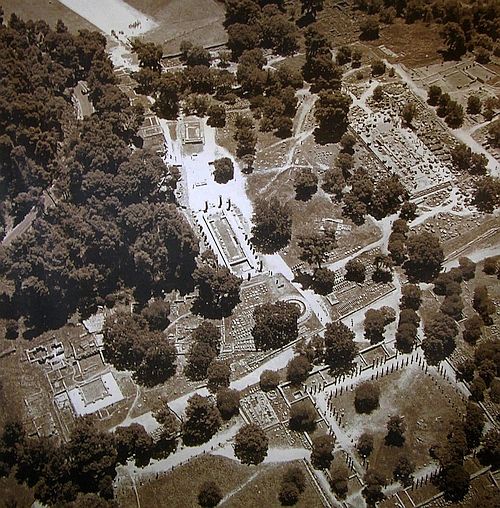
The Altis, the sacred grove of Olympia, was already walled in the Late Bronze age. The first monumental temples, dedicated to Zeus and to Hera, were then built in the 7th century BC, followed by other buildings and accomodations for athletes and pilgrims. The precinct reached its final form towards the end of the 4th century BC, only peripheral buildings being constructed in the centuries thereafter.
Earthquakes, landslips from the Kronos hill and especially the floods of Alpheios had buried ancient Olympia under a tremendous layer of debris and mud, before it was rediscovered in the 18th century. In 1829 French archaeologists began excavations at Olympia, but were stopped by the Greek government when artifacts were transferred to the Louvre. More systematic excavations were then begun by Professor Ernst Curtius in 1875 and continued by the German Institute of Archaeology in Athens until today.
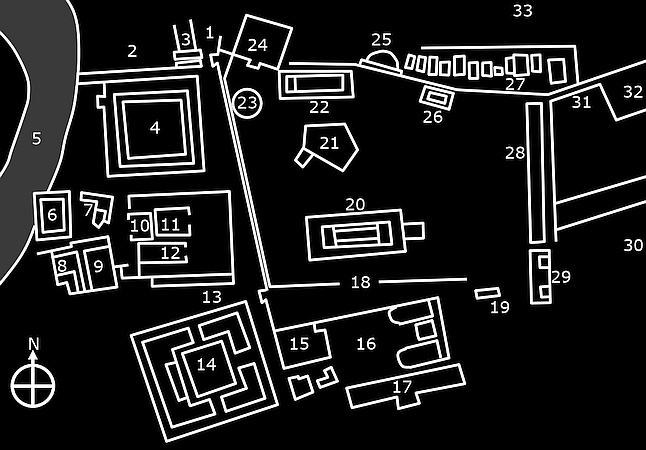
Site plan: 1. Modern entry to the altis - 2. Gymnasium - 3. Stoa of the gymnasium - 4. Palaestra - 5. Modern course of the river Kladeos - 6. Swimming pool - 7. Greek baths - 8. Kladeos thermae - 9. Roman guesthouse - 10. Heroon - 11. Theokoleon - 12. Workshop of Phidias - 13. Roman entry to the altis - 14. Leonidaion - 15. South thermae - 16. Bouleuterion - 17. South hall - 18. Hellenistic wall of the altis - 19. Old entry to the altis with triumphal arch - 20. Temple of Zeus - 21. Sanctuary of Pelops - 22. Temple of Hera - 23. Philippeion - 24. Prytaneion - 25. Nymphaion - 26. Metroon - 27. Treasuries - 28. Echo hall - 29. Hellanodikeion (Nero's villa) - 30. Hippodromos (race course) - 31. Entry to the stadium - 32. Stadium - 33. Kronion hill
