GREECE
 CRETE
HERAKLION
KNOSSOS
CRETE
HERAKLION
KNOSSOS

2024-11-10
Knossos is the site of the largest and most famous Minoan palace, visited by more than a million tourists every year. Its history goes back to the Neolithic period (7000-3000 BC), but the first palace was built on this place in the Middle Minoan period (also called Protopalatial or Old Palace period). Most of the architectural remains seen today come from the Neopalatial period (New Palace period, MM III - LM I).
With an area of 13,000 m2 (measured at one level, most of the buildings were two or more storeys high), Knossos is by far the largest of the Minoan palaces, but there are also others:
- Malia (on the north coast, province of Iraklion),
- Phaistos (on the south coast, province of Iraklion),
- Zakros (in eastern Crete, province of Lasithi).
Besides these "classical" Minoan palaces there are a number of other palatial buildings at Chania, Kommos, Galatas, Archanes, Gournia, and Petras.
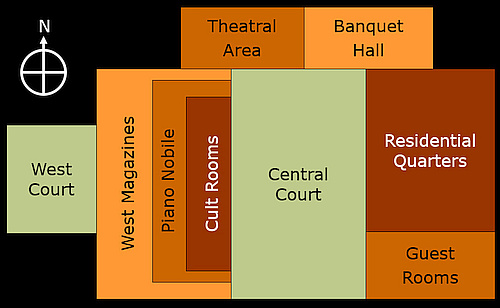
Left: It is quite interesting that although some variations occur mainly due to restrictions by the respective landscape, all of the Minoan palaces follow certain general principles in their layout.
Excavated by Sir Arthur Evans in 1900-1931, the palace of Knossos "suffered" severely from the restorations of this time. Rebuilding parts of the palace in order to preserve other remains led to the present appearance that makes it difficult for the visitor to distinguish between original and reconstructed features. - So much has been published about this palace of the legendary king Minos, that it was not felt necessary to repeat this here. Instead, I only show a number of pictures along with a few explanatory notes about this confusing, labyrinthic site.
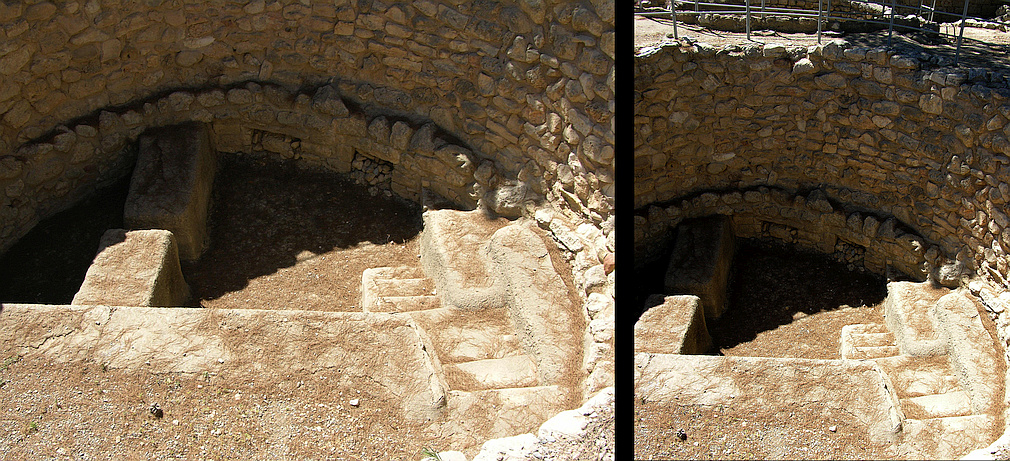
Above: One of the three "Kouloures" (Old Palace Period; MM III), near the West Court, built on top of MM IA houses. These stone-lined, circular pits were long interpreted as grain silos. More likely, they were either facilites for the storage and control of water or for refuse disposal. Since such structures have always been placed in front of the principal (western) facade of the palace, it seems very likely that they also had a symbolic significance.
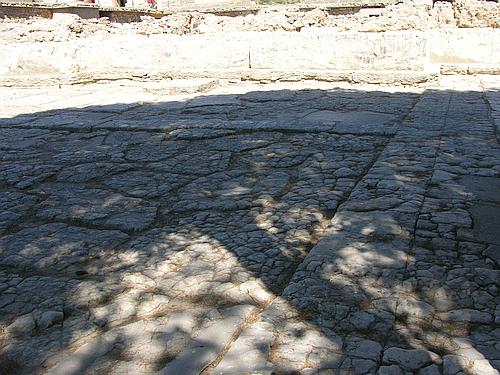
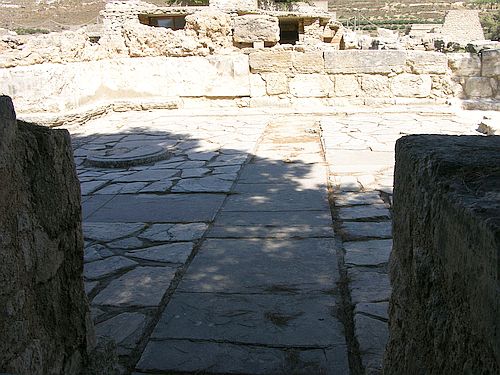
Below left: The West Court (Old Palace Period) with intersecting processional causeways in front of the West facade. It is interesting that a court like this can be found on the west side of all Minoan palaces, the west facade always being the most prominent.
Below right: West Porch, corridor of the procession. This was probably the place for religious ceremonies and a link between the Minoan town and the palace.
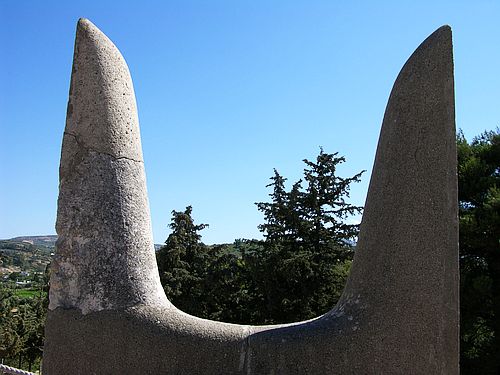
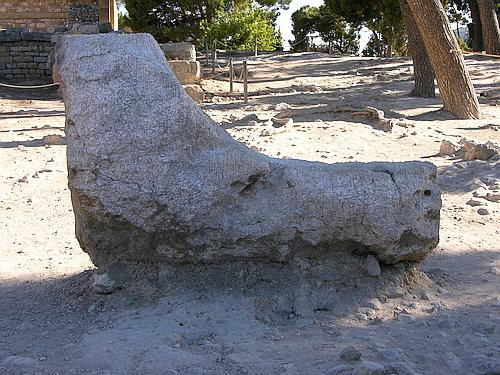
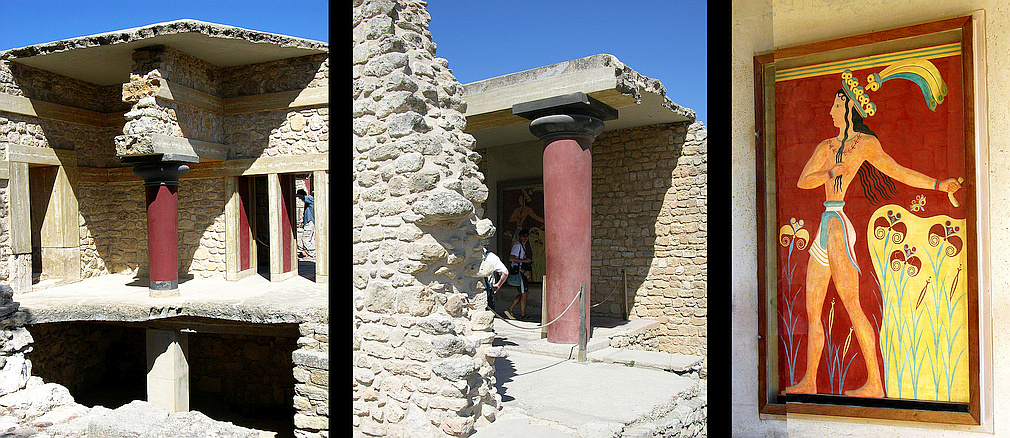
Above: Horns of consecration, restored near South propylon and original in gypsum near the theatral area. - Below: The fresco-decorated South Propylon, the most imposing building of the South Wing.
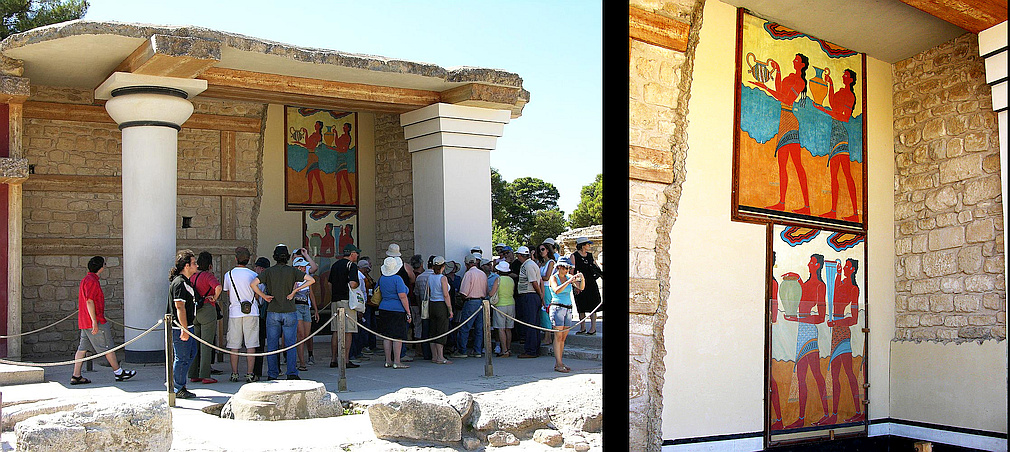
Below: The South Entrance Corridor with the fresco "Prince of the Lilies".