GREECE
 CRETE
LASITHI
SITIA
PETRAS
CRETE
LASITHI
SITIA
PETRAS

2024-10-28
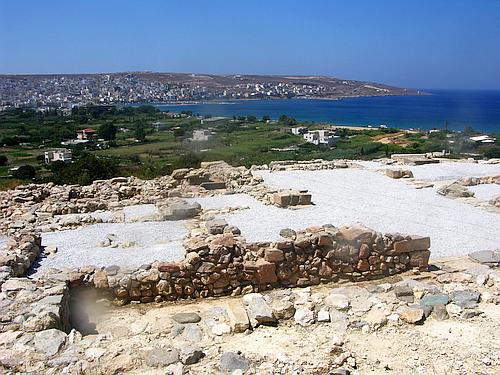
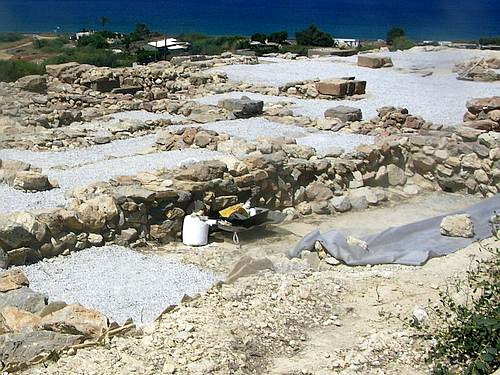
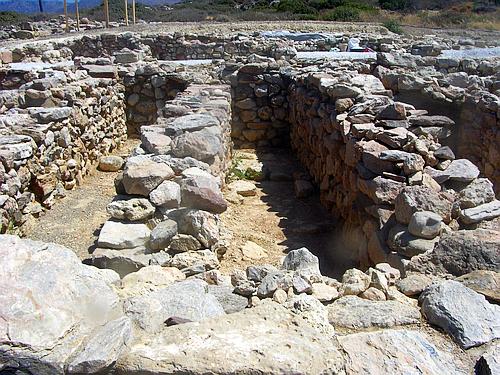
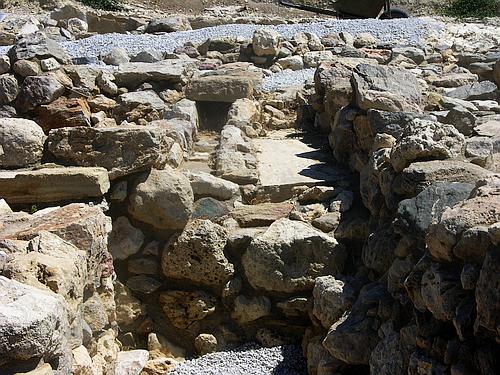
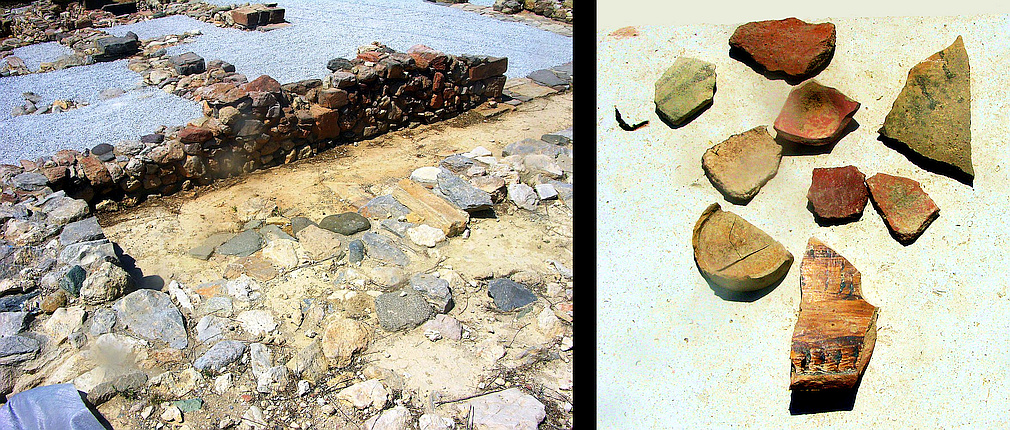
There were a number of indications for an important Minoan settlement to be sought in the area of modern Sitia. When Bosanquet in 1900 opened a few trenches at the site of Petras, a low hill overlooking the plain of Sitia, he found some ancient walls. But, believing the site to be too poorly preserved, he abandoned the excavation after only three days. The chances for the discovery of more than Minoan "villas" in the area appeared even smaller after the Minoan palace at Zakros was found in the 1960s. Zakros was believed to be the Minoan focus of eastern Crete, the gateway for trade with the Eastern Mediterranean. - It lasted until 1985 for systematic excavations at Petras to be carried out by Metaxia Tsipopoulou. This work is still (in 2006) continuing, including the consolidation of the site and research aiming at the establishment of a settlement pattern in the bay of Sitia.
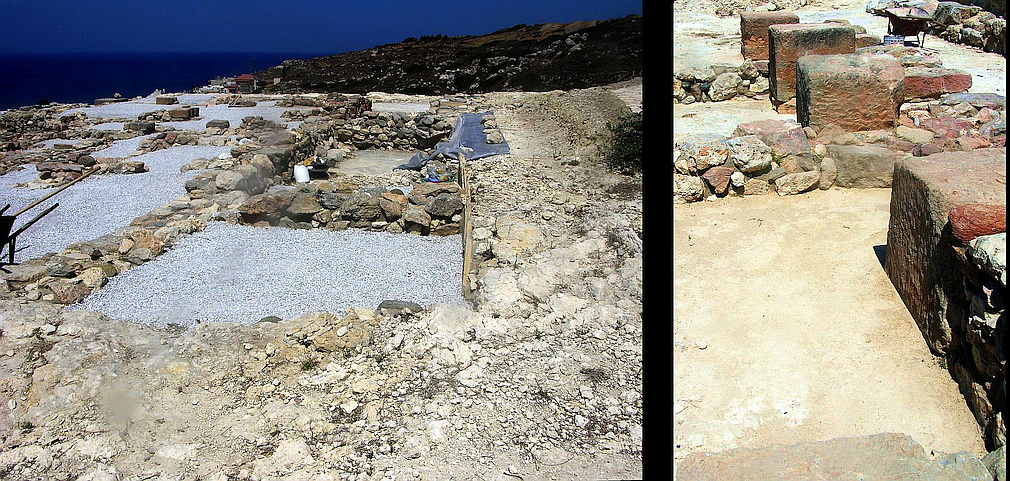
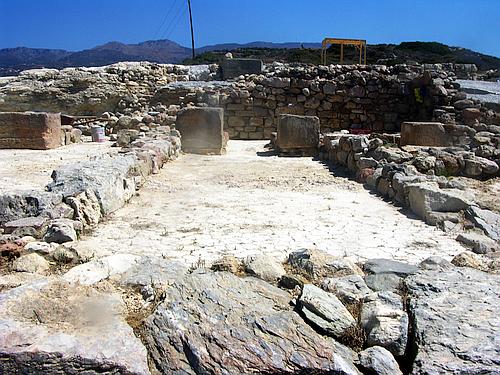
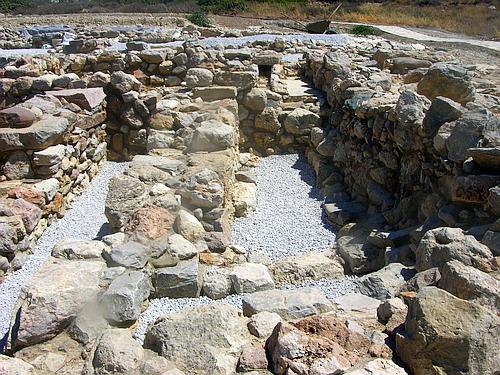
There are traces of habitation at the site since the Final Neolithic (ca. 3500 BC), but the first real settlement at Petras appears in the Early Minoan II period (ca. 2700-2150 BC). In the Old Palace period (ca. 1925-1750 BC), a central building was erected that bears all features characteristic for a Minoan palace (see: Knossos etc.), albeit on a relatively small scale.
The settlement reached its peak in the New Palace period (ca. 1750-1490 BC) when many buildings were enlarged or otherwise altered, and around 1450 BC Petras was destroyed, along with the other Minoan centers.
Only a short reoccupation occured around 1400 - 1300 BC, in the Late Minoan III period. Then, a silence of 26 centuries spread over Petras, interrupted only briefly when a cemetery was established on the plateau in the 12th century AD.