GREECE
 CRETE
LASITHI
ZAKROS
CRETE
LASITHI
ZAKROS

2024-10-28
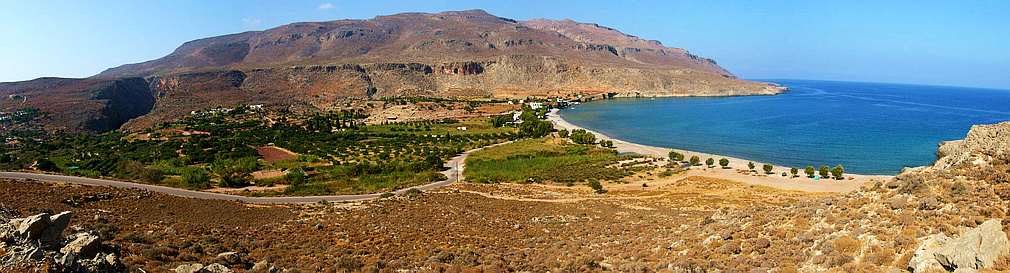
In the area of Zakros, on the east coast of Lasithi, ancient remains were reported in the 19th century by admiral Th. Spratt in his book "Travels in Crete". First trial excavations were then conducted, followed by the work of D.G. Hogarth of the British School of Archaeology, who in 1901 uncovered ancient houses at this site. Then it lasted again some 60 years until the chance finds of Minoan jewelry by peasants and the discovery of ashlar blocks lead to the decisive excavations of Nikolaos Platon in 1961. This work is still continuing.
The Minoan palace unearthed by Nikolaos Platon is of utmost importance for archaeology on Crete. Although it is smaller than the major palaces of Knossos, Phaistos and Malia, it was found unplundered, remaining in the original state of the time of its destruction. Moreover, the lateness of its discovery allowed a much more scientific approach to its excavation than was the case for the other palaces.
With its harbour in a sheltered bay, Zakros was an important commercial centre of the Minoans and their gateway to the East, as demonstrated by the excavated items like elephants' tusks from Syria, copper weights from Cyprus, gold from Egypt etc.
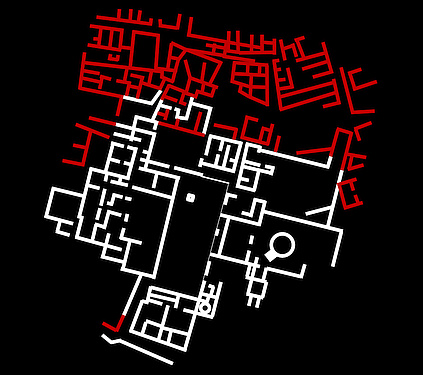
The first palace was built here around 1900 BC, and after its destruction by earthquake it was replaced by a new palace and a surrounding town in ca. 1600 BC. This was destroyed in 1450 BC, along with the other Minoan centres, and after that time abandoned.
The spectacular finds from the palace of Zakros can be seen in the Archaeological Museum of Iraklion, a smaller number is on display in the museums of Agios Nikolaos and of Sitia.
Below: Plan of the palace of Zakros with its two building phases and a view of the palace as seen from the Minoan town.
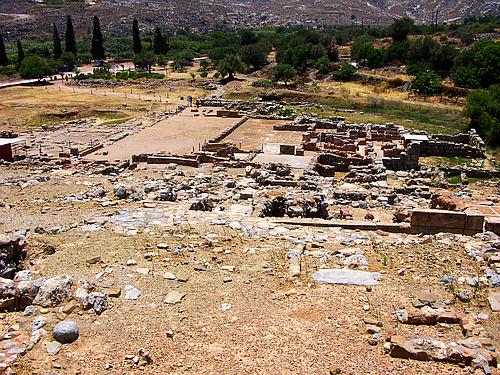
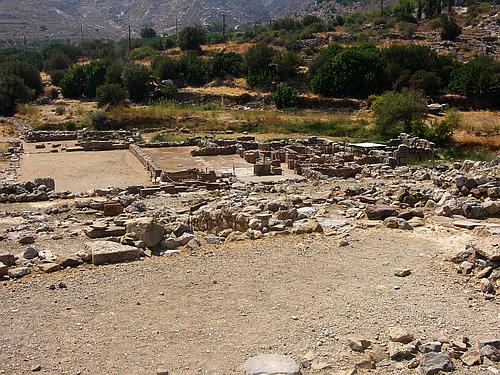
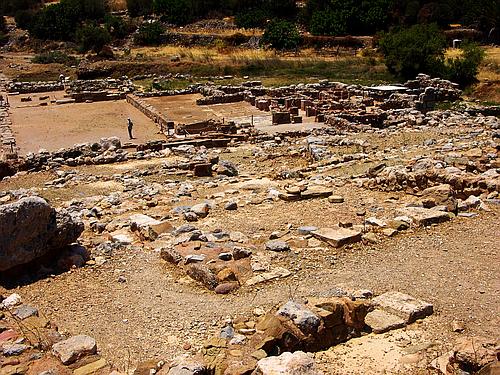
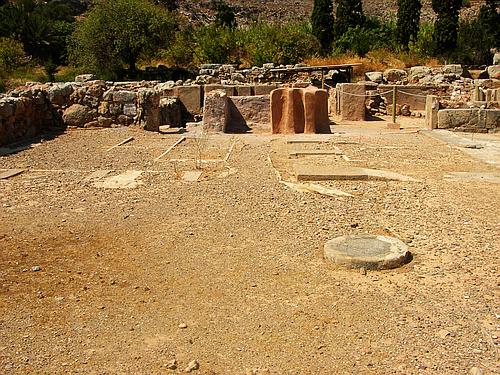
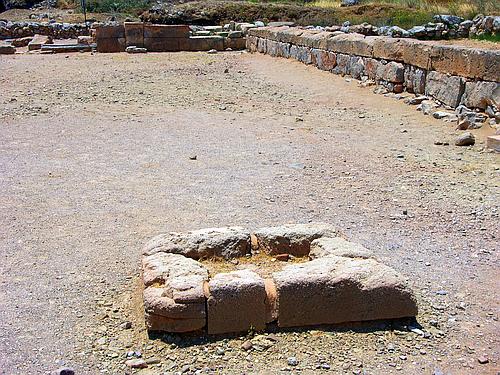
Above: More views to the palace. The Central Court is on the left, the ceremonial and administrative West Wing on the right. - Below: The Central Court (30 x 12 m), nucleus of the Palace area, looking to the south-west. At the nearer end on the pictures are the remains of a rectangular altar.
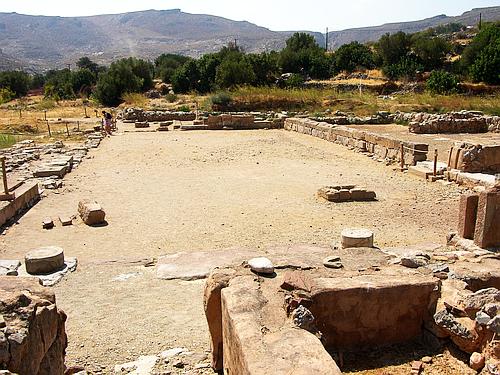
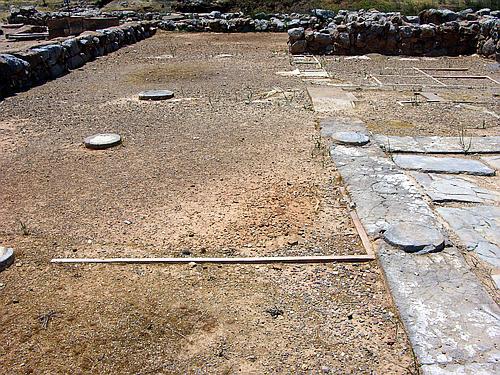
Below: The "Hall of Ceremonies" on the west side of the Central Court.