GREECE
 CRETE
LASITHI
GOURNIA
CRETE
LASITHI
GOURNIA

2024-10-28
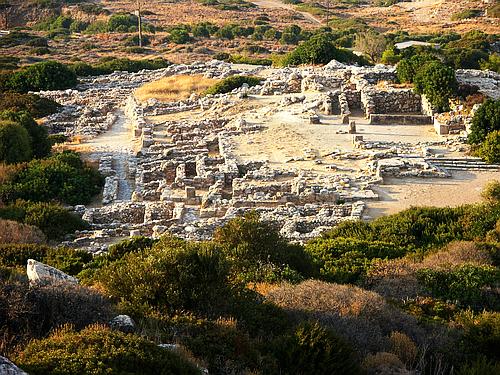
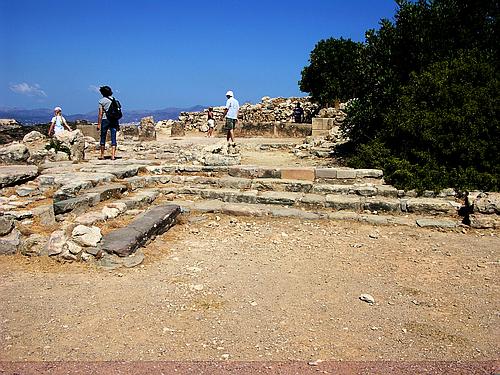
The top of the hill is occupied by a small "palace" - the seat of a local ruler. It has most of the features of the known major Minoan palaces (Knossos, Phaistos, Malia, Zakros), but it is much smaller and lacks any evidence of a more than only local influence. - The "Town Court", an agora or theatral area on the south side of the palace, is flanked by a L-shaped staircase. People may have sat (or more probably: stood) here to watch ritual performances. The same setting is known e.g. from Knossos.
Below: A so-called stone "kernos" with 32 indents, perhaps for libation offers to the Gods, further confirms the ritual purpose of these rooms.
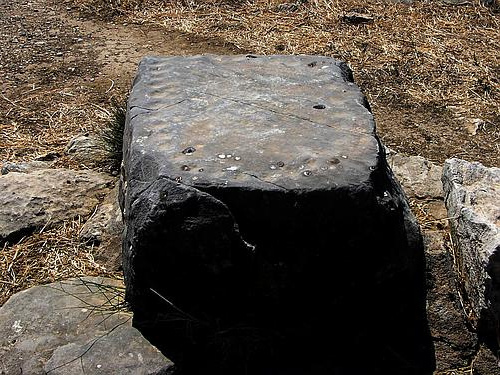
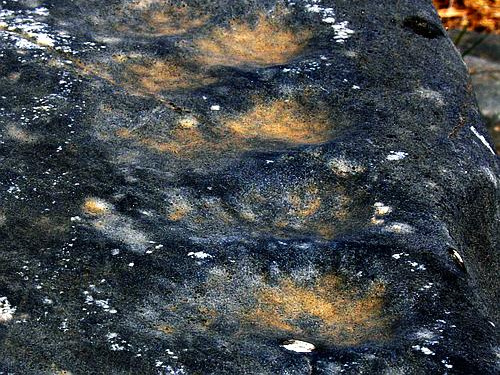
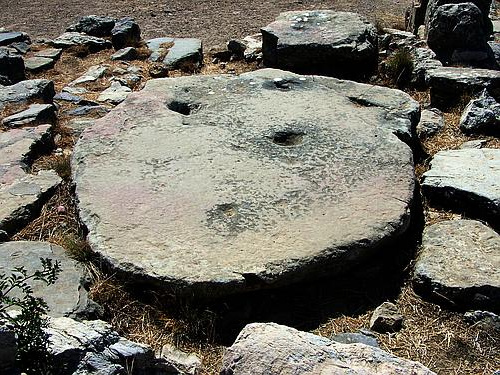
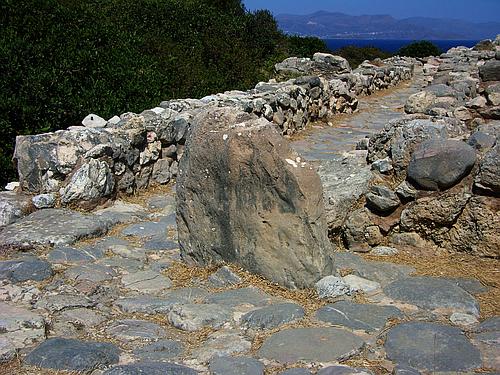
Above left: A flat stone with holes carved into it, probably associated with the bull sacrifice, can be seen near the courtyard. - Above right: Not quite well understood is what appears to be a sacred stone to the West of the Town Court. It stands in an East-West orientation, aligned with a terracotta channel (below left) that intersects remains of other buildings.
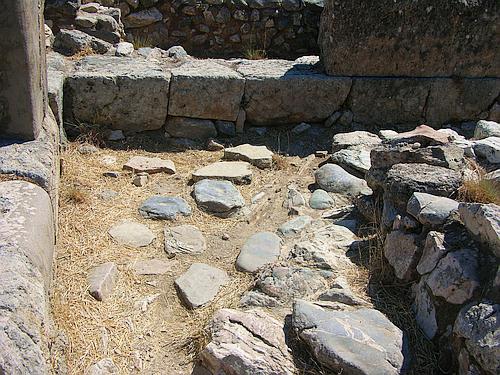
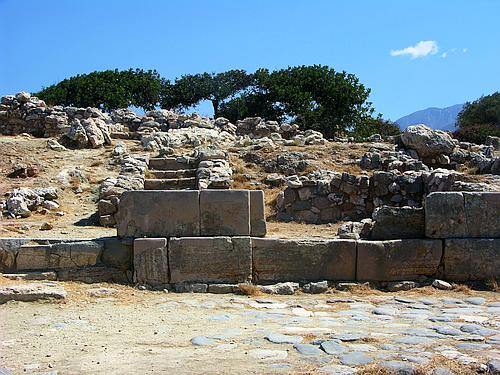
Above right: The West Court of the "palace" with the impressive remains of the facade in ashlar masonry. - Below: The northwestern part of the Minoan town.