GREECE
 ATTICA
SARONIC ISLANDS
TROIZEN
ATTICA
SARONIC ISLANDS
TROIZEN

2024-10-28
Let's come to the second story: Troizen is also the scene of the tragic legend of Hippolytus, son of Theseus and Hippolyte, as made famous in the play by Euripides. The story has it that Phaedra, the second wife of Theseus, spied at her stepson Hippolytus when he trained without a thread on his body and fell in love with him. But since he did not reciprocate her affections Phaedra slandered him of having raped her and took her life. Theseus then had Poseidon kill his son by a wave when he was on his way in a chariot. Could this have a historic background in the form of tsunami waves produced by the eruption of the Santorin volcano in 1627 BC?
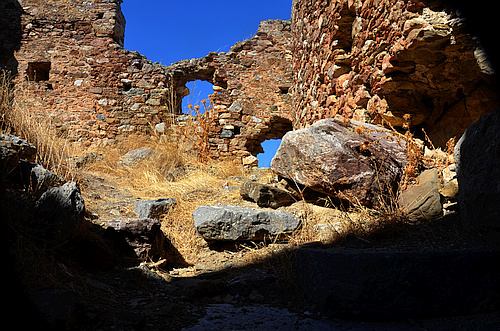
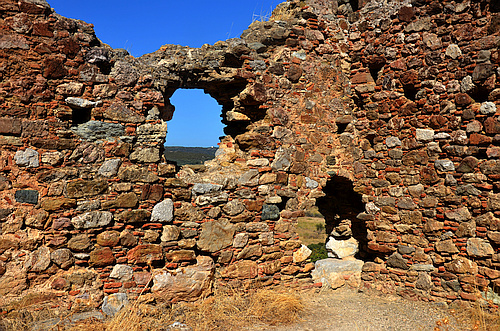
The third story about Troizen is historic and took place during the second Persian invasion in 480 BC. In the face of the advancing Persian army Athenian general Themistocles proposed to the city assembly that all the women, children and elderly residents of Athens be evacuated to Troizen while able bodied men were sent to fight the Persians or to man the Athenian fleet. A third century BC marble stele which recorded this proposal became known as the "Decree of Themistocles" or "Troizen Inscription" and a copy is now exhibited in the Archaeological Museum of Poros. As a consequence, around 70,000 people in all were evacuated to Troizen to be safe, and the people there took well care of them. Although Athens was subsequently destroyed its citizens were spared and the Persians defeated in the Battle of Salamis. The following year (479 BC) the city sent 200 Hoplites to fight in the Battle of Plataea, the final and decisive land battle following the second Persian invasion of Greece. - Although Troizen had always been allied to Argos and Athens, the Troezenians allied themselves with Sparta during the Peloponnesian War, resulting in Athens sacking the city in 430 BC.
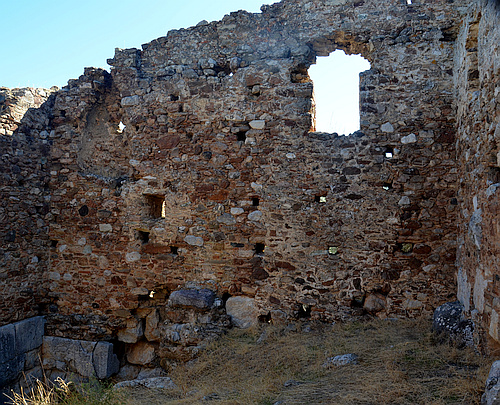
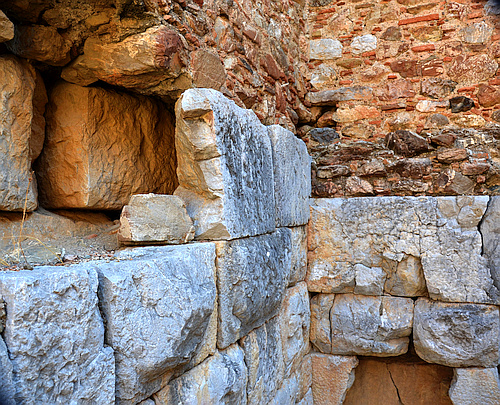
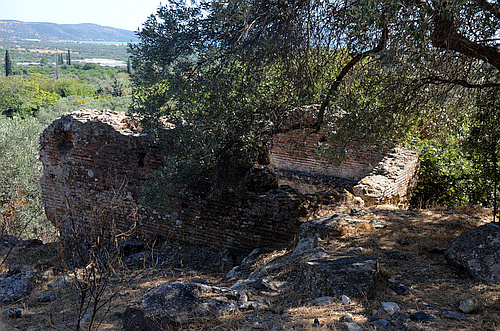
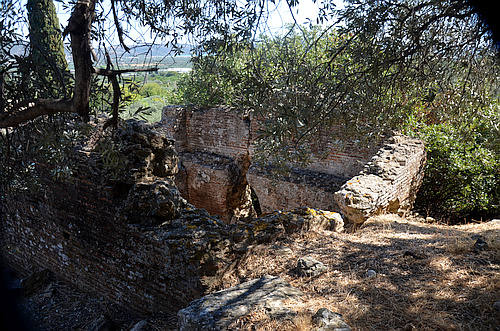
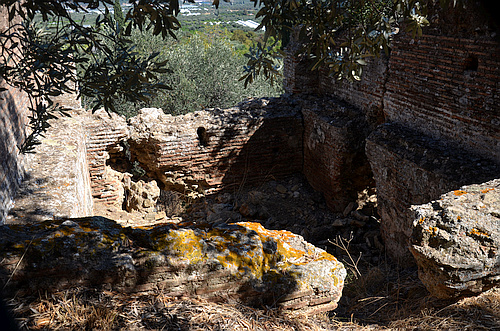
Below: 20 m east of the tower and below the road lies a Roman cistern with the brick masonry typical for this period. The 5.27 × 4.44 m wide waterproof basin was used as a clarifying basin.