GREECE
 ATTICA
ATHENS
NAMA
SCULPTURES
ATTICA
ATHENS
NAMA
SCULPTURES

2024-11-01
Impressive is the collection of archaic kouroi and their development: all are free-standing statues of naked males with a static posture, left foot set in front, and the typical "archaic smile".
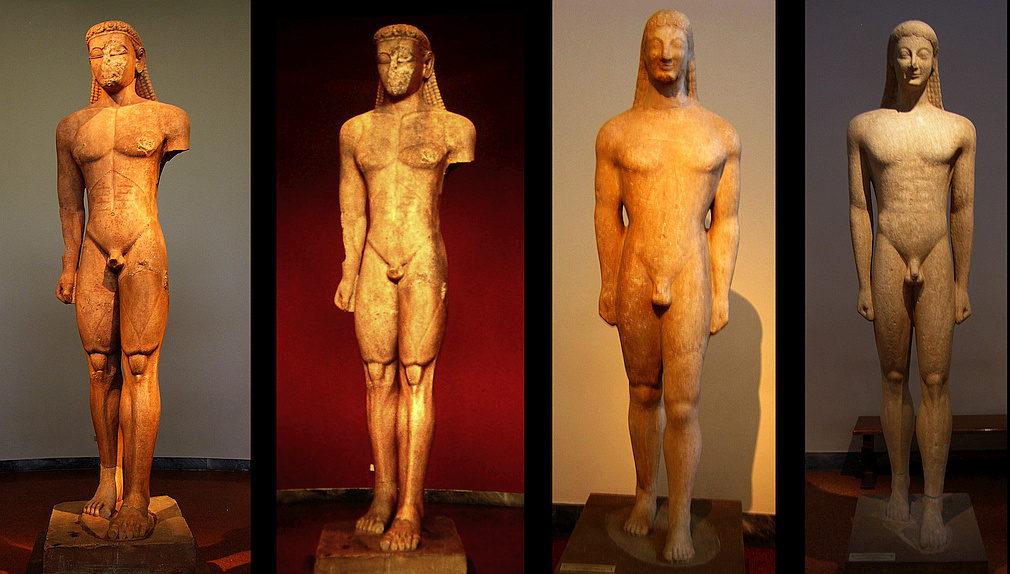
Above from left to right: 1, 2) The "Sounion Kouros" - colossal statue of a kouros, found in the temple of Poseidon at Sounion, dated to ca. 600 BC. - 3) Archaic kouros. - 4) Kouros from Melos, ca. 570-560 BC.
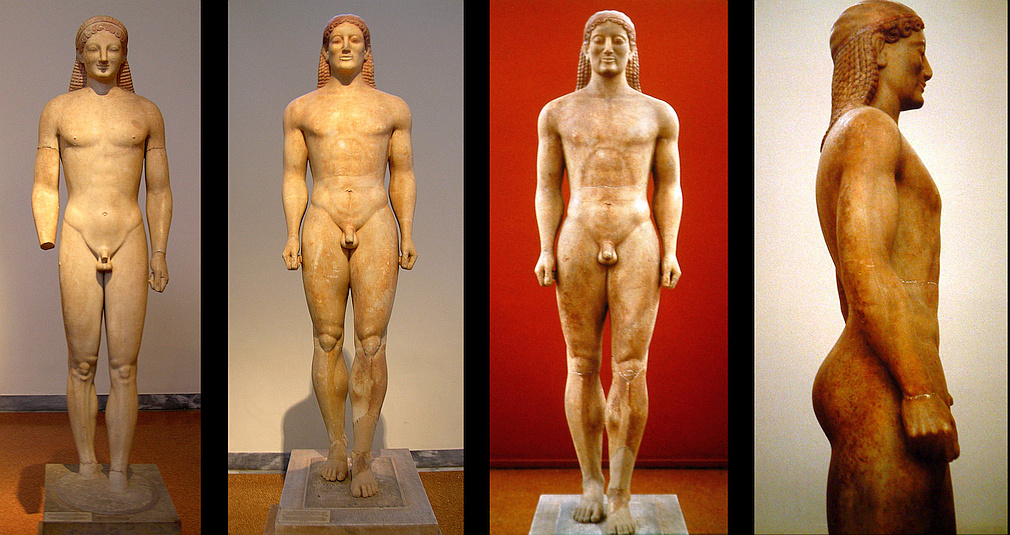
Above from left to right: 1) The "Myrrhinous Kouros" in Parian marble, 540-530 BC. - 2-4) Funerary kouros of Kroisos, the so-called "Anavissos-Kouros". The more than life-size (194 cm) statue in Parian marble has on the base the inscription: "Stop and lament at the tomb of the dead Kroisos, whom furious Ares slew when he was fighting in the forefront." - The posture is that of an archaic kouros, but due to its mobility and the fine modelling it is dated to as late as ca. 520 BC.
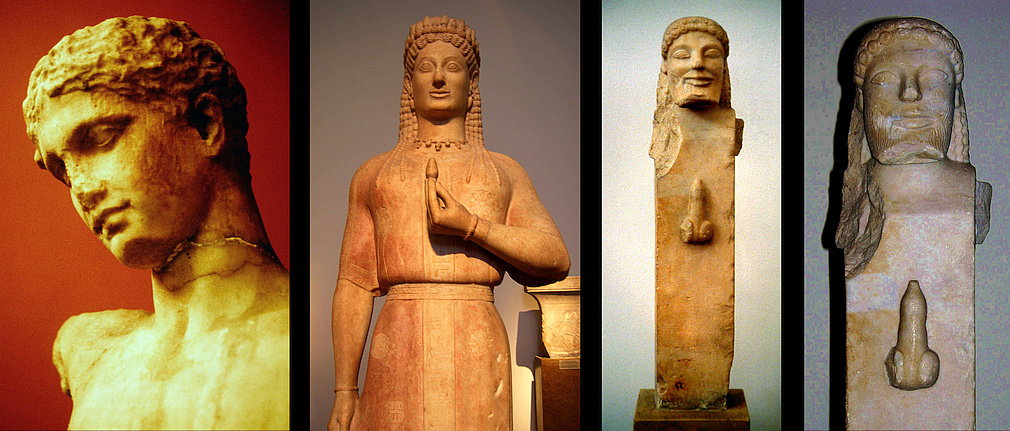
Above from left to right: 1) Young man. - 2) the "Myrrhinous Kore", ca. 540 BC, one of the most important examples of the ripe Archaic style, presented with a lotus bud in her left hand. - 3, 4) marble Herm stele, ca. 520 BC from Siphnos. Hermes was the patron of travellers, so that herms were erected along roads and especially at crossroads.
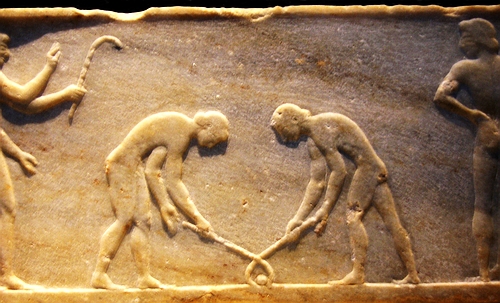
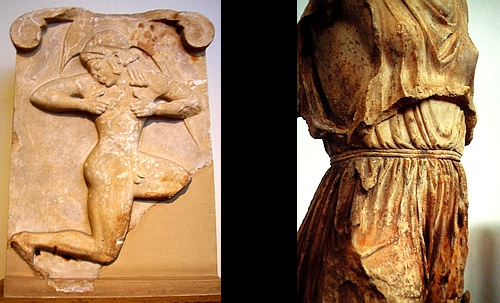
Above from left to right: 1) Nude Athenian youths playing some sort of hockey; marble relief from the cemetery of Kerameikos, ca. 510 BC. - 2) "running hoplite", a relief belonging to a funerary monument, ca. 500 BC. - 3) Hebe, statue of a young woman, found in the old agora of Athens, an Attic work of about 440 BC.
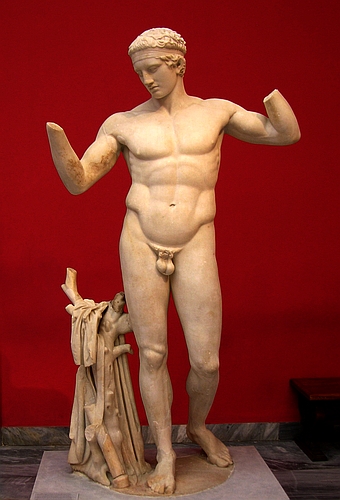
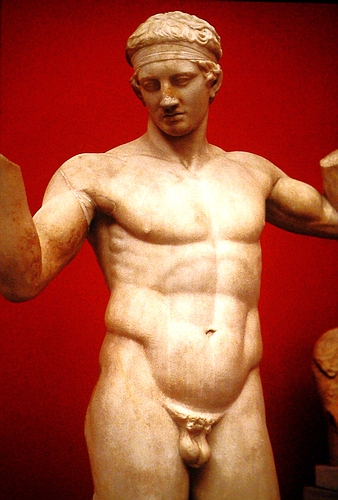
Below: The "Diadoumenos", a life-size statue of a young athlete fixing the fillet around his head. It is a marble copy of a lost famous bronze by Polykleitos.
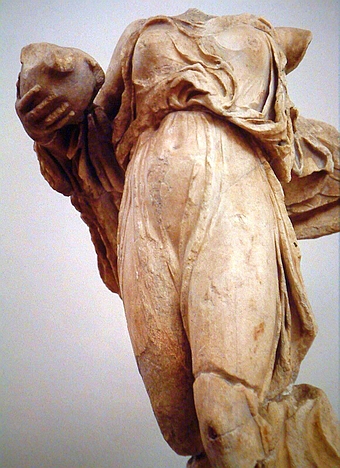
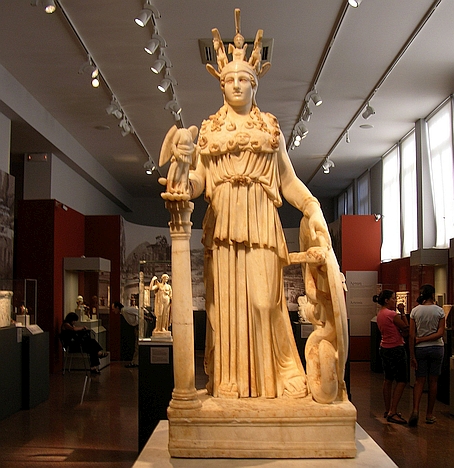
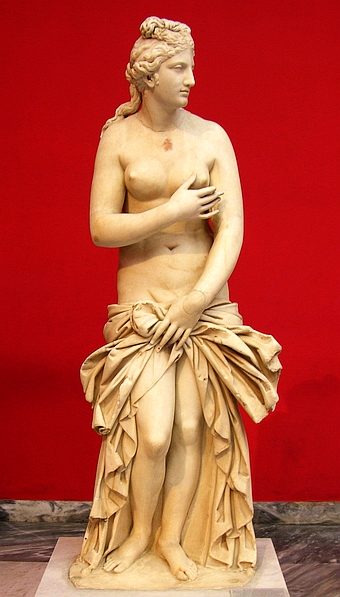
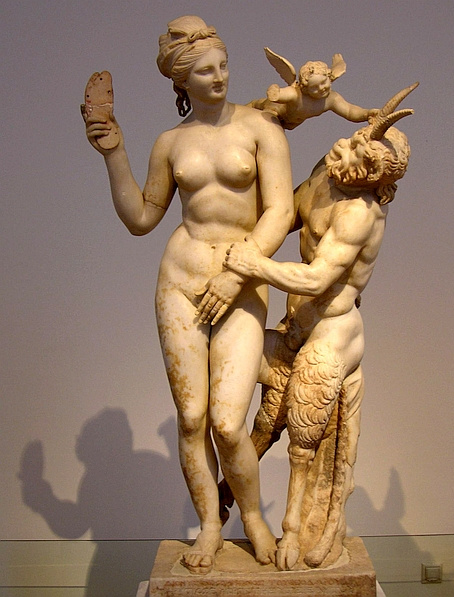
Above left: Headless statue of Nike, ca. 380 BC, from Epidauros, holding in her right hand a partridge, symbol of the healing power of Asklepios. - Above right: The "Varvakeion Athena", the truest copy - 1/12 of the original - of the great chryselephantine cult statue of Athena Parthenos by Phidias. - Below left: The "Syracuse Aphrodite", a Roman copy of a statue by Praxiteles. - Below right: The "Slipper Slapper", a hellenistic marble group with Aphrodite, Pan, and Eros.