GREECE
 ATTICA
SOUNION
ATTICA
ATTICA
SOUNION

2024-10-28
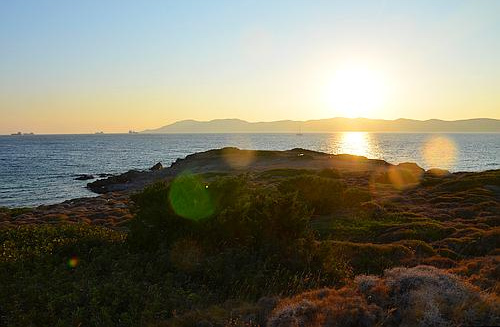
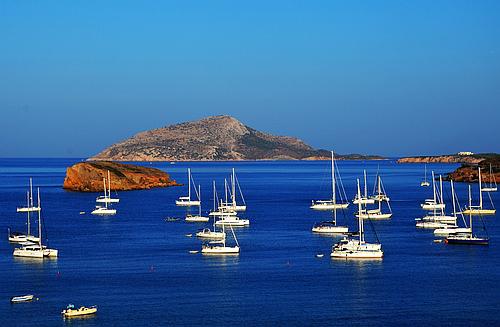
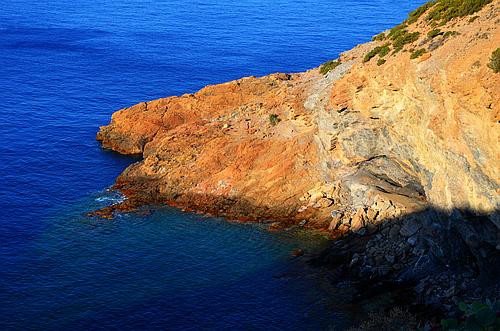
Sunrise at Cape Sounion, the southernmost tip of Attica and "the sacred cape of the Athenians" (Homer, Odyssey). In antiquity it was a significant strategic location, from where the city-state of Athens controlled the sea passage to its central port Piraeus and the Aegean Sea as well as the Lavrion peninsula with its rich silver mines.
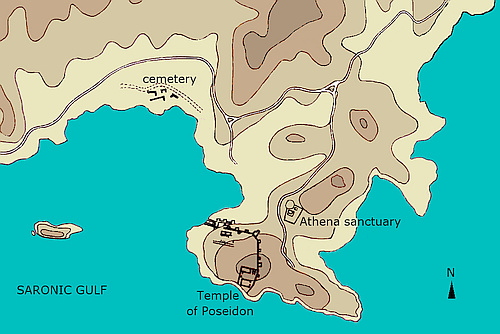
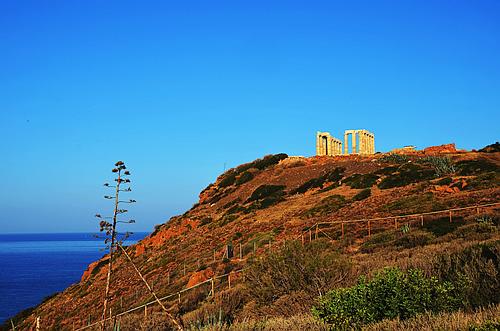
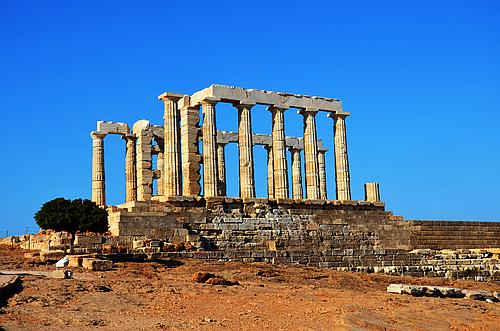
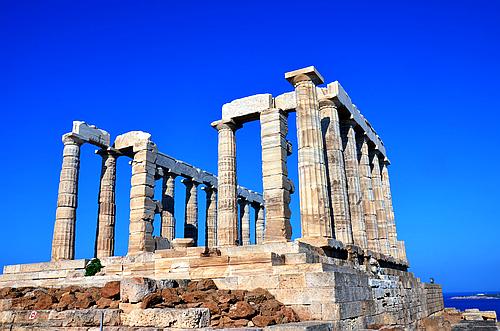
At the end of the peninsula the Athenians built sanctuaries to honour two of their most important deities: Athena and Poseidon. The temple of Athena, originally on a lower hill, was deconstructed already in antiquity and transported to the agora in Athens. But what remains of the sanctuary of Poseidon makes it one of the most impressive temples in Attica.
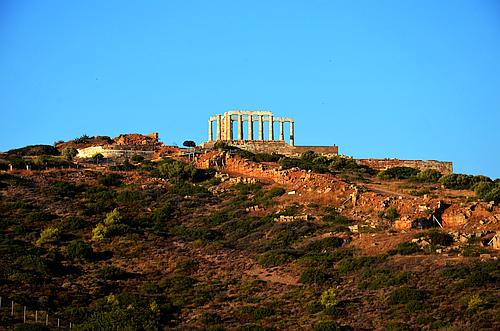
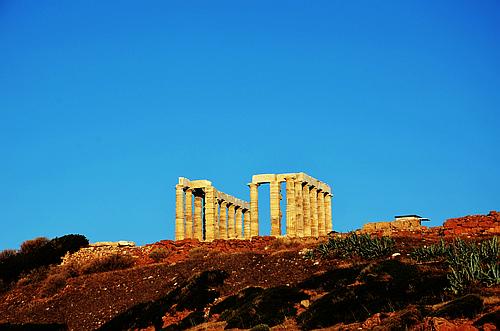
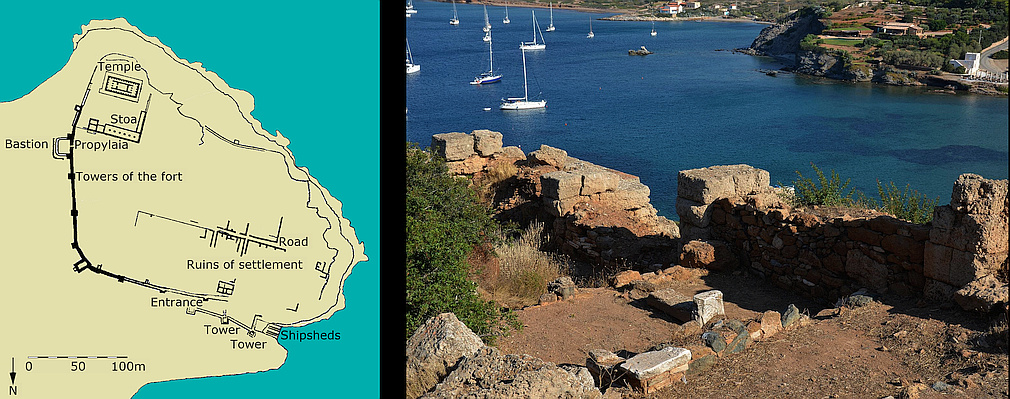
The temple of Poseidon on top of the promontory lies within a precinct that was fortified for safety reasons during the Peloponnesian War 413/412 BC. Its walls, originally 3 - 3.5 m wide, were built of two parallel fronts with a fill of stones and soil. They extend over a length of 400 m, cutting off the cape from the mainland, and were reinforced by ten towers. The walls are built of limestone, in some places marble, and show isodomic and polygonal masonry of different qualities due to numerous repairs and alterations. - The modern footpath crosses these walls at several points.