
GREECE
 PELOPONNESE
ARGOLIS
EPIDAURUS
SANCTUARY
PELOPONNESE
ARGOLIS
EPIDAURUS
SANCTUARY

2024-11-24
According to ancient Greek believe, illness was the result of outraging a god. Curing, therefore, required the help of a god - in the first place Apollo. But even Apollo, far beyond all human suffering and harm, needed a mediator, a demigod. In Greek mythology, this was Asklepios, son of Apollo and Koronis (daughter of king Phlegyas of Orchomenos).
After his mother's death in childbed, Asklepios was raised by the centaur Chiron, who told him all the secrets of healing. Asklepios soon caught up with his master and with his healing power saved the lifes of thousands. When Hades, the dark master of the underworld, complained to Zeus, Asklepios was ordered to stop his unduely doings. The demigod, disobedient to the supreme command, was then vaporized by furious Zeus. But Epidaurus, the legendary place of his death, became a place of curative oracles, a place of pilgrimage for Greeks from all parts of the ancient world.
The healing power of Asklepios continued to live in his children Hygieia, Podaleirios and Machaon. In Epidaurus, it was passed on from generation to generation. And still today, Asklepios can be seen in the night sky as the constellation Ophiuchus, associated with the sacred snakes.
Historically, the worship of Apollo as "Apollo Maleatas" in Epidaurus can be traced back to prehellenic times and is related with a Mycenaean sanctuary on Mount Kynortion. Only in the Archaic period was this superimposed by the cult of Asklepios, culminating in the 4th and 3rd century BC, when an ambitious building program was undertaken. Another heyday was reached in the second century A.D., showing the survival of the sanctuary throughout antiquity.
In 1821, at the beginning of the Greek war of liberation, the Asklepieion in Epidaurus reached some importance again, being the place of a secret assembly where the rebellion against Turkish occupation was decided.
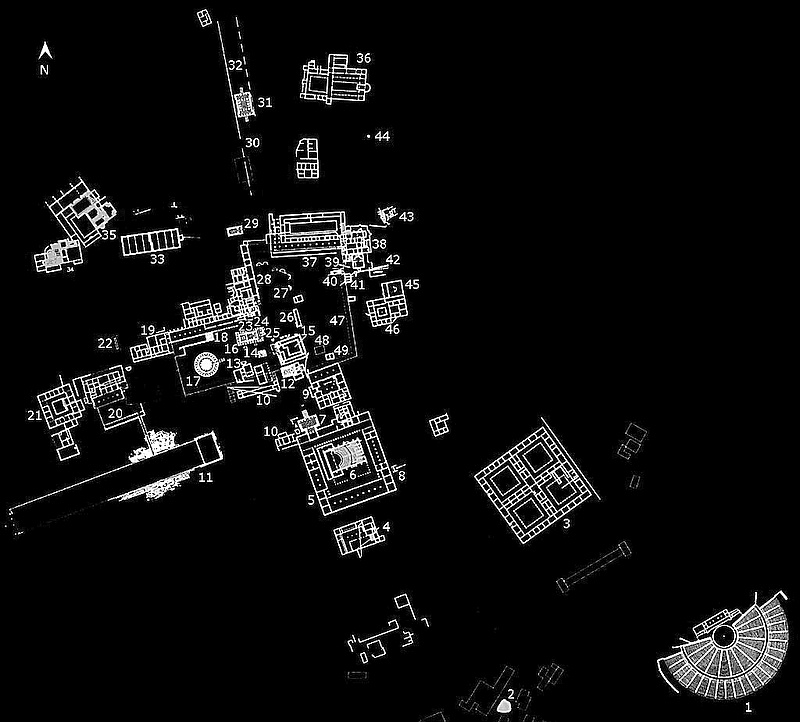
Above: 1. Theatre - 2. Cemetary of Late Antiquity - 3. Hospice (Katagogion) - 4. Bathouse - 5. Building for ritual meals (Hestiatorion) - 6. Odeum - 7. Propylon to the Hestiatorion - 8. Fountain - 9. Temple of the Egyptian gods - 10. Roman buildings (stoa etc.) - 11. Stadium - 12. Temple of Artemis - 13. Treasuries (Oikoi) - 14. Altar of Apollo - 15. Building of the ancient cult - 16. Temple of Asklepios - 17. Tholos (Thymele) - 18. Dormitory (Enkoimeterion) - 19. Annexe to the Enkoimeterion - 20. Athletes' entrance to the stadium - 21. Palaestra - 22. Cistern - 23. Sacred well - 24. Buildings of the ancient cult - 25. Statue-fountain - 26. Altar of Asklepios - 27. Sacred square - 28. Library - 29. Temple of Themis - 30. Well - 31. Propylaia of the sanctuary - 32. Sacred Way - 33. Cistern - 34. Bath complex - 35. Bath complex & Sanctuary of Isis - 36. Basilica - 37. Stoa of Kotys - 38. Roman bath complex (Akoai) - 39. Epidoteion - 40. Sacred fountain - 41. "Doric fountain" - 42. Section of the aqueduct - 43. Bath complex - 44. Well - 45. Sanctuary of the Dioskouroi (Anakeion) - 46. Roman house - 47. Perimetric stoa - 48. Base for late building - 49. Bipartite sanctuary
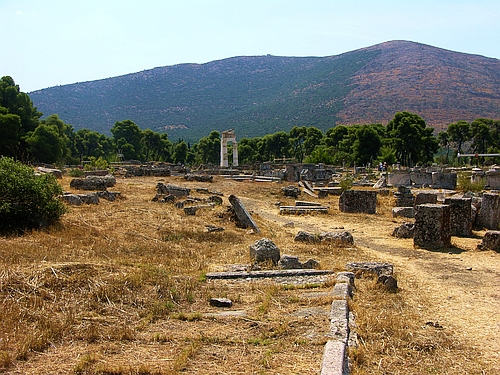
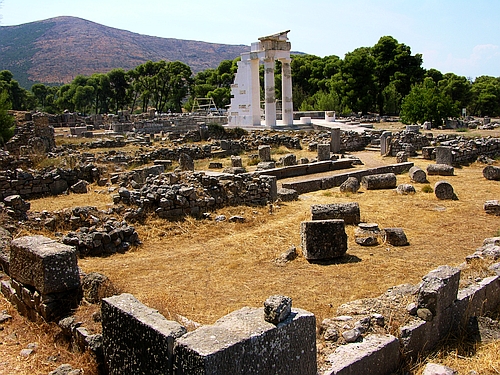
The present archaeological site of the sanctuary in Epidaurus came in use in the 6th century BC, when the growing stream of pilgrims exceeded the capacity of the hill-top sanctuary of Apollo Maleatas. The prosperity of Epidaurus allowed a large-scale building program in the 4th and 3rd century BC, the remains of which can now be seen scattered over a wide area.
As the importance of the sanctuary of Asklepios in Epidaurus grew and its fame attracted more and more pilgrims, healing became a mass production. With a growing hotel-industry, the pleasure-seeking masses had to be entertained. Buildings for musical, theatrical and athletic diversion were provided, the contests of the "Asklepieia" being held every four years.
In Imperial times, particularly in the 2nd century AD, the sanctuary enjoyed another floruit. For some time, even the ancient pagan cult and the new Christian religion coexisted in Epidaurus.
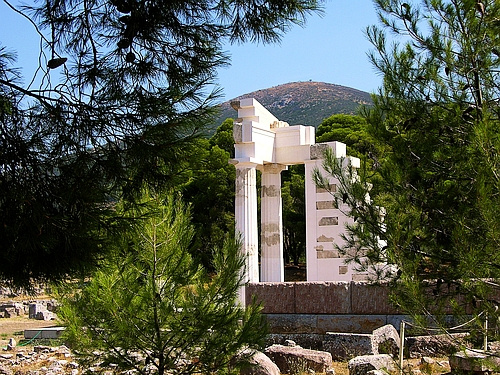
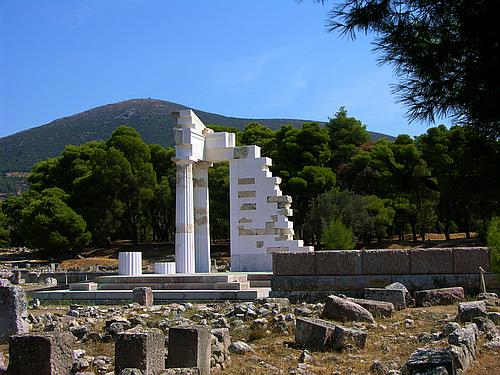
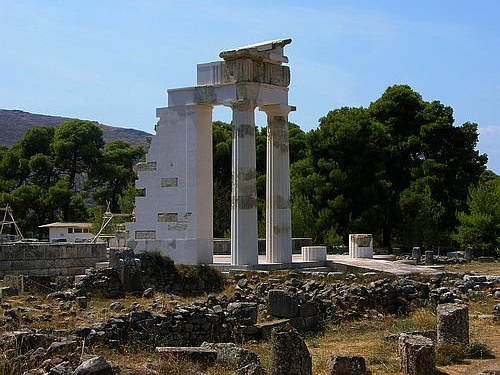
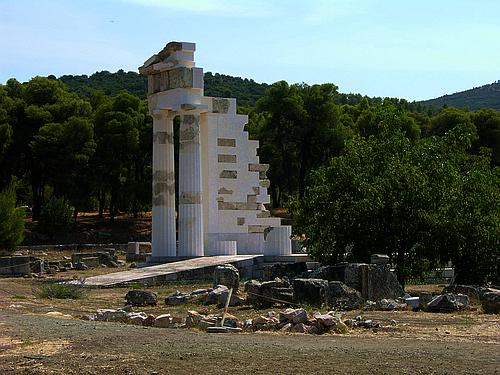
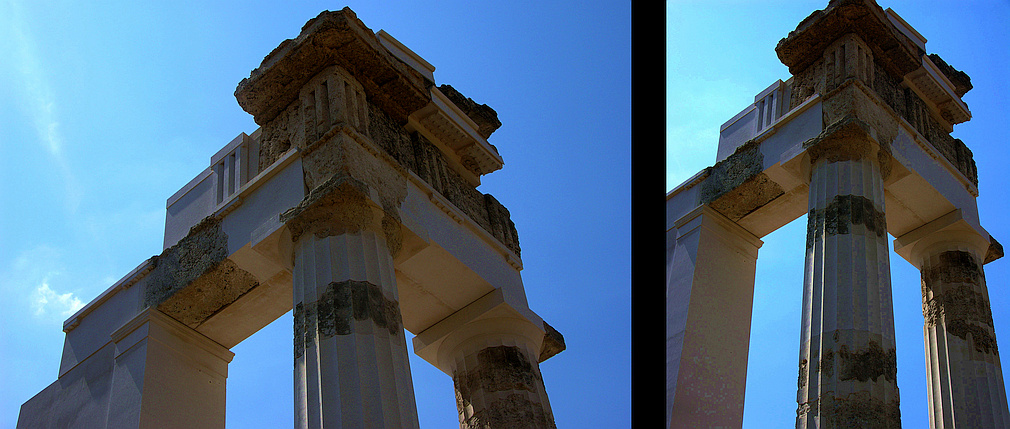
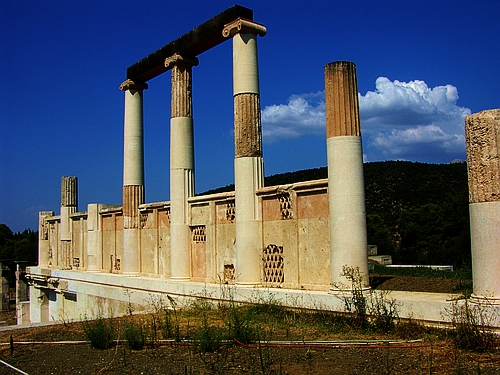
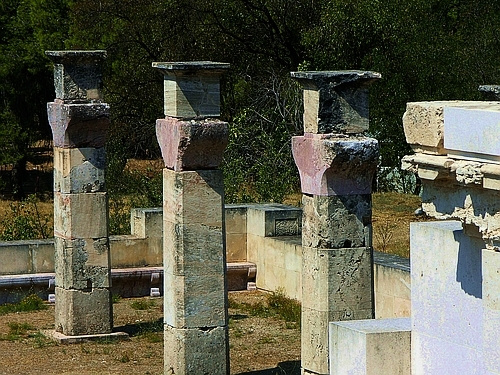
Above: The Enkoimeterion (4th century BC), a dormitory, at the centre of the sanctuary. The sleep, symbol of death and resurrection, was the context in which the god approached the patient and miraculously cured him/her. The miraculous cure might have been based on magical energy and auto-suggestion, but eventually the observation and recording of it created a body of experience and empirical knowledge for scientific healing.
