>> BACK TO GREECE <<
 TURKEY
TROY
TURKEY
TROY

2025-01-21
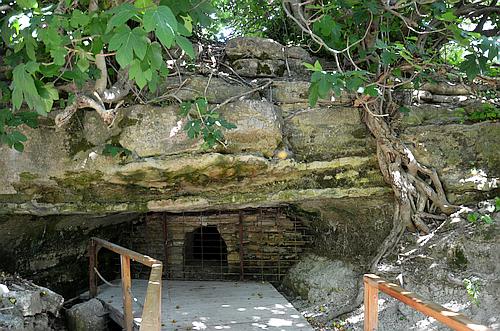
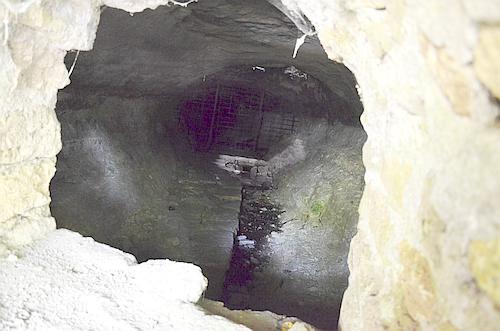
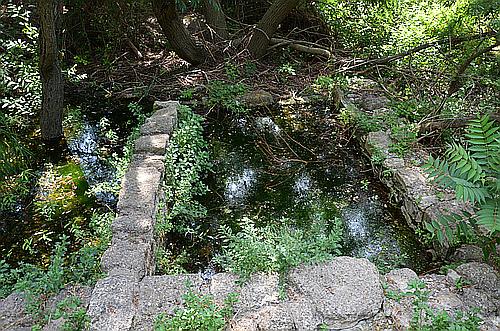
Cave with Troy/Wilusa's source, unfortunately closed to the public. The construction of this artificial system of tunnels with a remarkable length of 160 m goes back to the third century BC and is related with a local god KASKAL.KUR. In 1280 BC it is described in a treaty between the Hittite king Muwatalli II and king Alaksandu of Wilusa (= (W)ilios = Ilion / Troy). Thus, the source was the deciding evidence for identifying Troy with the Wilusa of Hittite documents. - Later, a Roman extension used clay pipes for transporting water from the source to fish tanks in front of the cave.
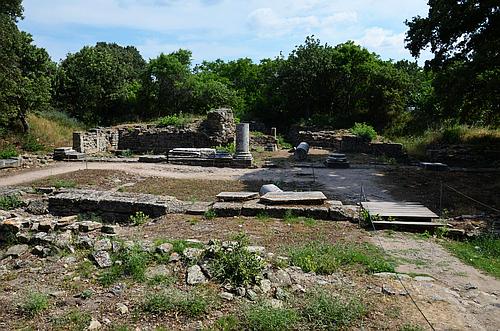
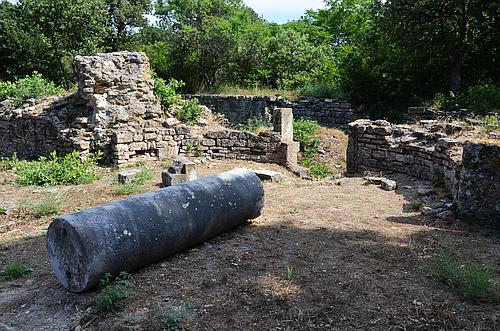
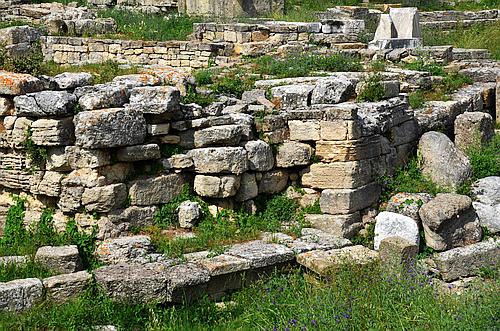
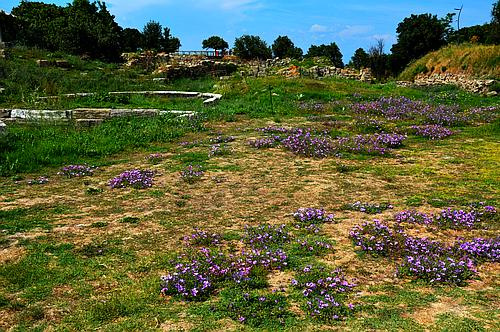
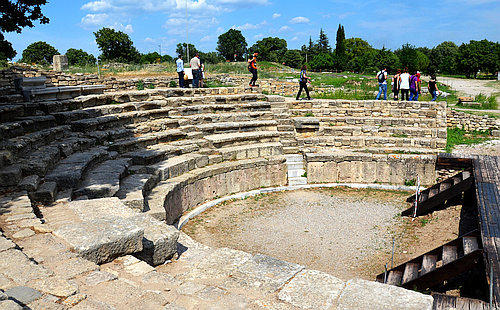
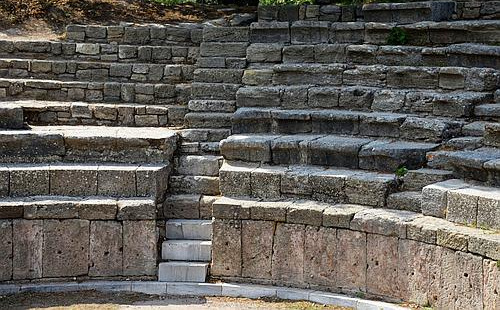
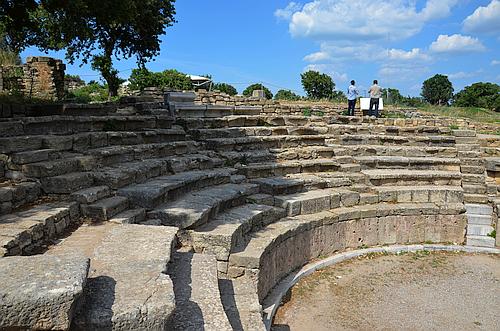
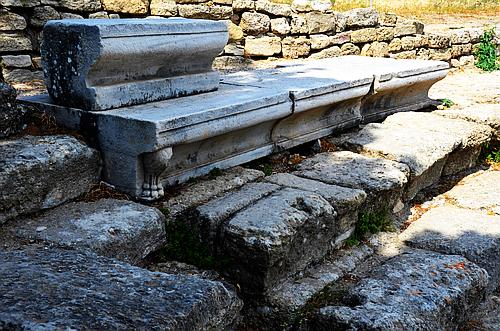
Above: Remains of a Roman bath house with various architectural parts lying around. - Below: Roman odeion built during the reign of Emperor Augustus, 63 BC-14 AD, in Troia IX. The Odeion was used for musical performances. It has a semi-circular orchestra, with a skene and several tiers of seats constructed of large limestone blocks and divided by aisles into wedge-shaped sections.
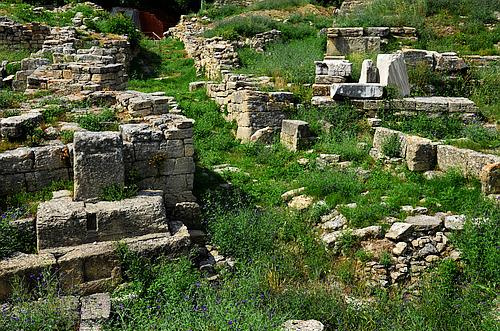
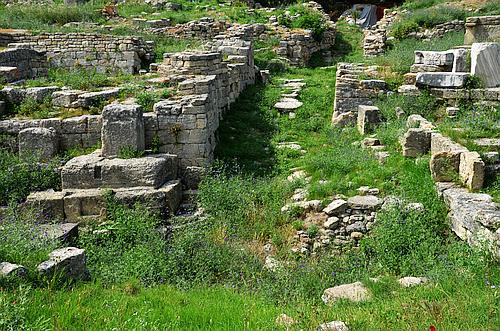
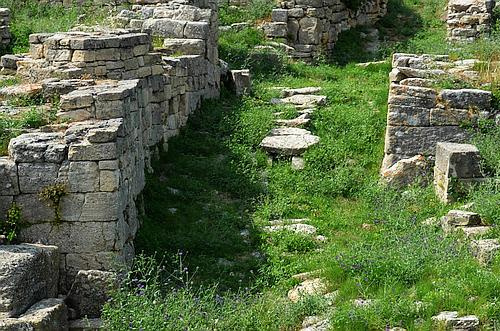
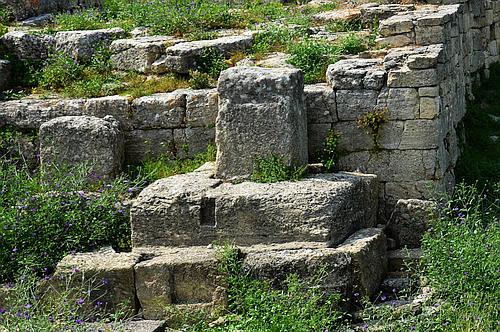
Above and below: The South Gate (or "Dardanos Gate") of Troy VI, probably the main gate of the citadel in this period. In front and left of the gateway are the remains of the south tower, which was added slightly later to the fortification. In front of the south tower stood several stone steles, typical examples of an early Anatolian cult that was usual at gates. Remains can still be seen with hollows for offerings. All of the gateway was paved with flagstones. In the middle of the road runs a sewer for rainwater.