GREECE
 PELOPONNESE
MESSINIA
MESSENE
PELOPONNESE
MESSINIA
MESSENE

2025-01-13
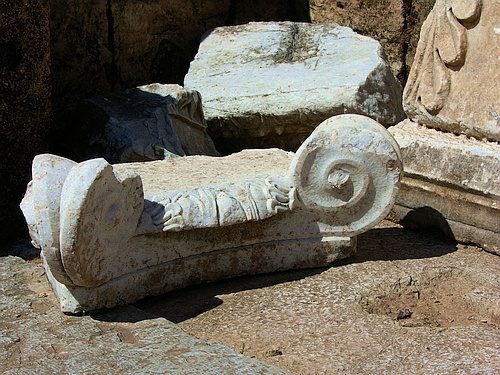
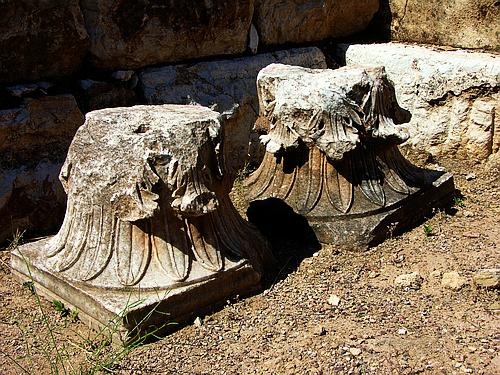
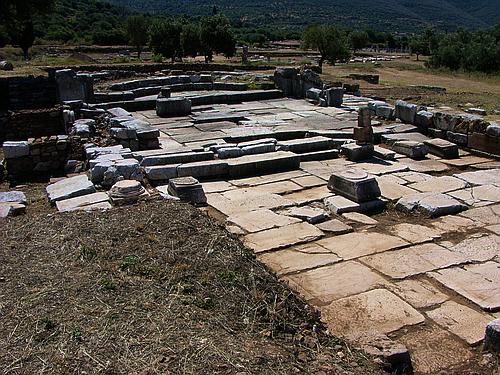
Above right: South of the theatre are the remains of a 38 x 16m large basilica. Dedicated in the 7th century, it was entirely built of stone blocks of older buildings.
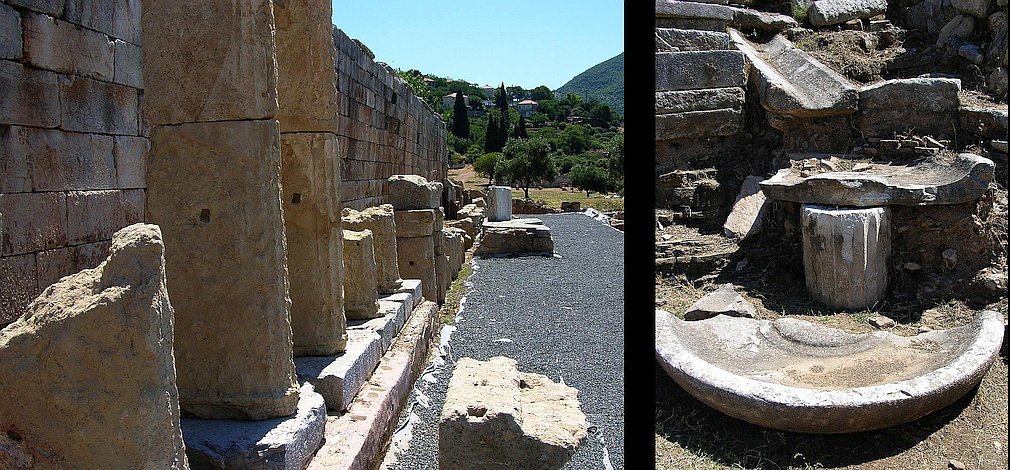
Above: The Arsinoe Fountain House, which supplied the city's agora with water from the Klepsydra spring. It was named after Arsinoe, mother of Asklepios and daughter of Leukippos, mythical king of Messinia. The Fountain House's decoration with a collonade screening a high retaining wall underwent several changes during the city's history.
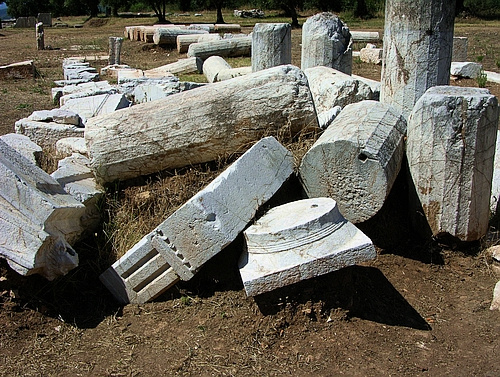
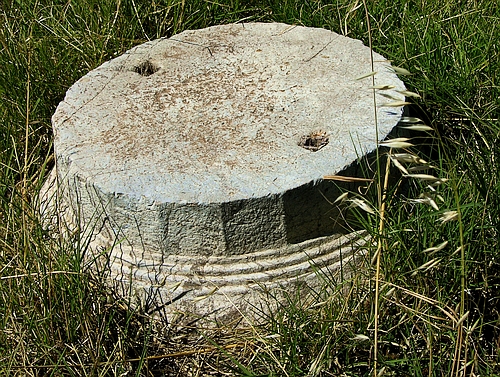
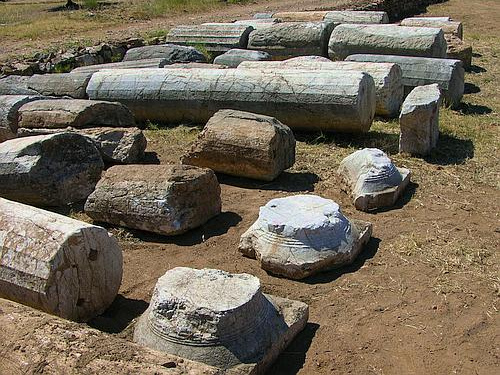
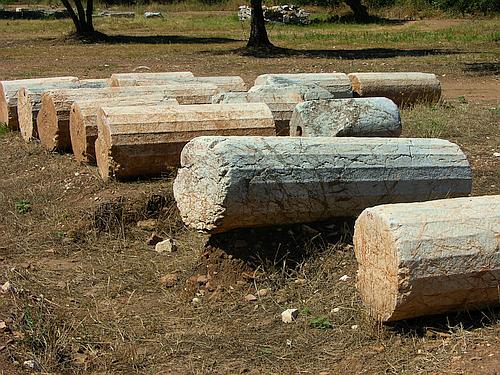
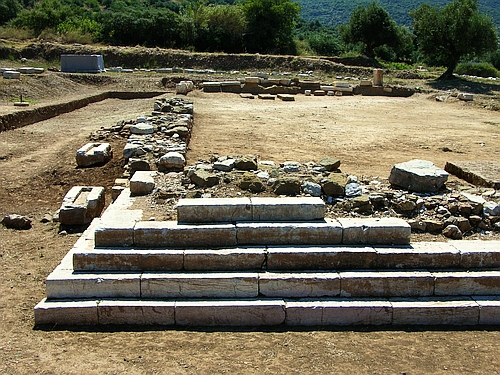
Above left: Architectural remains of the Doric peripteral temple of the deified Messene, a pre-Dorian queen, after whom the city was named. In its cella stood a gold and marble cult statue of the goddess.
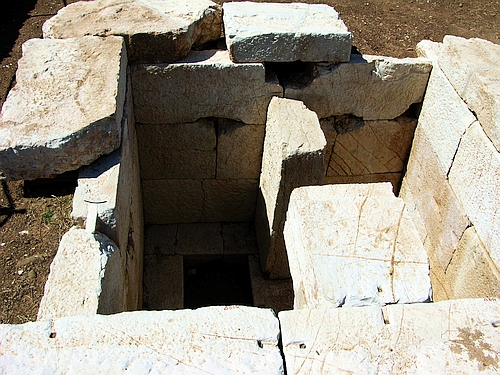
Above right: What literary sources mention as "treasury" is a subterranean chamber built of rectangular stone blocks. It was originally covered by bulky stones, the central opening with a stone lid of 1.5 tons. The renowned general Philopoimen of the Achaean League was imprisoned here in 183 BC and poisoned by fanatic members of the anti-Achaean party.
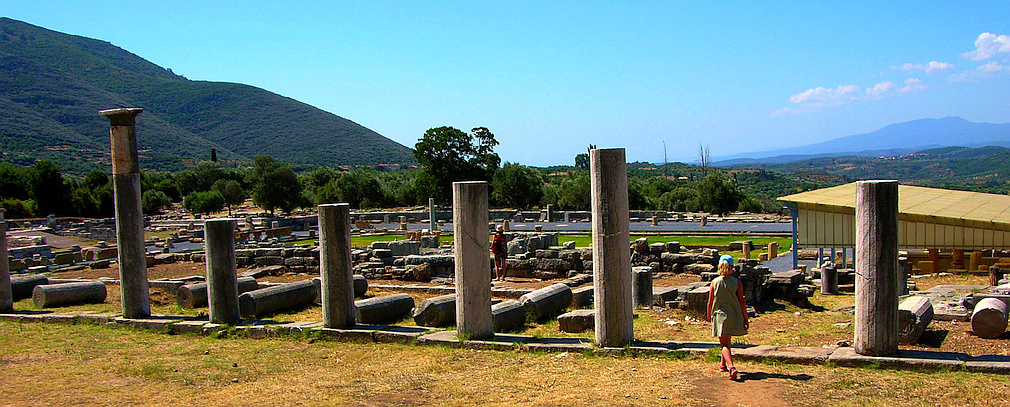
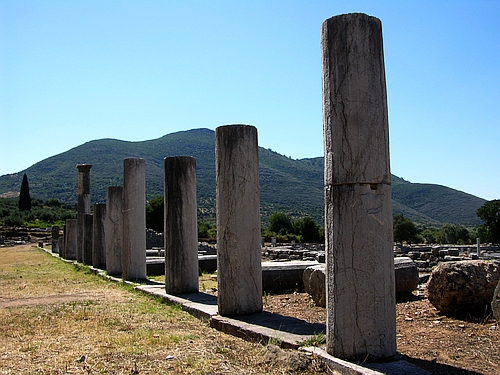
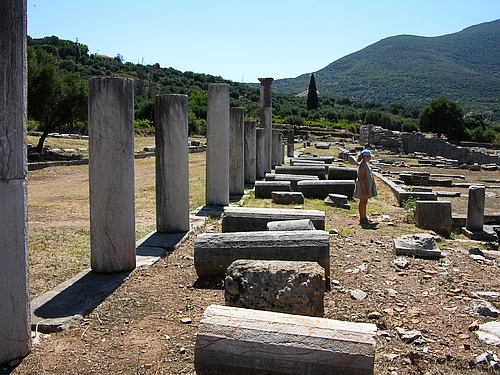
Below: The most conspicous and with its 72 x 67 m largest complex in ancient Messene is the work of an unknown architect of the 2nd century BC. Its central building is a temple dedicated to Asklepios and his daughter Hygieia. Cultic and artistic connections exist with the more famous Asklepieion of Epidaurus. Many columns of the surrounding stoa have been re-erected and give a vague impression of its former grandeur.