GREECE
 PELOPONNESE
KORINTHIA
ISTHMIA
CYCLOPEAN
PELOPONNESE
KORINTHIA
ISTHMIA
CYCLOPEAN

2025-01-03
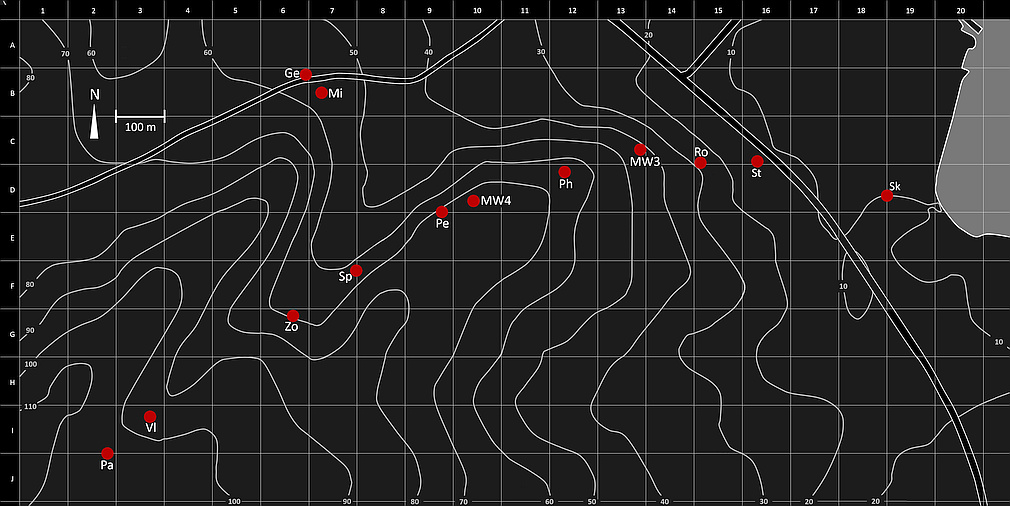
In 1966 and 1968 Oscar Broneer published his findings of 11 sections of a 'Cyclopean Wall' that he dates to the late Mycenaean period and interprets as the remains of a trans-Isthmian defensive wall, whether completeley spanning the isthmus or left unfinished. Since his publications several explanations have been put forward but many more questions remain unanswered. Do all these sections belong to the same building project? Do all sections present Cyclopean masonry? Are some of these sections not defensive but retaining walls? Why is there this strange loop of the wall (if it is one) to the Southwest? - Many questions that caught my interest and so on three days in September 2023 I set out to document as many of these sections as possible.
Section 'Sk'
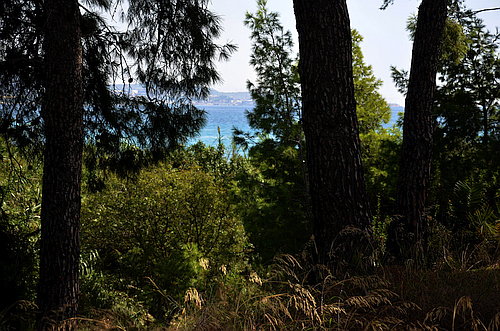
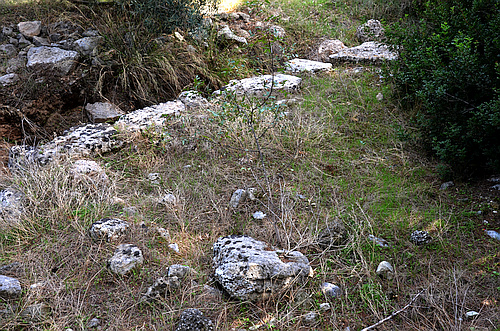
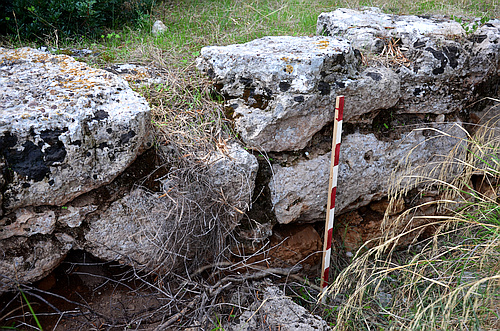
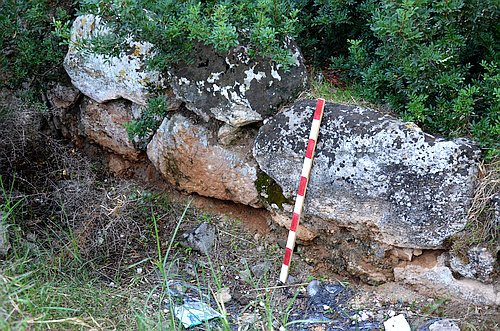
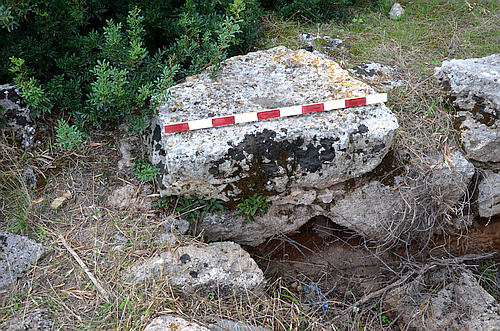
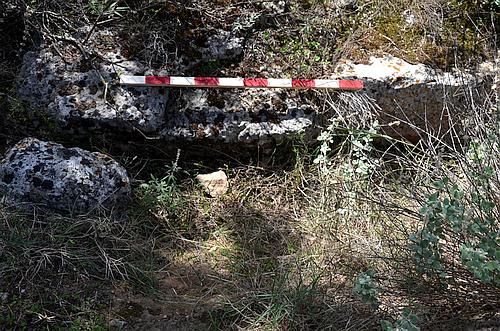
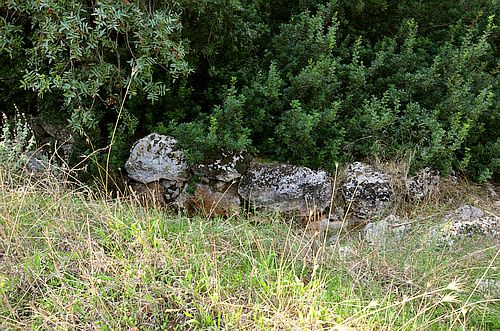
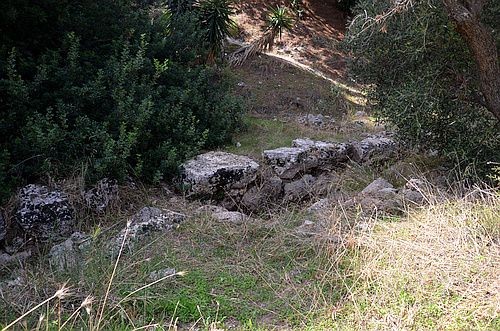
Above and below: Section 'Sk' is the most eastern part of the 'Cyclopean wall' some hundred meters from the shore of the Saronic Gulf. The visible northern face of the wall at the bottom of a slope consists of three layers of large irregular blocks of stone.
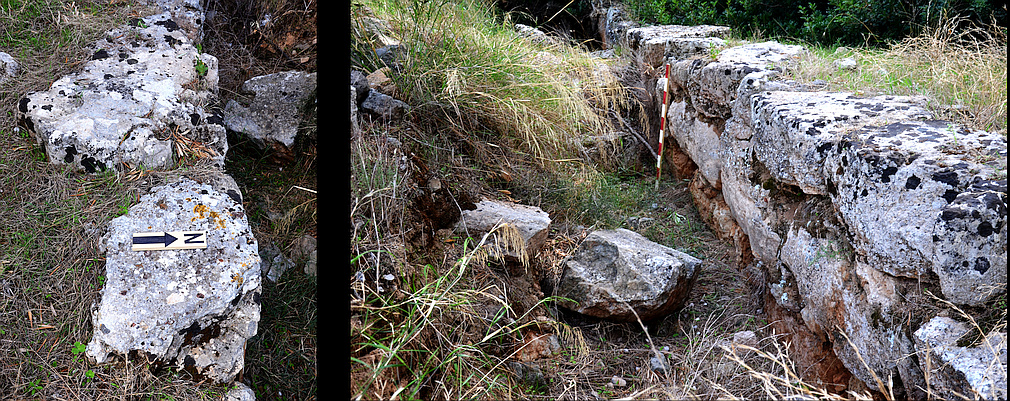
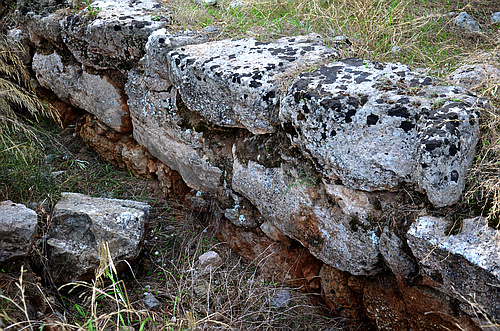
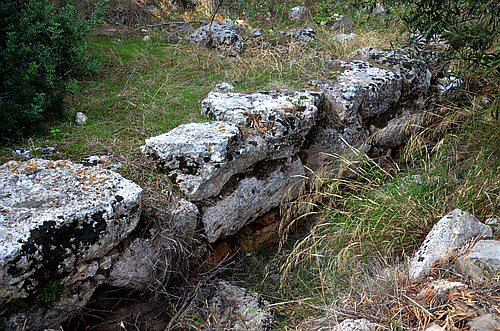
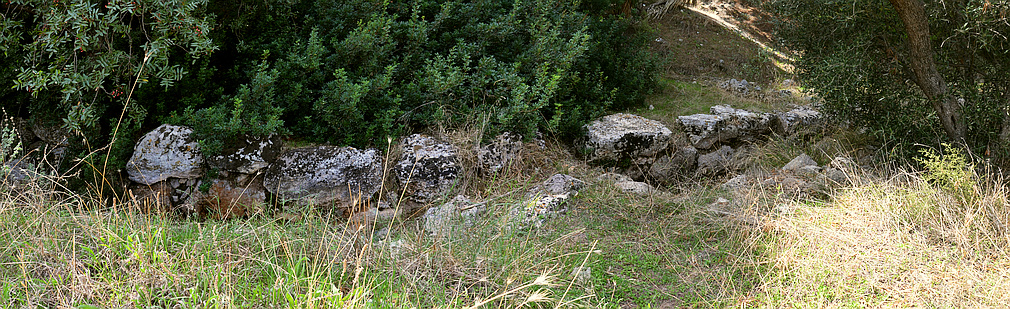
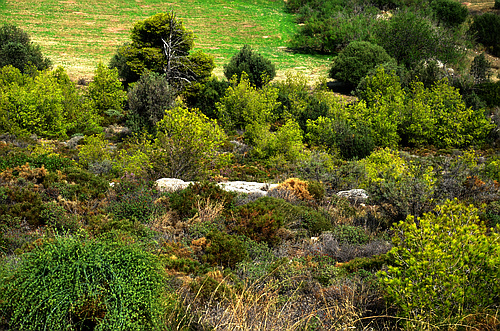
Above: panoramic view of the section 'Sk'. - Below: Trying to locate section 'Ro' only brought me to a part of the Hexamilion on Mytikas ridge. Proceeding south to section 'Ph' the dense vegetation impeded further approach. So here are only views down the slope with the valley of the later stadium beyond.
Section 'Ph'

Section 'Pe'
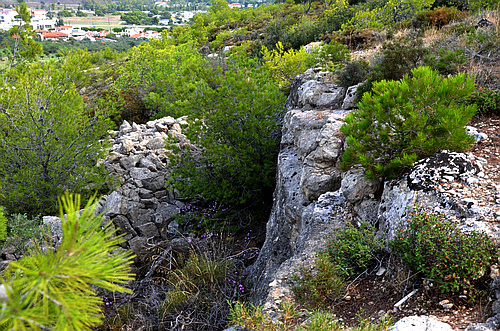
Next comes section 'Pe'. Near the top of the ridge I only found an irrelevant heap of stones (left), which are certainly not part of the Cyclopean wall and very probably don't lie on top of it. I assume section 'Pe' to lie a little further down the hill.
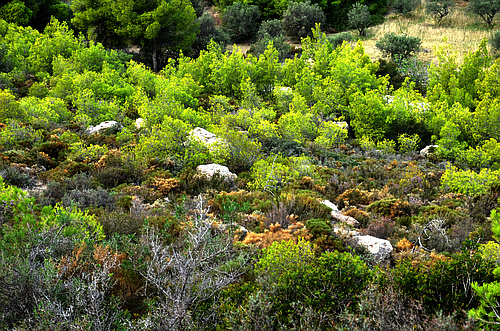
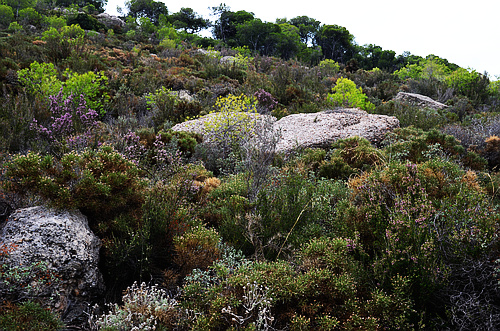
Due to the difficulty of the terrain with a dense vegetation of thorny bushes and the chance to meet one of the dangerous snakes I could then only take a photograph looking downhill (below left) and another one uphill from the road below (photograph below).
Unfortunately I don't find anything looking like the Cyclopean Wall in these views, just boulders distributed over the hillside.