GREECE
 PELOPONNESE
ELEIA
OLYMPIA
SANCTUARY
PELOPONNESE
ELEIA
OLYMPIA
SANCTUARY

2024-12-20
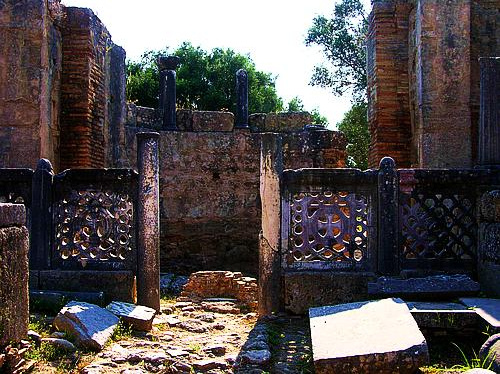
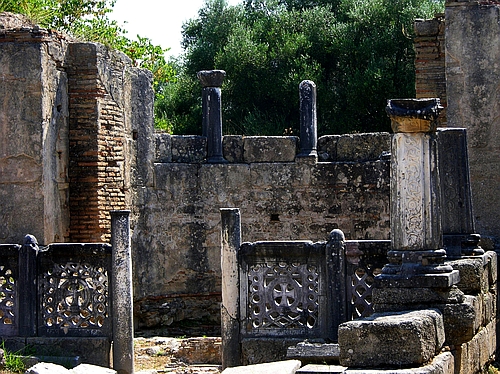
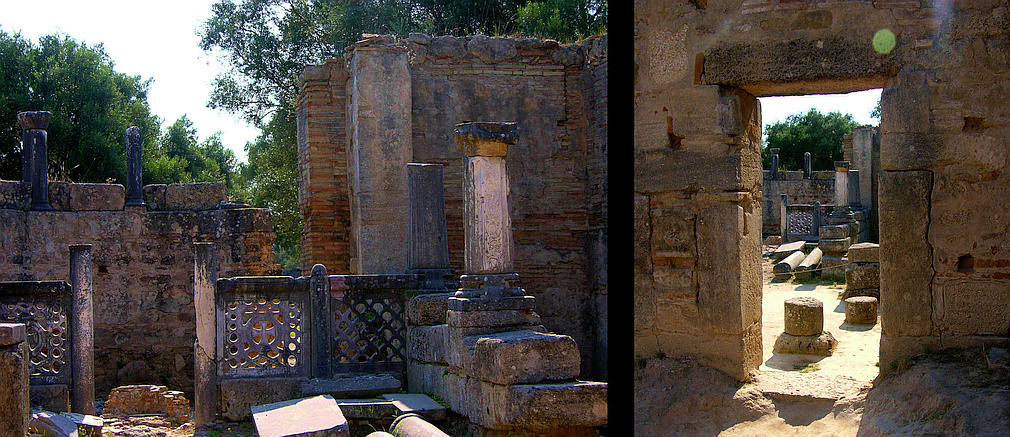
Above and below: We now come to an elongated building (15 x 32 m) that appears to the modern visitor mainly as the three-aisled basilica, into which it was transformed in the 5th century AD. Originally, this was none other than the workshop of Phidias, erected around 430 BC, and described by Pausanias. Archaeologically this has been confirmed by the discovery of tools and terracotta moulds used by the sculptor, and finally in 1958 by the find of a cup bearing Phidias' name. The building has the same measurements as the cella of the temple of Zeus, probably also a similar internal structure. It was here that Phidias manufactured the great chryselephantine statue of Zeus, seated on his throne as ruler of the world. On three platforms Phidias and his men worked on the statue, with its height of 13.3 m even taller than the cult statue of Athena in the Parthenon. It was then transferred to the temple and admired as one of the Seven Wonders of the World.
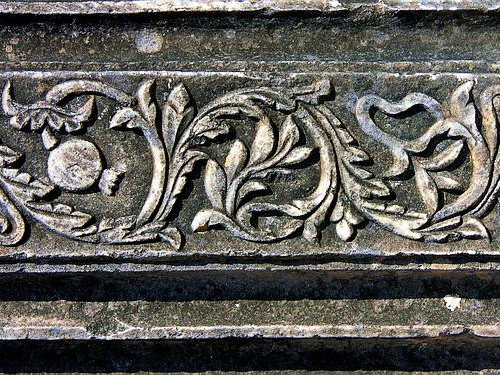
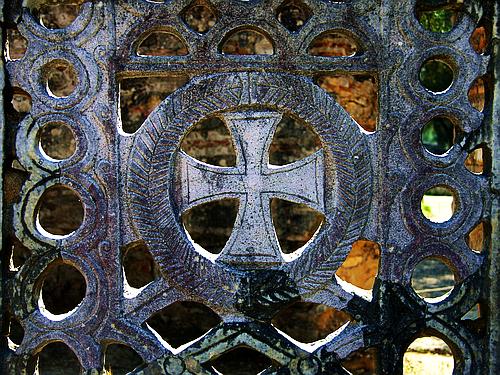
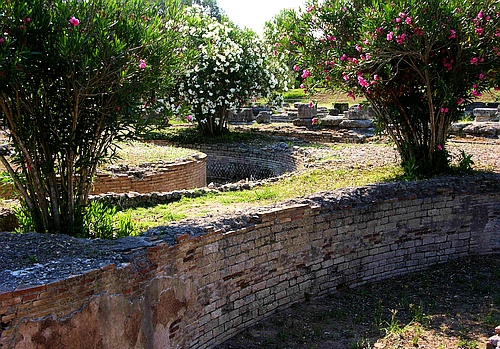
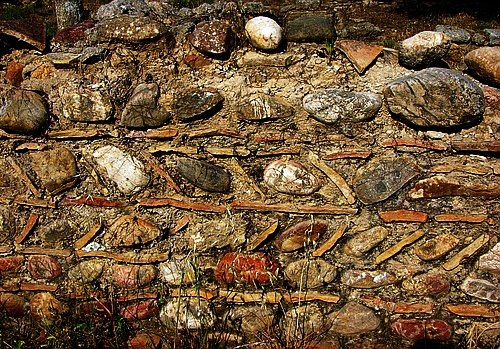
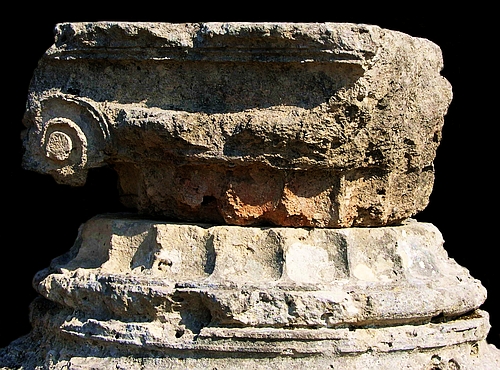
Above left: Arched watercourse as part of the Leonidaion, built around 330 BC by Leonidas of Naxos. It was a luxurious guest-house where only the officials and VIPs stayed - normal visitors of the Olympic Games slept in the woods surrounding the site. Its Ionic collonade and a lavishly layed out garden emphasized its distinguished noblesse. - Above right: Interesting decoration of a Roman wall. - Below: Column capitals.
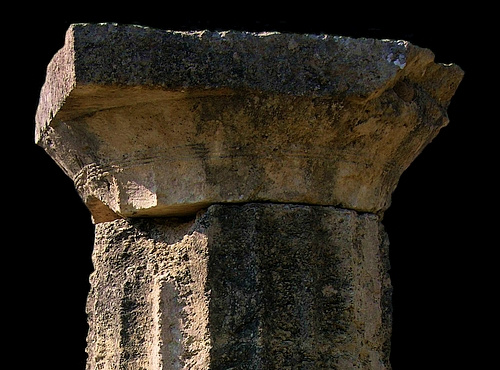
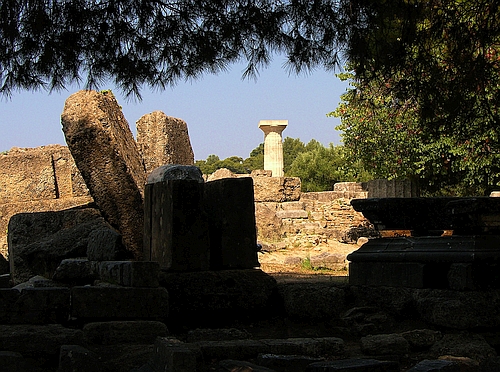
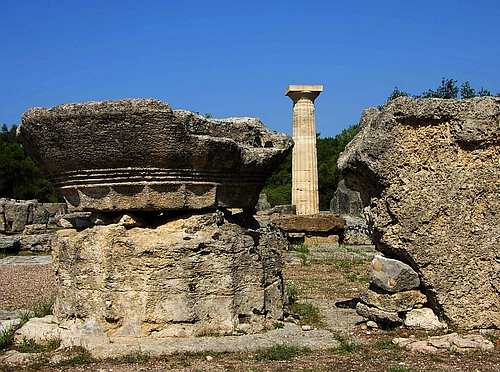
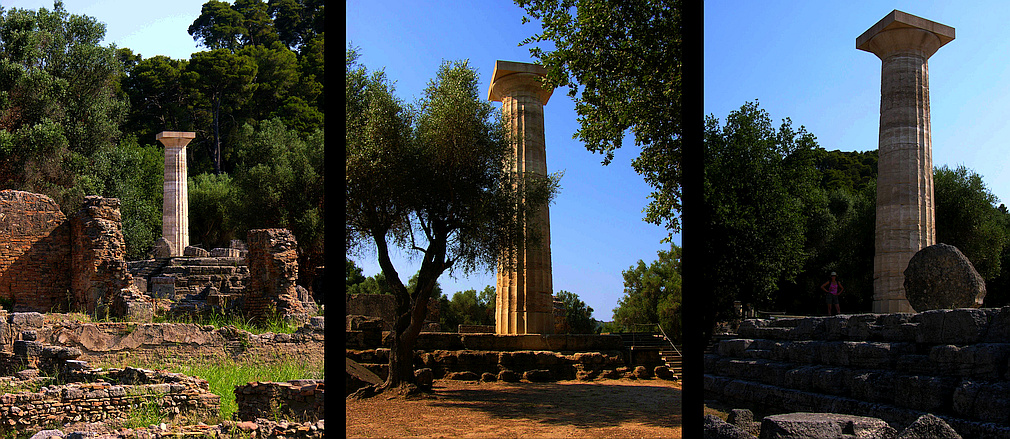
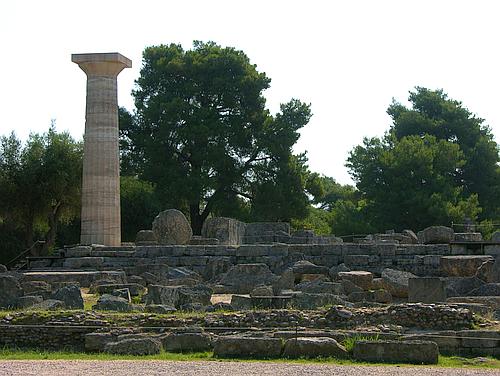
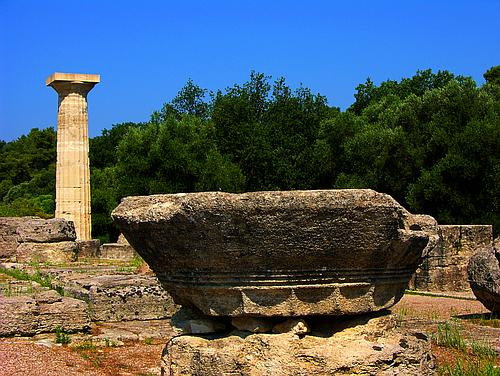
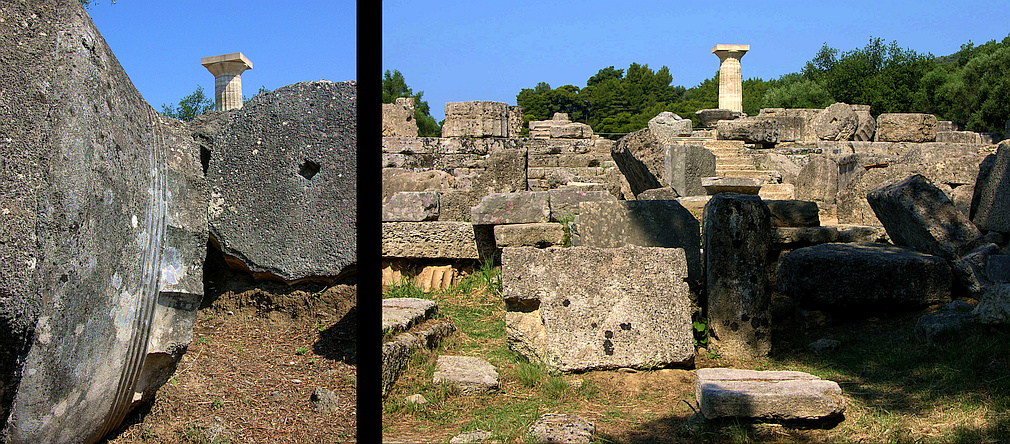
We now enter the actual altis ("sacred grove") - the sacred precinct of Zeus - which was also in Classical times only surrounded by a low wall. Dominating the altis is the monumental temple of Zeus with really imposing dimensions (crepidoma: 64 x 28 m), fit for the father of the Olympian Gods. It was built in 470-456 BC as Doric peripteral temple with one re-erected column standing on a crepidoma of three high steps.