GREECE
 PELOPONNESE
ARGOLIS
MYCENAE
ACROPOLIS
PELOPONNESE
ARGOLIS
MYCENAE
ACROPOLIS

2024-12-02
Grave Circle A
Passing the Lion Gate, you see "Grave Circle A" on the right, the burial place of a royal family. It is enclosed with a double ring of upright stone slabs with a height of 90-150 cm, forming a circle of 27 m in diameter. Within this circle are six shaft, cut 7.50 m deep into the rock. When Heinrich Schliemann made the first excavations here in 1874-76, he found 19 skeletons (of eight men, nine women, and two children), accompanied by extremely rich grave goods, one of the most spectacular archaeological discoveries ever. How this wealth was accumulated in the Mycenae of this time is still controversial.
The striking correspondence between the finds and Homer's description in the Iliad led Schliemann to believe that this was the burial place of Agamemnon and his companions. Today, the graves are dated to 1600-1500 BC, which is much earlier than the times of Agamemnon and the Trojan war. Homer obviously took historical events of this earlier period and incorporated them into the saga of the Iliad.
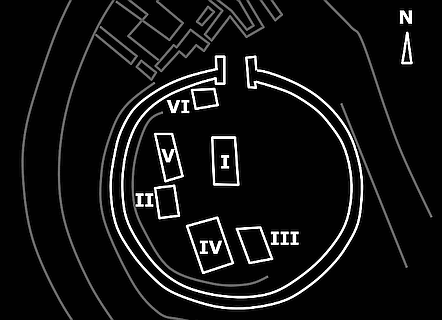
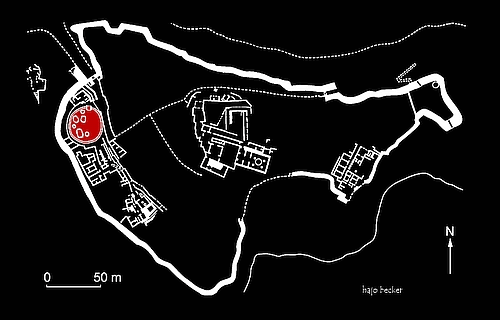
Left: Plan of Grave Circle A with the position of the six shaft graves I to VI. North of the opening - the entrance to the grave circle - are the remains of the granaries and beyond that (outside the plan) is the Lion Gate. Adjoining Grave Circle A on the east (right) is the Great Ramp. On the western side (left) of the grave circle is a massive retaining wall and still a little further west the thick outer wall of the acropolis.
Below: Panoramic views of Grave Circle A.
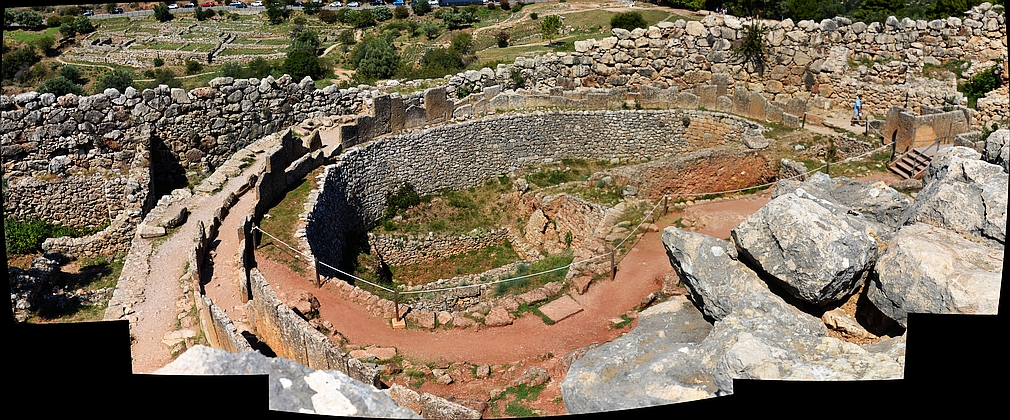
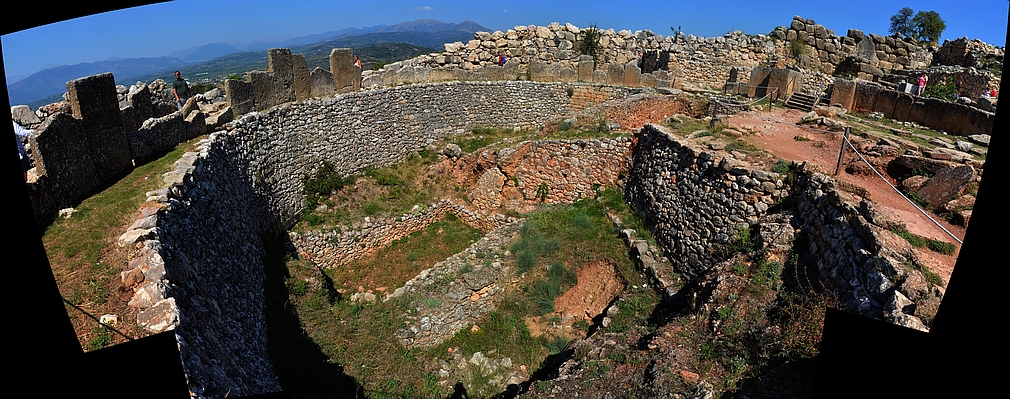
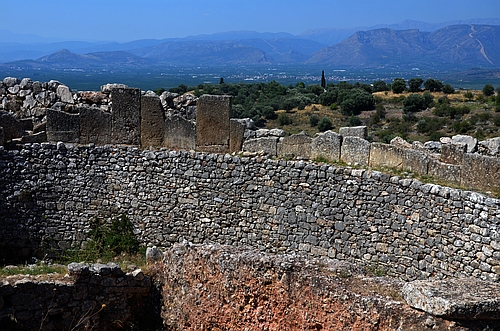
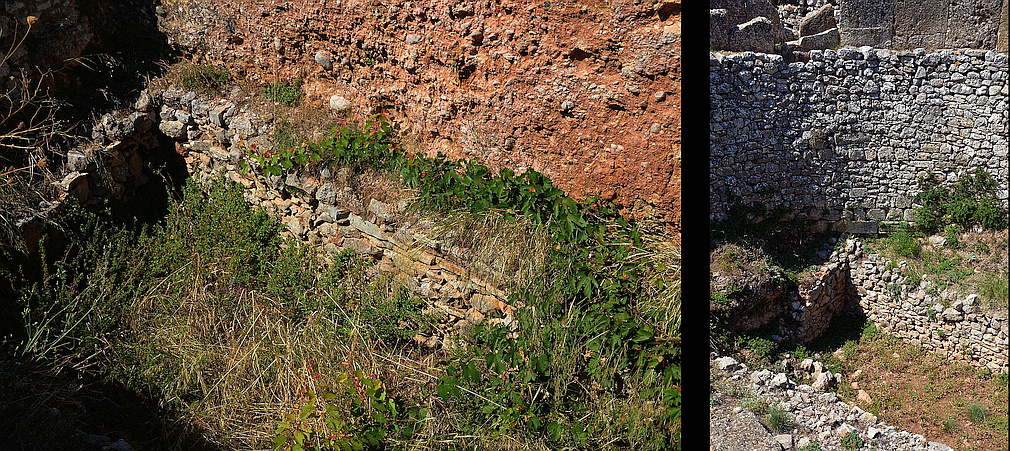
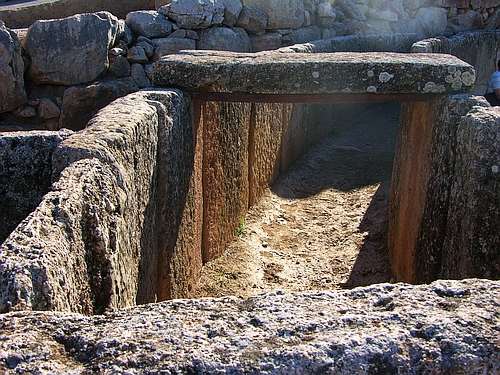
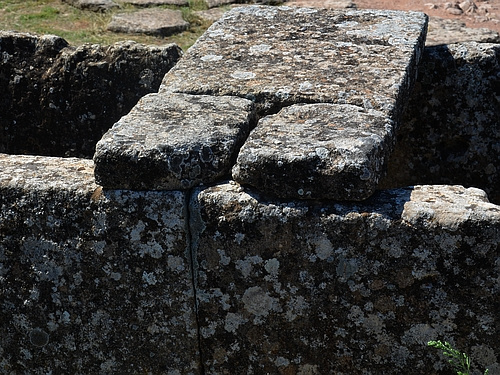
The space between the double ring of upright slabs of Grave Circle A was originally filled with rubble, the top was covered with more slabs - preserved only in places.
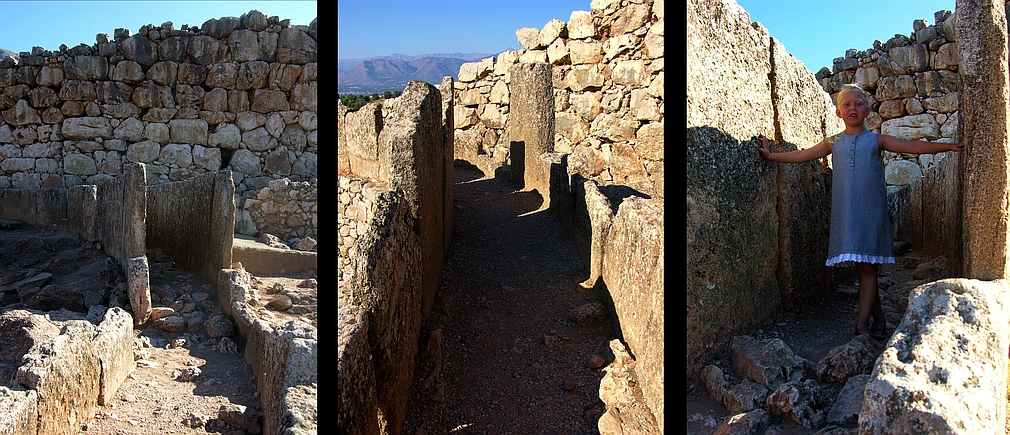
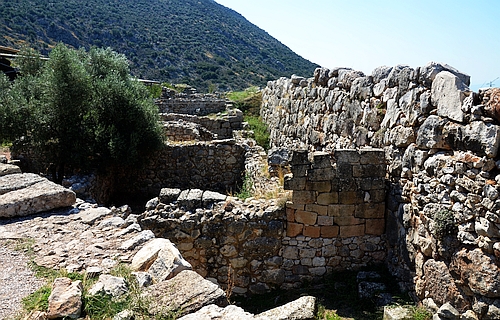
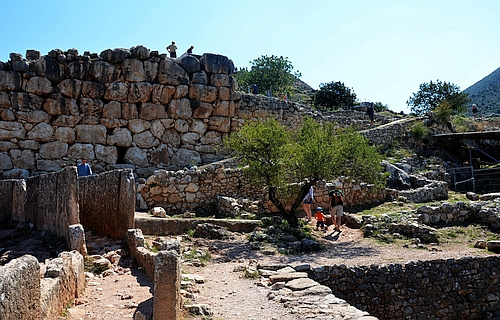
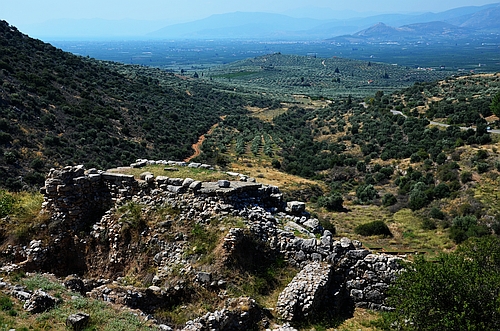
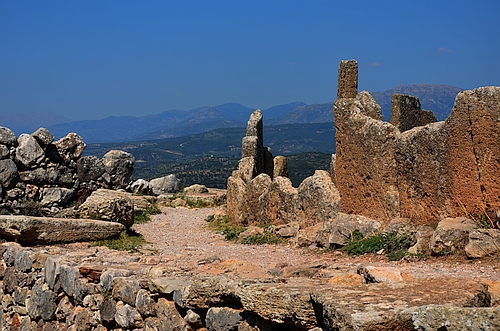
Above left: Looking East from Grave Circle A. - Above right: part of Grave Circle A in front of the Great Ramp. - Below left: The wall next to Grave Circle A backing the Great Ramp. - Below right: As the path winds up from the Great Ramp to the summit of the acropolis there are breathtaking views to remains of buildings on terraces below and across the green Argolid plain to the Gulf of Nafplion with the Larissa of Argos standing out in the distance.