
GREECE
 PELOPONNESE
ARGOLIS
MYCENAE
ACROPOLIS
PELOPONNESE
ARGOLIS
MYCENAE
ACROPOLIS

2024-12-02
the Lion Gate
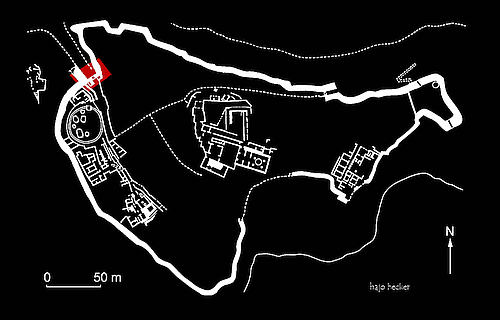
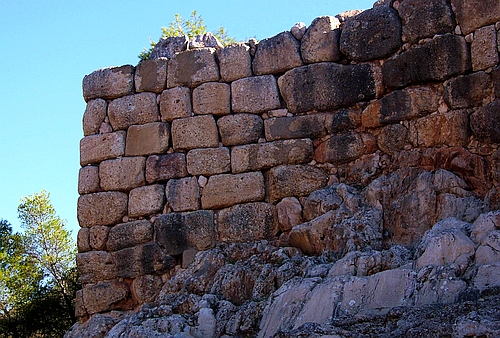
Approaching the world-famous Lion Gate, the main gate of the acropolis, built by the Mycenaeans to demonstrate royal power and to impress the visitor. It shows the classical Mycenaean setting for the defense of such an important point: On the left, massive walls tower high above anyone approaching; this is completed by a bastion on the right side, the vulnerable side not guarded by the shields of any attacking force.
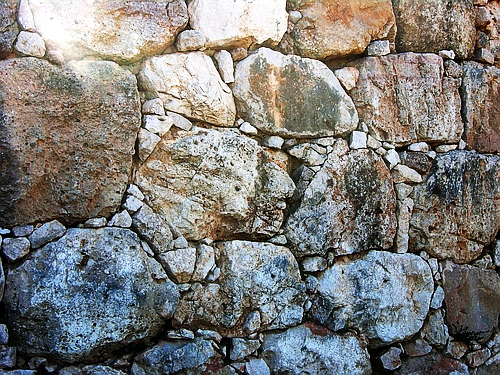
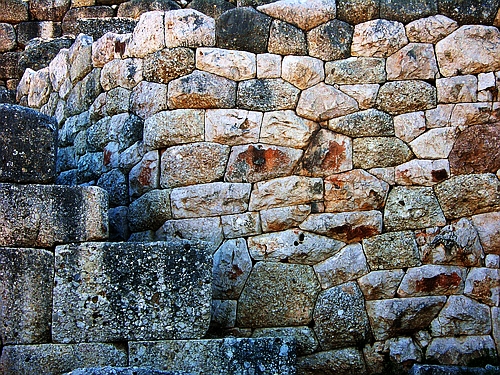
Above left: "Cyclopean wall" near the Lion Gate. - Above right: Ashlar blocks and polygonal wall near the Lion Gate. - Below: The Lion Gate, constructed in ca. 1250 BC, has two monolithic posts (height = 3.20 m), slightly inclined, leaving an opening of 3.10 m width at the bottom and 2.90 m at the top.
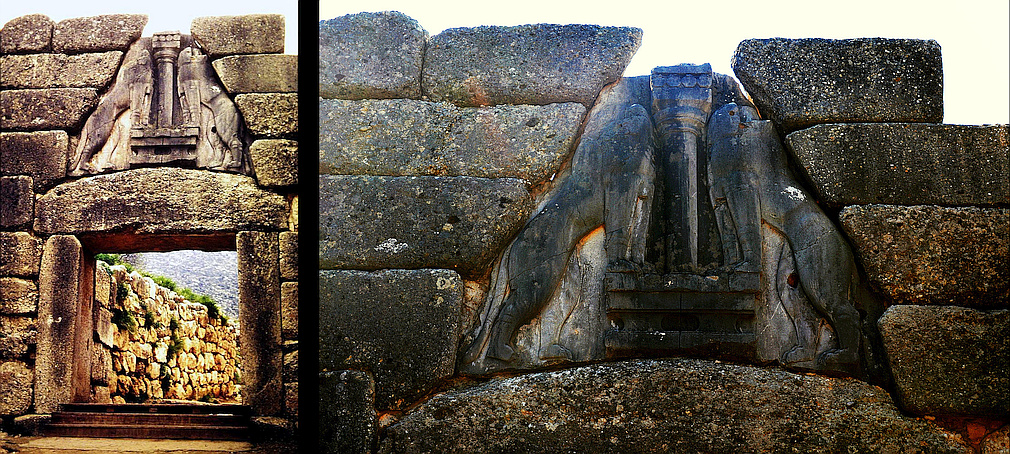
The relief triangle above the lintel is filled with a triangular slab of grey limestone with the famed relief of two heraldic lions (more likely, lionesses), the oldest monumental sculpture in Europe. The lions stand on what appears to be an altar, between them a Minoan column (tapering downwards). The heads of the lions have disappeared (Heinrich Schliemann, referring to the straight cutting and the presence of bolt-holes, assumed that they were separate pieces, perhaps made of bronze). It is a forward-looking architecture - an Egyptian inheritance - ultimately Neolithic, the pathetic demonstration of power. - On the gateposts lies a massive lintel (4.60 m long, 2.00 m wide and 1 m high in the centre, less towards the sides, weighing 35 tons) in the same manner as in the tholos tombs.
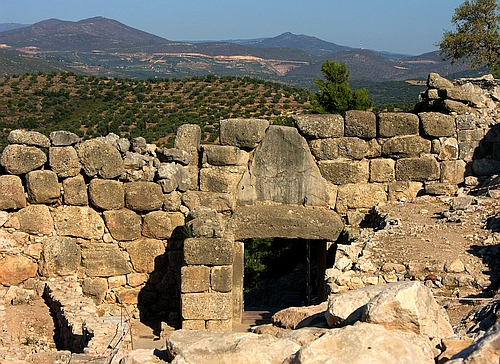
Left: A view to the Lion Gate from inside the acropolis, seldom photographed.
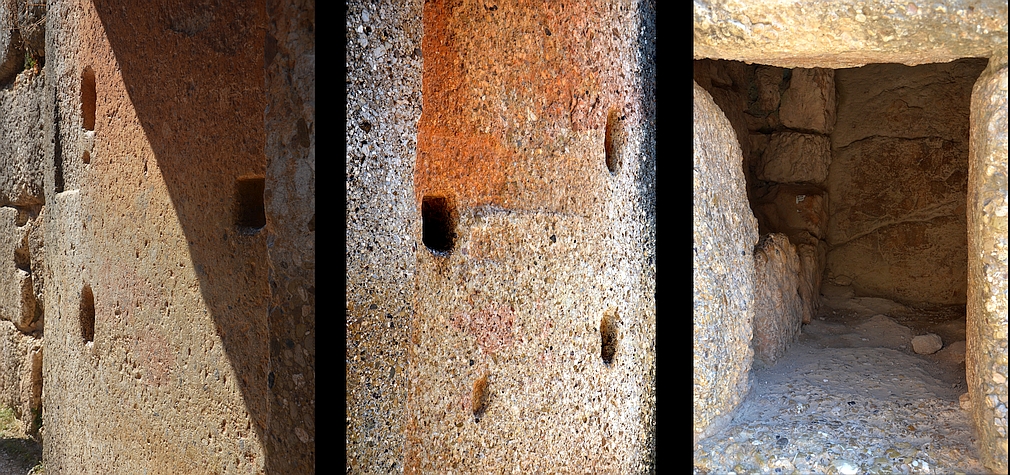

Above: Inside the gateway, pivot-holes can be seen for the double doors and large sockets on the sides for securing the closed doors with a wooden beam. - Above right: A small chamber just inside the Lion Gate, perhaps for the guards (although it appears very small to me).
