
GREECE
 PELOPONNESE
ARGOLIS
MYCENAE
ACROPOLIS
PELOPONNESE
ARGOLIS
MYCENAE
ACROPOLIS

2024-12-02
the Walls
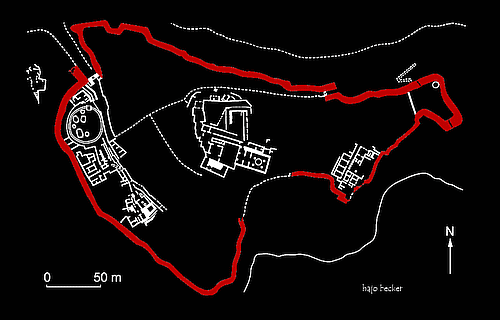
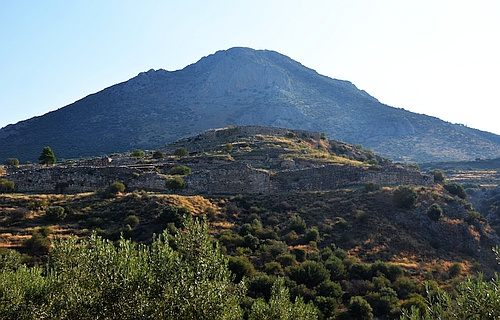
The acropolis of Mycenae occupies the area of a hilltop between two deep ravines, the Kokoretsa and the Khavos. In three building phases (1350, 1250 and 1225 BC) it was enclosed by a massive wall, still one of the most impressive fortifications, comparable only to the walls of Tiryns. Except for a small gap in the South, where the steepness of the hill gives enough natural defense, the whole length of the wall is preserved.
The wall of Mycenae's acropolis is preserved up to a height of 4.5-11 m (in the Southwest up to 17 m) which is impressive enough but considerably less than in Mycenaean times. The thickness of the wall generally varies between 3 and 7 m (on some places in the North and Southeast even 10-14 m).
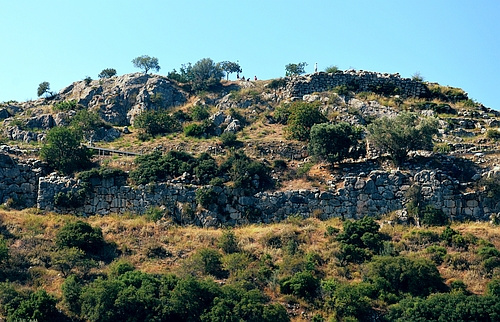
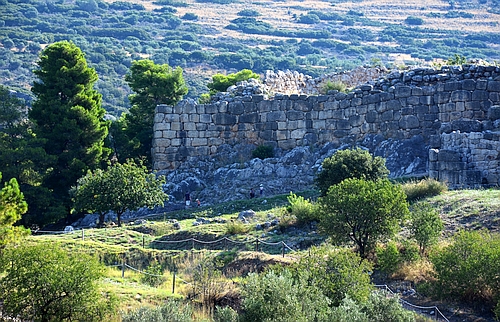

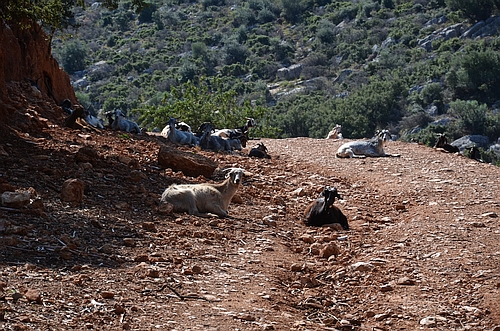
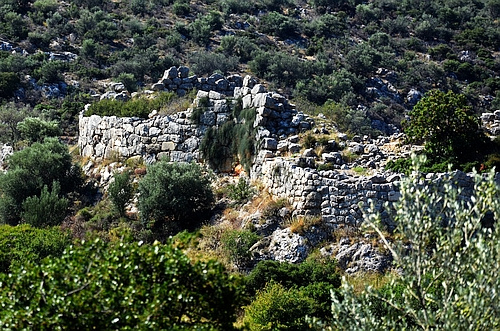
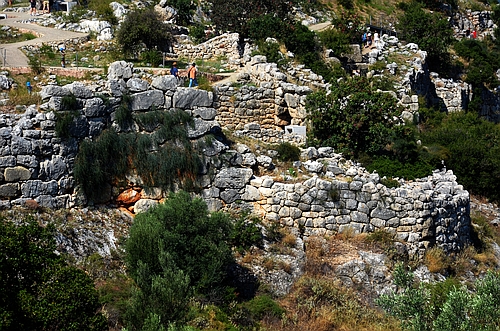
Above: The acropolis from the West. - The usual visitor sees the acropolis of Mycenae only from the South. But there is an inconspicuous road (below left) - small, but partly asphalted - that leads around the western side of the acropolis up to the foothills of the mountains north of Mycenae from where there are spectacular views of the citadel - hardly ever seen by any of the numerous tourists.
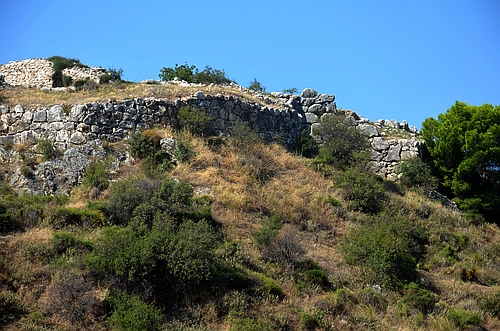
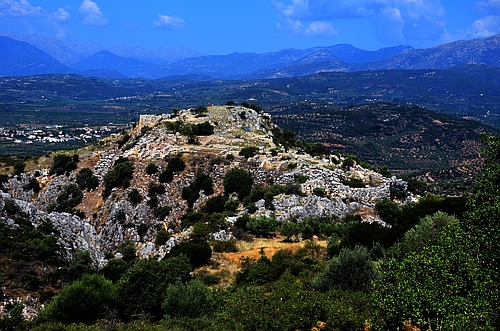
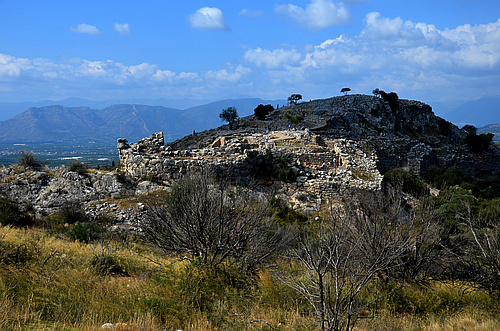
Above left: A rare sight, the acropolis from the North and the fertile valley beyond. - Above right and below: More views of the seldom seen North side of the acropolis. - These gigantic walls make it clear that the acropolis of Mycenae never was the charming residence of the royal family, but the heavily armed capital of an empire ready for war.

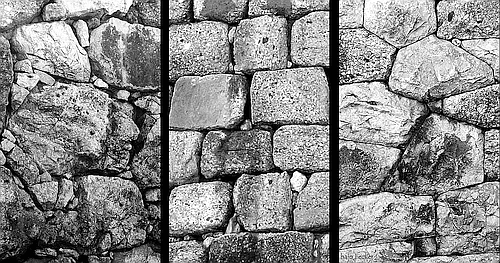
There are three distinct types of wall construction, and near the Lion Gate all of them can be discerned:
A. The "Cyclopean wall", similar to the ones in Tiryns, is made of large, irregular blocks of stone, more or less left in their original form.
B. The second type uses hammer-dressed square blocks, the ashlar masonry, especially in the vicinity of the Lion Gate and around the North Gate.
C. A third type, the polygonal wall, was used in the Hellenistic period (third century BC), when polygonal blocks of breccia were precisely jointed.
