GREECE
 PELOPONNESE
ARGOLIS
LERNA
PELOPONNESE
ARGOLIS
LERNA

2024-12-01
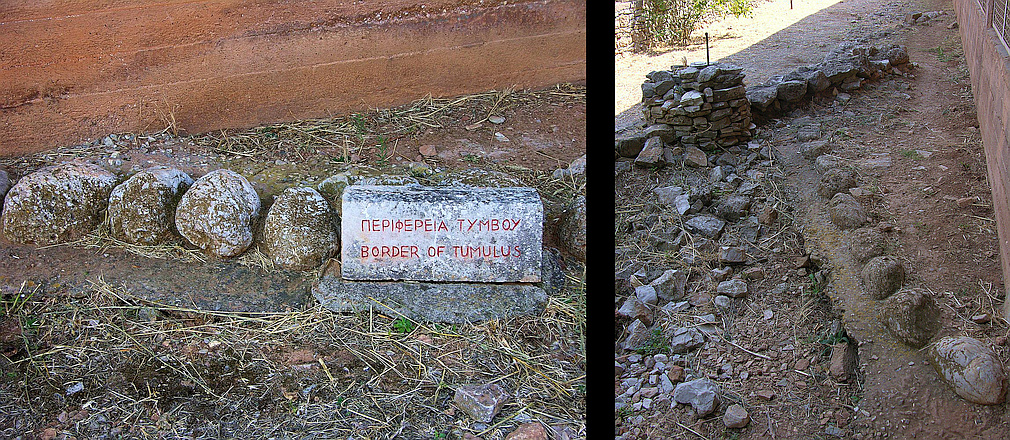
Above: After the destruction of the House of Tiles (ca. 2200 BC), the area where it originally stood was encircled with stones - the "border of tumulus" - which seems to indicate that the original people remained and considered this building as something special, probably sacred. This could of course contradict the assumption that a new population had taken over Lerna by this time. - Caskey on the other side: "One is struck by the burning of the House of the Tiles, by the quite extraordinary respect paid to its ruins, and by the wholly different character of the settlement that succeeded. [...] These factors surely imply deliberate warlike action, and a reoccupation of the site by people of a different material culture."
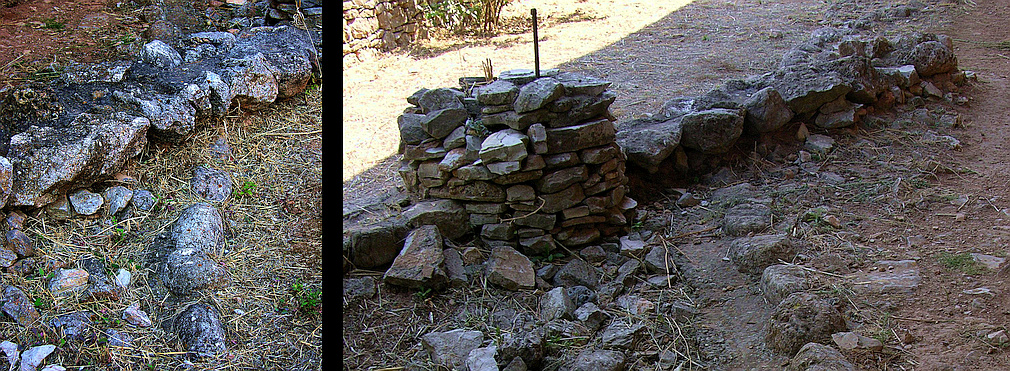
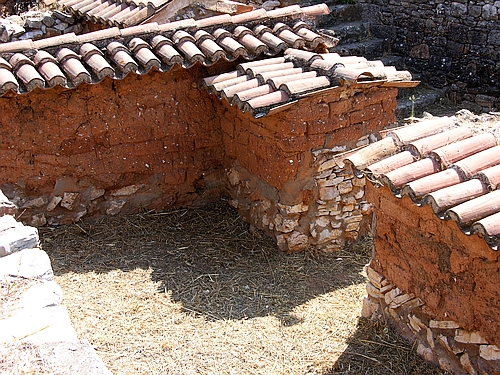
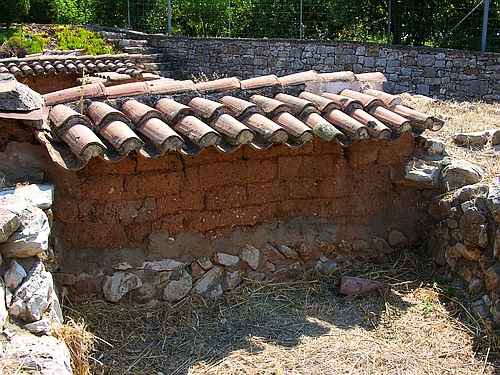
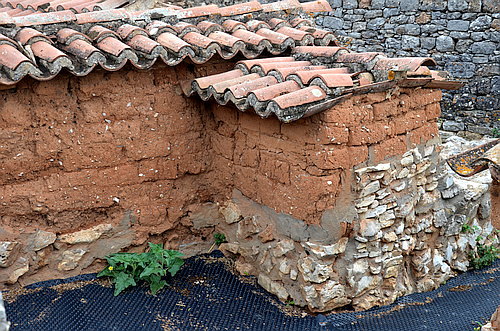
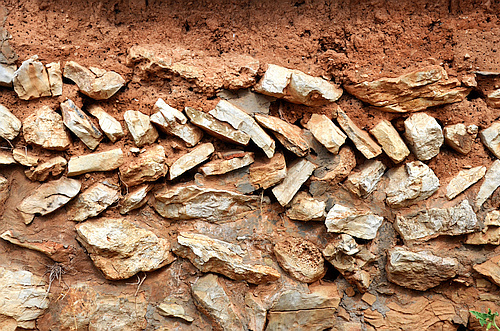
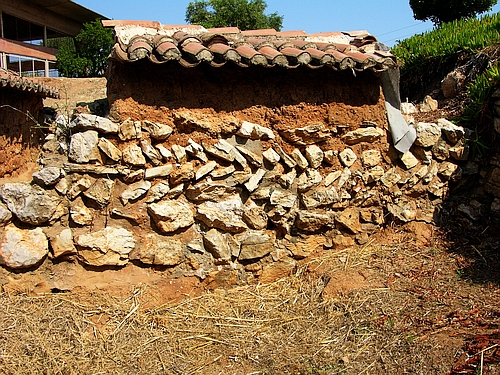
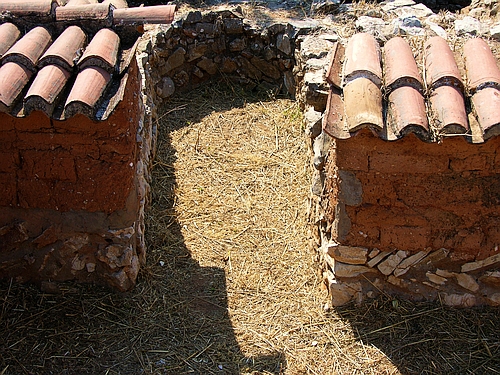
Above and below: Double fortification walls with towers of the Early Bronze Age, ca. 2500 BC, in the southern part of the excavated area. The lower part of the walls was made of large irregular stones, with unburnt bricks above (the tiles on top are of course modern and serve the preservation).
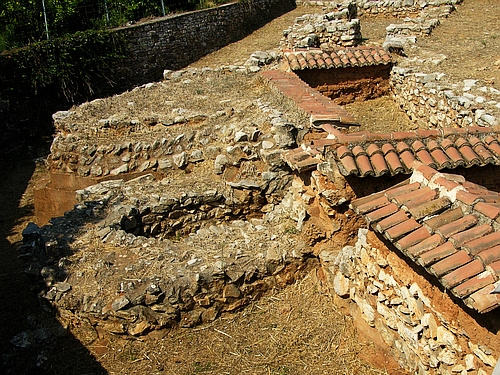
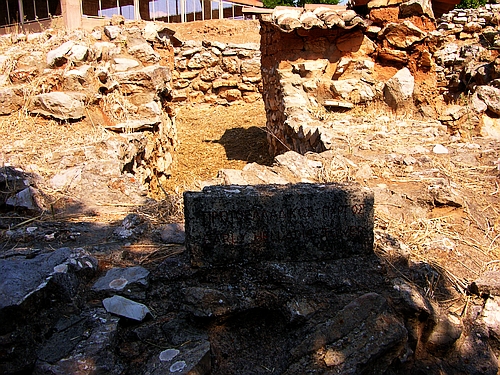
Above right and below: Apsidal buildings of the Early Bronze Age. The apsidal style is thought to have originated at Troy and other sites in Anatolia, in which case it might point to the entrance of a new population into Lerna.