GREECE
 PELOPONNESE
ARGOLIS
LERNA
PELOPONNESE
ARGOLIS
LERNA

2024-12-01
The archaeological site of Lerna, situated just south of modern Myloi on the western side of the Argolic Gulf opposite Nafplion, is one of the most important and best studied prehistoric sites in Greece.
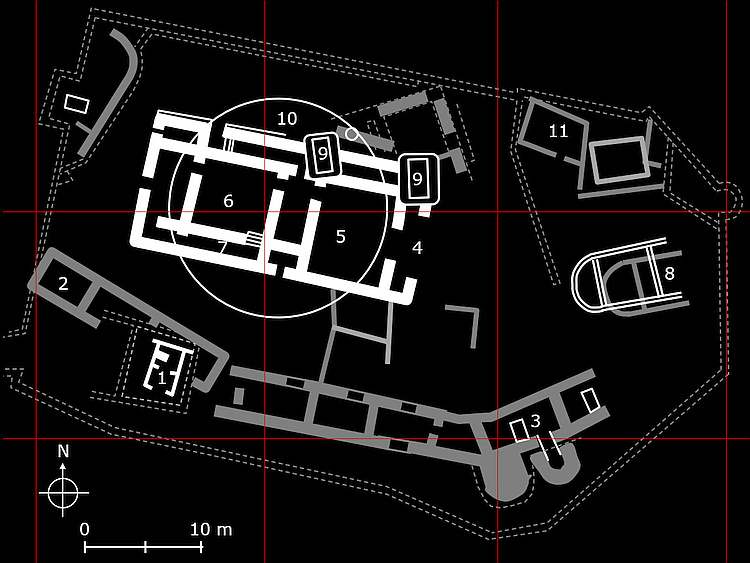
Above: Plan of prehistoric Lerna with the "House of Tiles" shown in white. - 1. Neolithic house, 2. Early Helladic houses, 3. Early Helladic fortifications, 4. Entrance / propylon, 5. Throne room, 6. Second room, 7. Outer corridor / staircase, 8. Apsidal houses, 9. Mycenaean shaft graves, 10. Tumulus, 11. Storage room with pithoi.
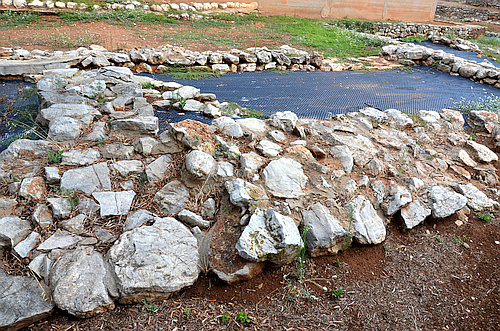
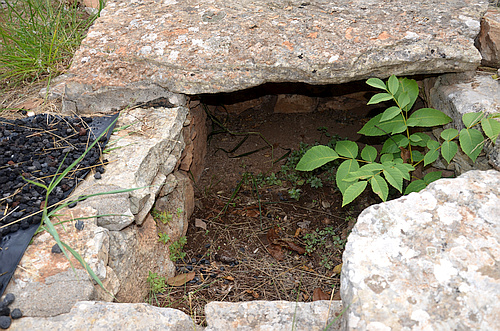
Below: Remains of an Early Helladic building and of a grave of this period.
The deeper levels of the excavated area in Lerna contained remains of a settlement inhabited for a long time in the Neolithic period, from ca. 5500 to ca. 3500 BC.
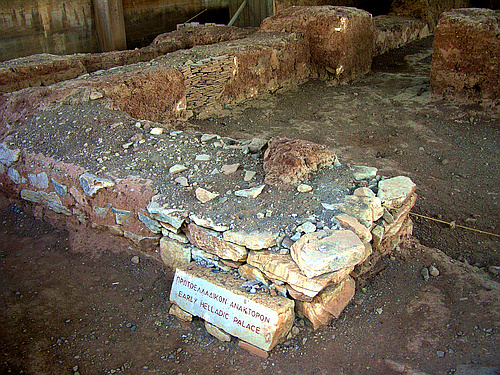
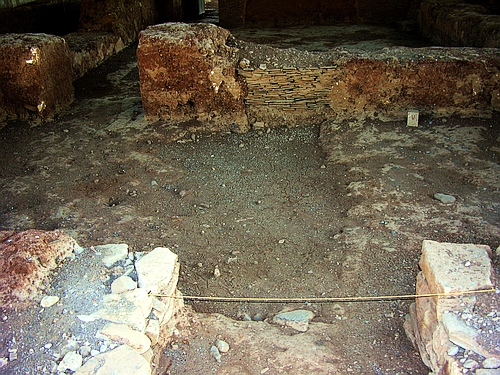
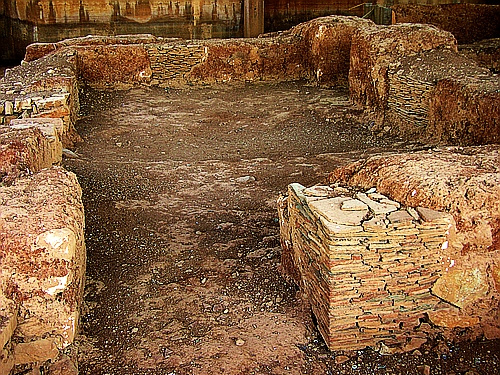
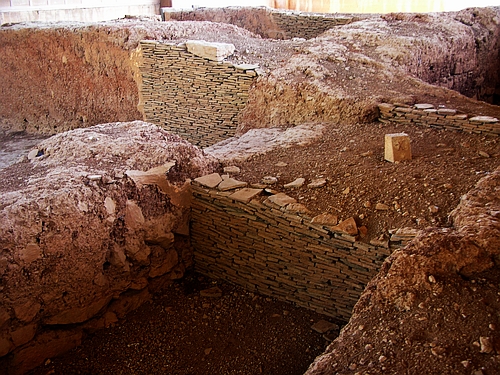
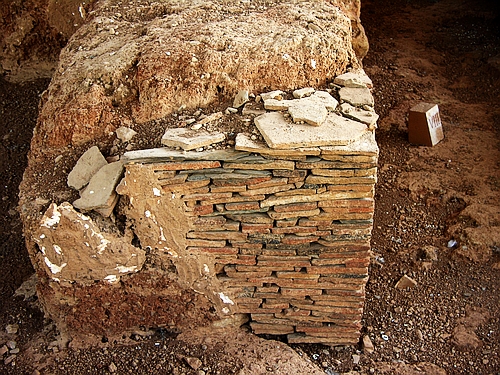
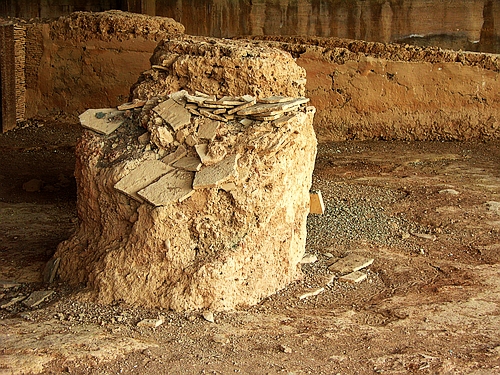
Abandoned during the Late Neolithic period, the site was reoccupied since ca. 2500 BC and flourished particularly in this period of the Early Bronze Age. The settlement was fortified at this time and a large building was erected: the "House of Tiles", so called because of the numerous clay roof-tiles found in its debris. Clay sealings and other artefacts found in its rooms imply intensive trade with other regions of the Aegean. Before the end of the Early Bronze Age (ca. 2200 BC) this building and the fortifications were destroyed by a catastrophic fire.
The settlement was again inhabited during the Middle Bronze Age, but during most of the Mycenaean period (1800-1250 BC) the mound was used mainly as a cemetery. Around 1250 BC the site was definitely abandoned.
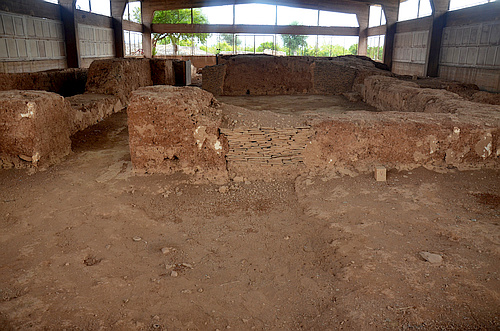
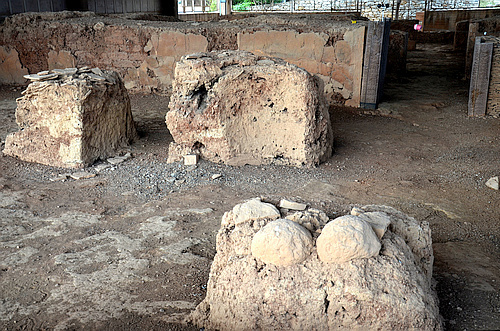
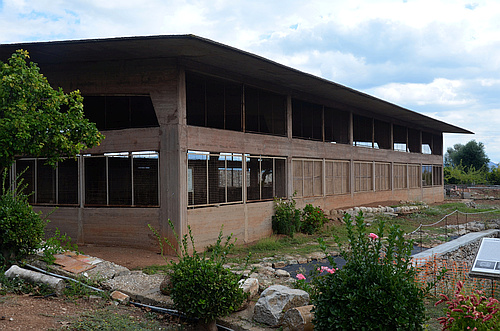
Above and below: The "House of Tiles" was a two-storeyed building measuring 12 x 25 m, sometimes called a palace. In this period a palace would probably function as a multi-purpose building, e.g. serving as a decision-making center and living quarters of the leaders or priests, as warehouse, and as temple.