GREECE
 PELOPONNESE
ARGOLIS
AVGOU MONASTERY
PELOPONNESE
ARGOLIS
AVGOU MONASTERY

2024-11-23
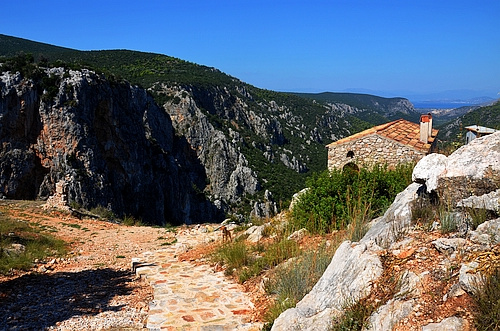
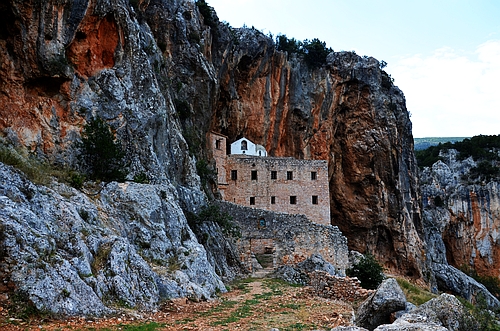
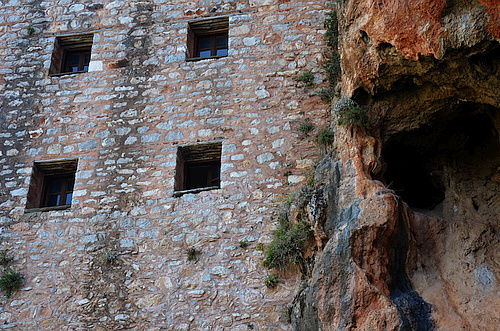
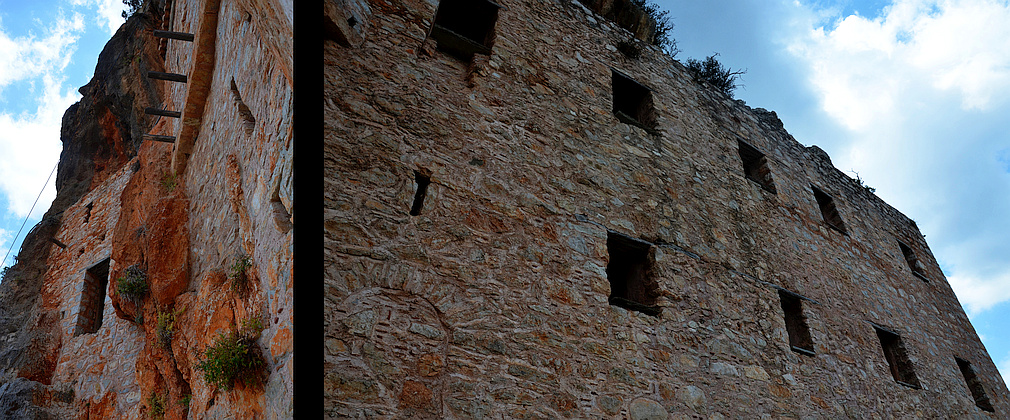
Passing an auxiliary building we finnaly arrive at the monastery that is said to have been founded in the 11th century. However, the fortress-like appearance may have only evolved as late as the 16th century. Characteristic are the narrow windows, the labyrinthic interior, and the loopholes through which hot oil could be poured onto assailants.
There are various legends about the foundation of the monastery. When the hermits, living in caves of the region, decided to form a community and started to build a church in another place their tools kept vanishing and reappeared at the present location of the monastery. This was of course interpreted as a divine choice of the appropriate place.


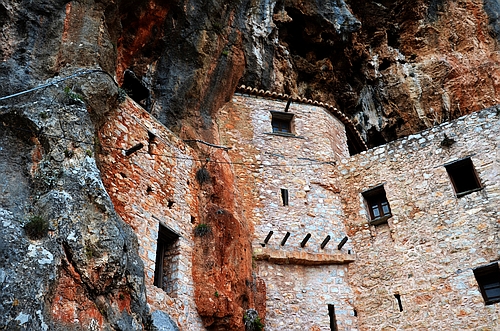

Towards the end of the 17th century Avgou monastery was the wealthiest of all monasteries in the Argolis with landholdings far extending the vicinity. At that time 16 monks lived here with as many servants. The decline began when the monks joined the Greek War of Independence. Immediately after its beginning in 1821 the Turks hanged the then abbot of the monastery in Palamidi, and in 1825 they set the monastery aflame. In the course of the ecclesiastical reform of Bavarian reigned Greece the monastery was finally closed in 1834 and abandoned.