GR
 PELOPONNESE
ARCADIA
ORCHOMENOS
ACROPOLIS
PELOPONNESE
ARCADIA
ORCHOMENOS
ACROPOLIS

2024-11-17
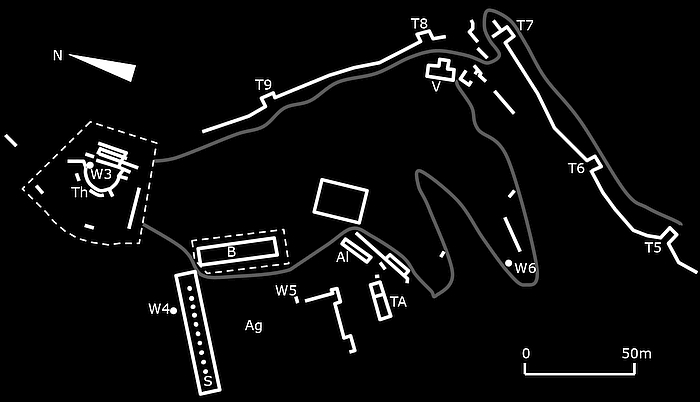
Plan above: Ag = Agora, Al = Altar, B = Bouleuterion (East Stoa), S = North
Stoa, TA = Temple of Artemis, Th = Theatre,
Tn = Tower number n, V = Visitors center, Wn = Well number
n.
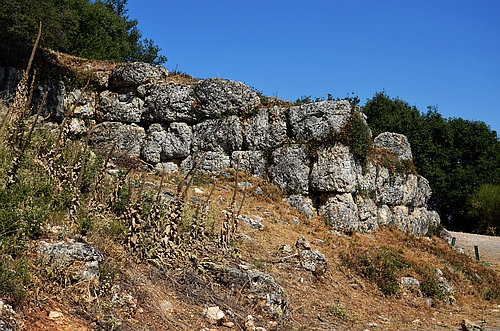
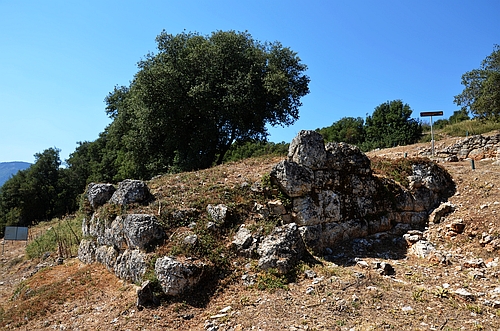
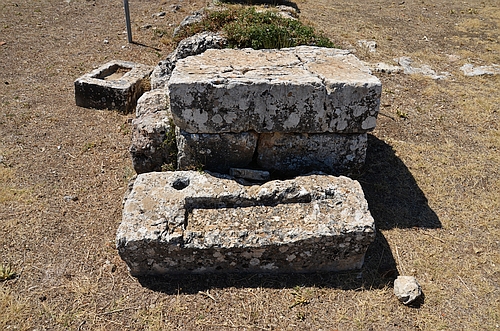
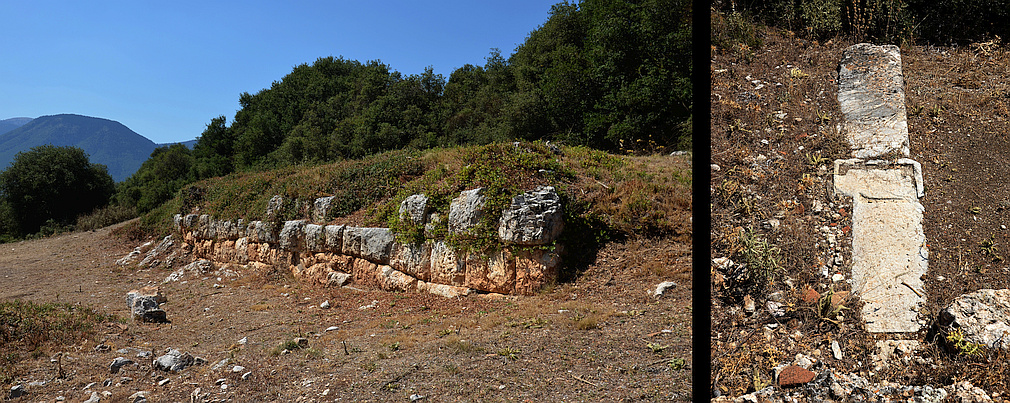
Above and below left: Parts of the mighty Hellenistic fortification wall with towers near the entrance to the archaeological site of the acropolis. - Below right: Marble threshold to a not specified building
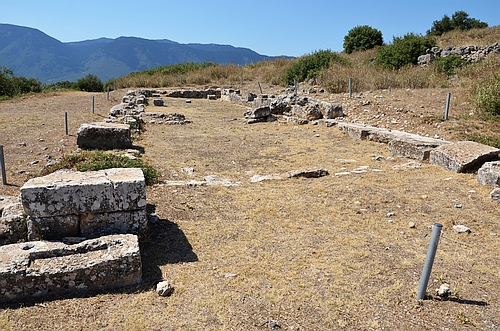
The very old city of Orchomenos appears in Linear B script as E-ko-me-no, and in Homer's Iliad its attribute is "rich in flocks". During the First and Second Messenian War (776-628 BC) Orchomenos was the seat of the kings of Arcadia, but with the end of the institution of kingship lost its significance. It was later an ally of Sparta, and in the Persian Wars participated with 120 soldiers in the battle of Thermopylae and with 600 in Plataea. In the second half of the 4th and early 3rd century BC a large building program took place, including most of the monuments seen today. During the 3rd century Orchomenos, due to its significant military strength and key geographical position, played an important role in the conflicts of this turbulent period.
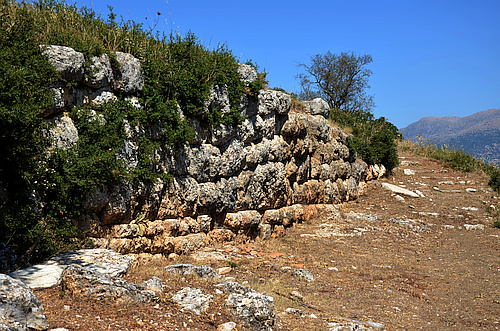
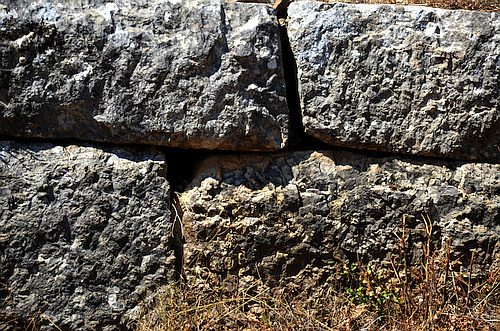
Above and below left: the steeply sloping terrain necessitates massive walls below the terrace of the temple of Artemis Mesopolitis.
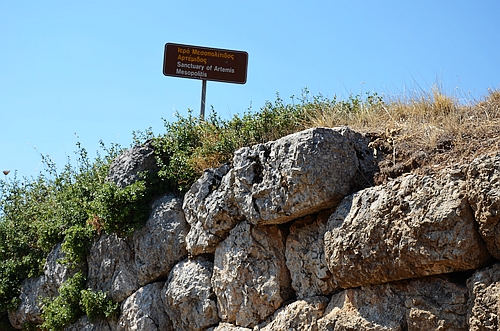
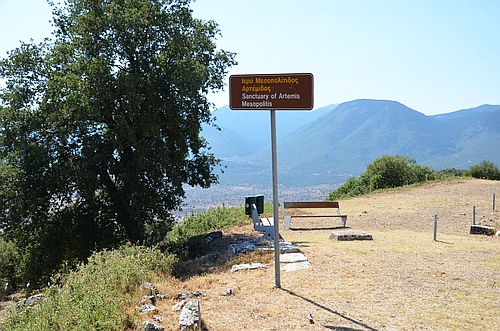
Below: In the sanctuary of Artemis Mesopolitis ("at the center of the polis") is a hekatompedon temple of the 4th century BC with pronaos and cella. It is only 6.5 x 20 m, whereas hekatompedon ("100 feet long") implies about 30 m. The temple's foundations were made of limestone, while the upper parts of the walls were of mudbricks. In front of the temple is an elongated rectangular altar (below right), also of the 4th century BC and preserved to a height of two limestone blocks.