GREECE
 MACEDONIA
PIERIA
DION
PARK
MACEDONIA
PIERIA
DION
PARK

2025-10-19
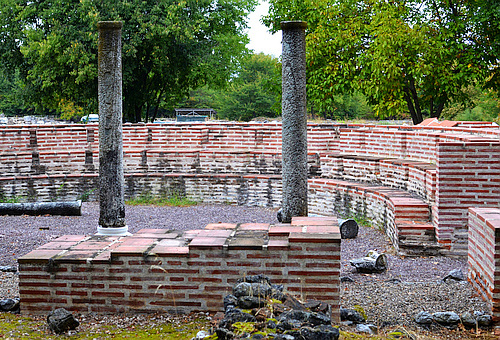
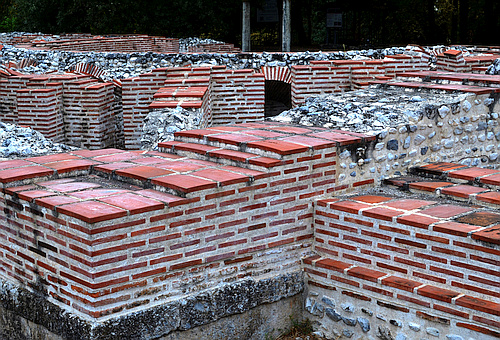
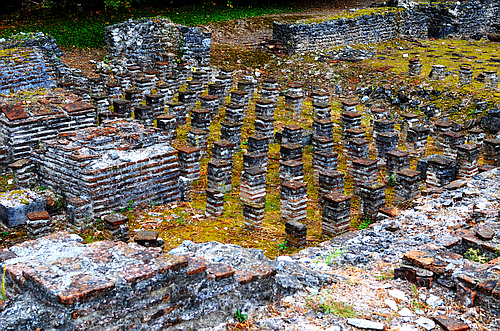
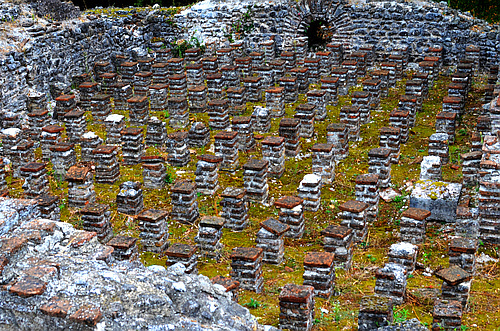
Great Roman baths: They were constructed in the last decade of the 2nd century AD and were in use until the second half of the 3rd century, when a powerful earthquake destroyed the building. They were part of a complex organized around an open court. It included the odeion, a small roofed theatre, and the public toilets along the central road. A narrow forecourt was the entrance to the baths at the east side of the building. It led to a spacious reception hall with mosaic floors, where portraits of eminent men from the local community were displayed. South of the entrance were the disrobing room and the quarters for the lukewarm and hot baths. The floor of the heated areas was set on a framework of short square columns arranged so as to create a basement space, the "hypocaust" (below). Hot air from fire burning in vaulted openings in the exterior walls circulated in to the hollow floor and through the double walls rose to the roof of the building. At the west side of the grand hall was a large pool for the cold bath, decorated with statues. The north wing, decorated with marble columns and mosaic floors, provided opportunities to relax and socially mix with other citizens. The eastern room of this wing was dedicated to the cult of the god Asklepios. There were found fragments of statues (now in the museum) representing Asklepios and his family: his wife Epione, his sons Machaon and Podaleirios, and his daughters Hygieia, Aigle, Panakeia, Akeso and Iaso. This group of sculptures was made at the end of the 2nd century AD in a Neo-Attic workshop. Their prototypes were works of the 4th century BC.
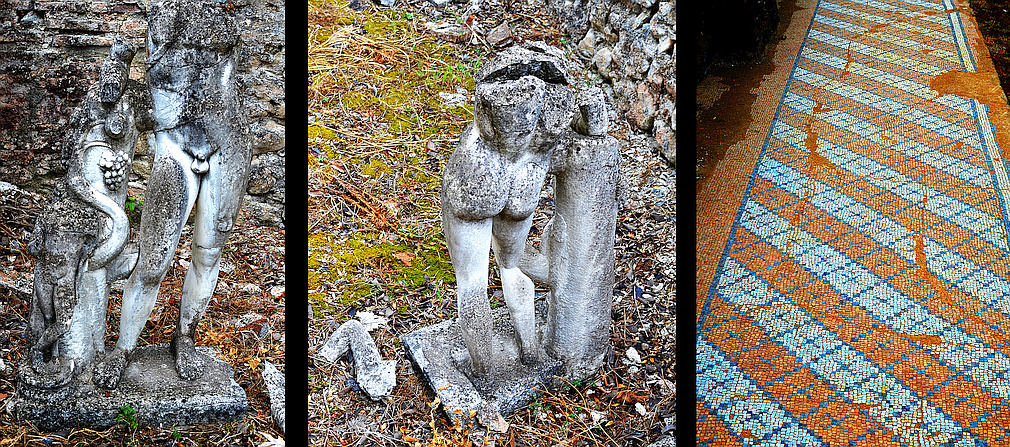
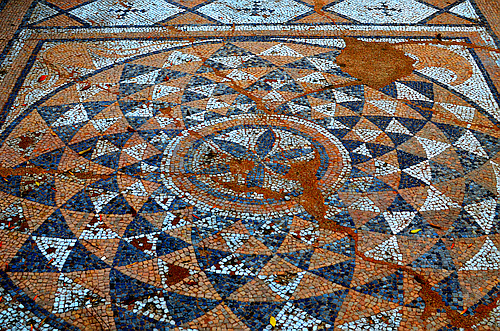
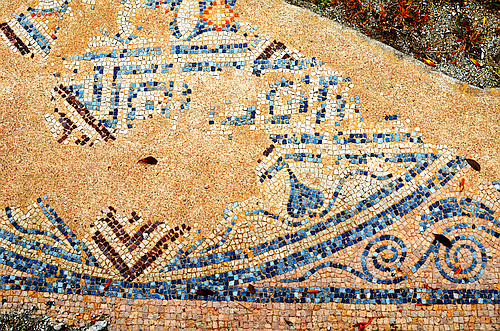
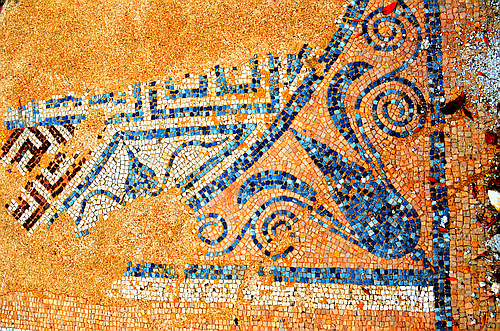
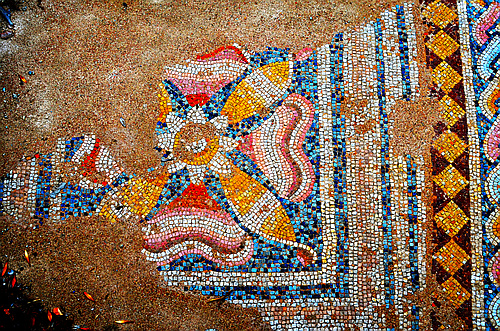
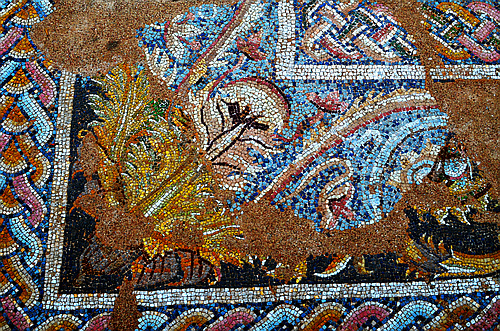
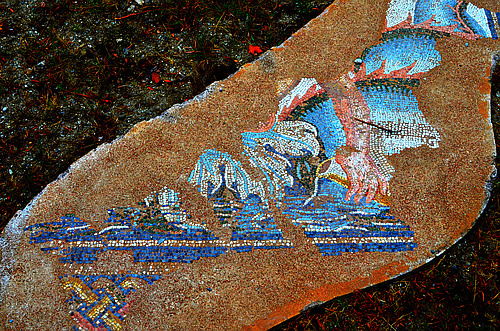
All of the site is full of beautiful mosaics.