GREECE
 CRETE
LASITHI
PALAIOKASTRO
CRETE
LASITHI
PALAIOKASTRO

2024-10-28
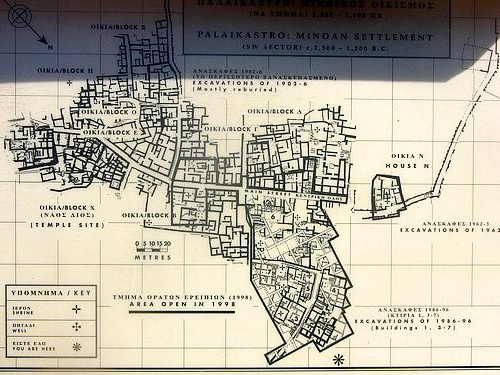
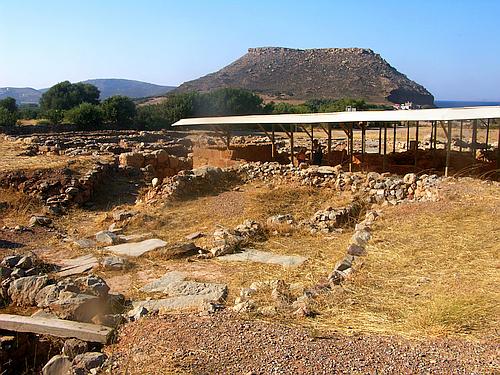
About 2 km east of modern Palaiokastro, on a site at the sea called Rousolakkos, lie the remains of a sizeable Minoan settlement. This Bronze Age town, the original name of which is not known, covers an area of some 50,000 square metres.
First signs of habitation appear in Early Minoan II A (ca. 2700 BC), and from then on the site was populated throughout the Middle Minoan period. Following its destruction in the 17th century BC, the town was rebuilt on an even larger scale. Another destruction by fire occured at the end of the Late Minoan IB period, along with many other cities on Crete. By the time when Zakros was abandoned (1450 BC), Palaiokastro also ceased to be inhabited. During the period of Mycenaean occupation of Crete, in 1450-1200 BC (LM III), the site was reoccupied and became the largest town in eastern Crete. This is certainly due to its favourable position on the east coast of Crete, with a large plain behind it and a harbour sheltered by Kastri hill.
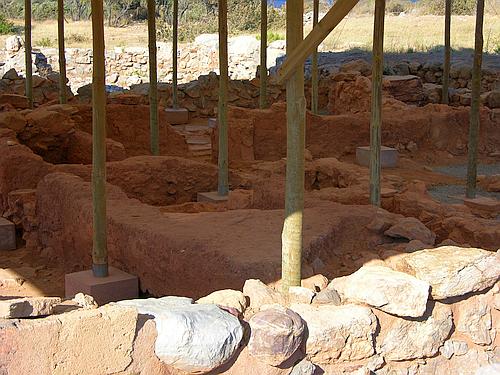
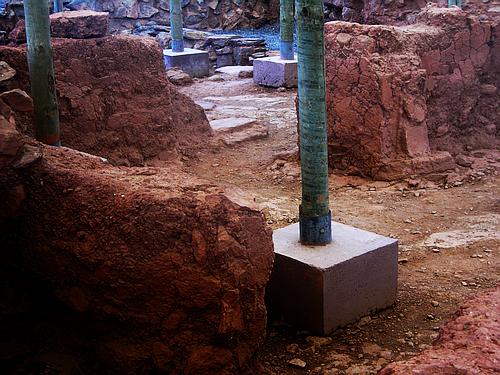
The site was first excavated by R. Bosanquet in 1902, followed by J. Dawkins in 1906. The excavated part suffered badly in the Second World War, later from a bulldozer. Much of the earliest excavations (still included in the plan), have since been covered over again with earth. Other sections were excavated in 1965-66, and in 1986 excavations were resumed by the British School of Archaeology and are still in progress.
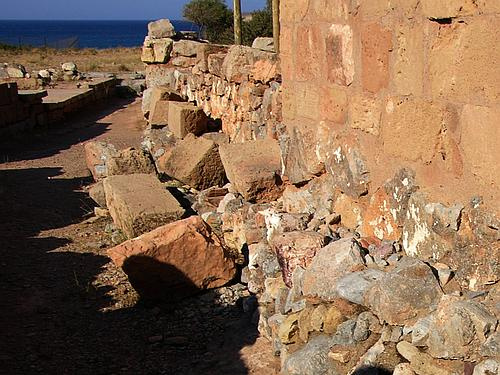
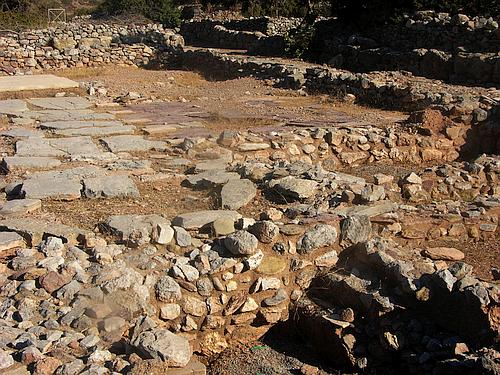
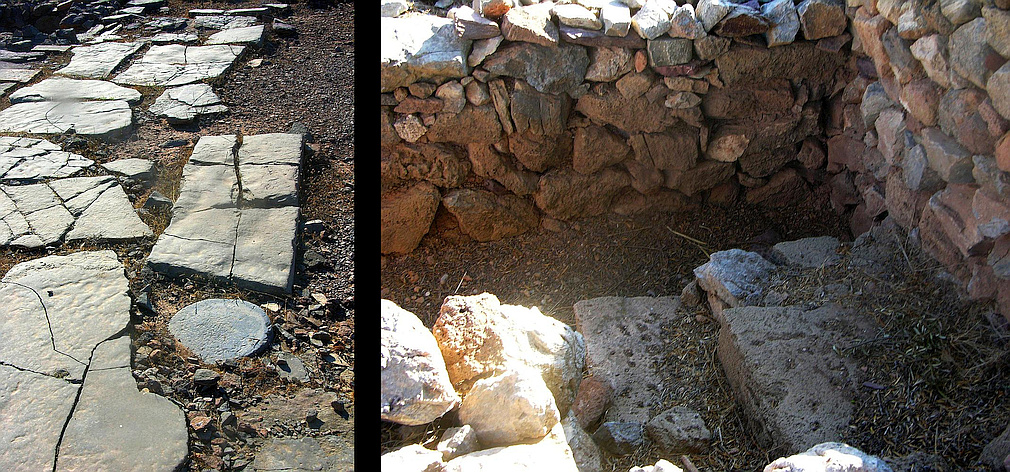
A central thoroughfare has been revealed, with smaller paved streets crossing at right angles. These divide the city into nine quarters, served by an excellent drainage system. The buildings, some of them with antechambers and a megaron, usually have an imposing stone facade with internal walls built of mudbrick. Many artefacts have been recovered, the most exciting being the gold and ivory kouros. Like other finds, it is displayed at the Archaeological Museum of Sitia.
North-east of sector X, the sanctuary of Diktaian Zeus was detected, which was in use from the Geometric period (8th century BC) until the Roman conquest. However, no Minoan palace or temple has yet been found. This means that the craft workers carried out their tasks geographically separated from the palace, but perhaps directed by the priests at Zakros. - Relating to cult practice, a very important peak sanctuary was located on the summit (225 m) of nearby Mount Petsophas.