GREECE
 PELOPONNESE
MESSINIA
PERISTERIA
PELOPONNESE
MESSINIA
PERISTERIA

2025-01-13
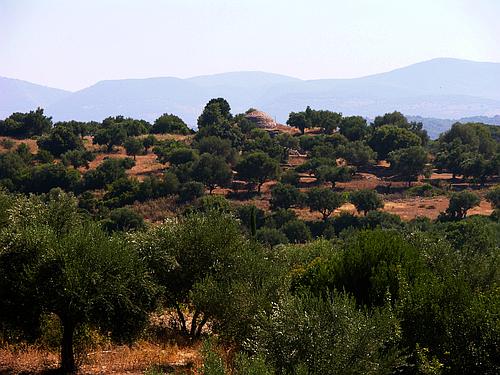
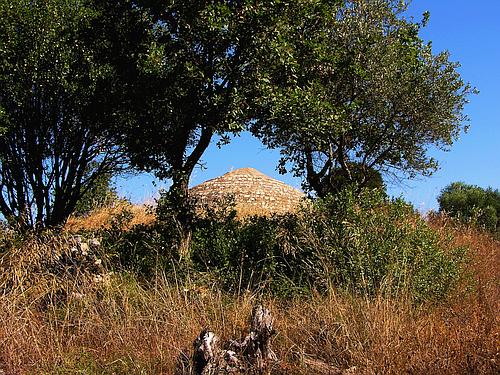
The archaeological site of Peristeria is about 6 km Northeast of Kiparissia. From the main coastal road to Pirgos, a side-road branches off to Raches, from where it is some 4 km to go.
The area is sometimes characterised as "Mycenae of the western Peloponnese" because of the many objects, such as pieces of jewellery, everyday utensils, etc. that were found from this period. First excavations at Peristeria were carried out by Spyridon Marinatos in 1960-65, revealing three royal tholos tombs of the Mycenaean period. In spite of previous plundering, the tombs still yielded jewellery, a gold cup and rosettes of the 16th-15th century BC. The objects are now kept in the Archaeological Museum in Chora.
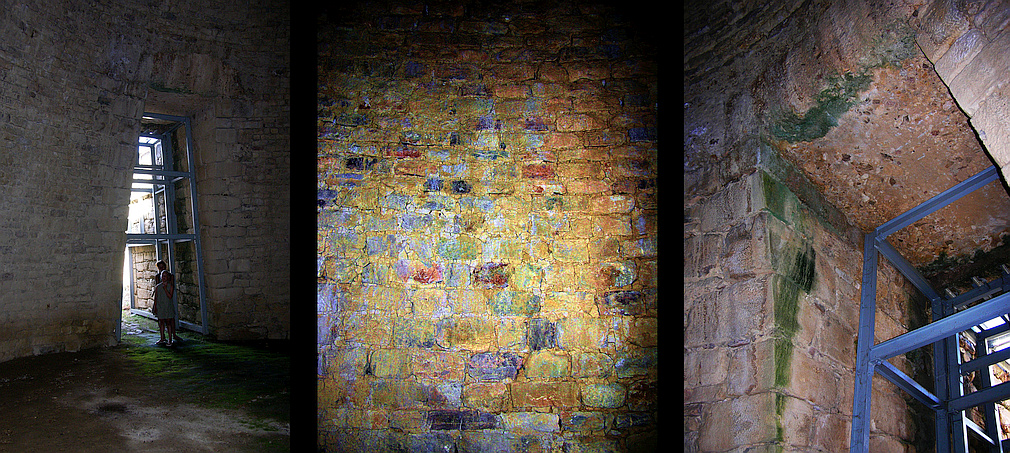
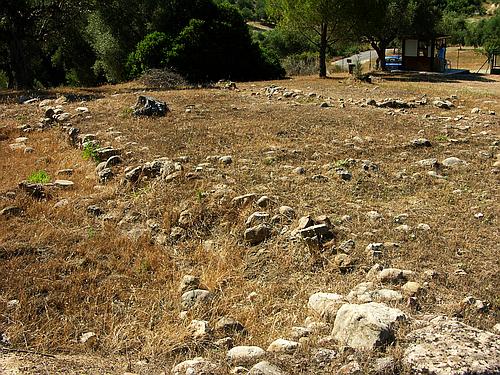
Below left: Entering the site, various fundaments of buildings can be seen. Part of a large Late Helladic I building, including a courtyard, was uncovered here. Superimposed were Roman walls.
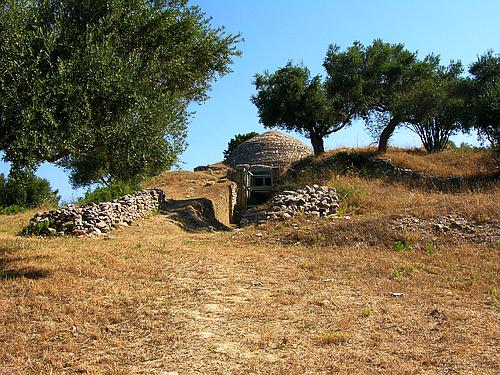
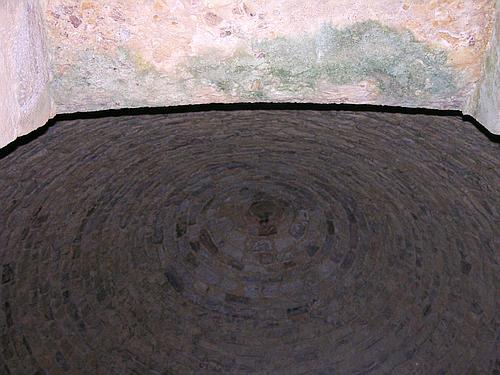
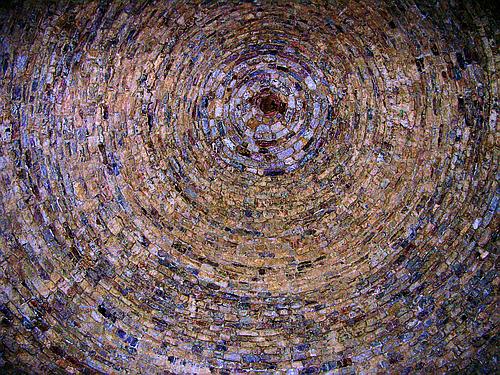
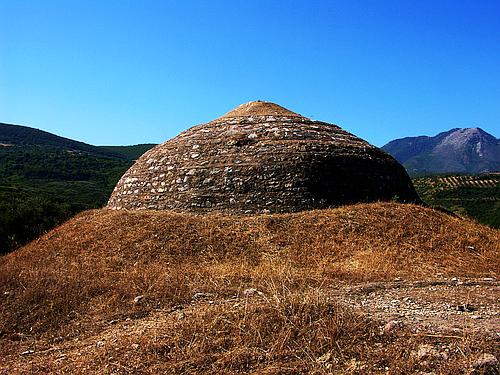
The largest of the three tholoi, where the first burials appear to belong to LH IIA, is remarkably well preserved. Its vaulted thalamos has a diameter of 12.10 m, the entrance gate has an impressive height of 5.10 m. It is sometimes associated with king Neleus, Nestor's father, but this assignment is quite dubious. - Unique is the strange curvature of its roof, which was originally below ground.
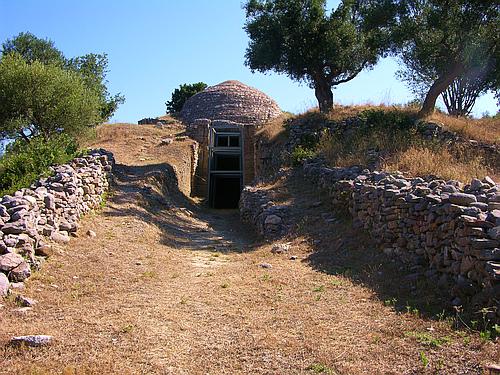
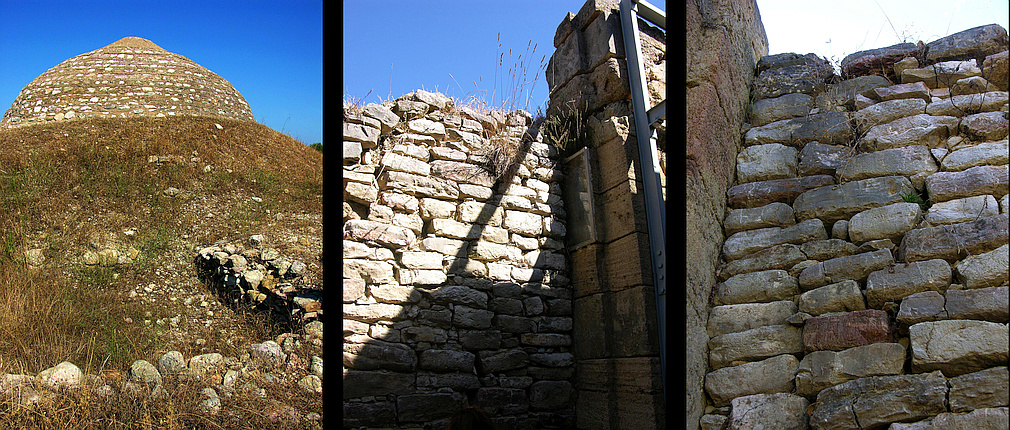
Another peculiarity, and often discussed, is that on the left side of the doorway are two "masons' marks" (protected under a glass plate and difficult to discern from below; above center): a twig and a double axe. Such signs are typical for Minoan Crete! Minoans in southwestern Peloponnese? Or was the tholos built by Mycenaeans who intentionally wanted to forge a link with Minoan palace architecture? Another version seems much more likely: Following the eruption of the Thera volcano in ca. 1675 BC and the catastrophic destructions on Crete, a flood of Cretan refugees sought their fortunes in safer areas, especially in the southern Peloponnese. These refugees would have brought with them the outstanding skills which bore fruit in the fine ashlar masonry of Peristeria tholos no. 1, probably the product of a Minoan architect working for a Messenian prince. The influence of Crete on the southwest Peloponnese in the Late Helladic II period is remarkable.
For a discussion of the conversion process of the basic tholos form to the more sophisticated ones, i.e. from the Mesara type of Minoan Crete to the Mycenaean type: see the text accompanying Koryphasio, the site of the oldest tholos tomb on mainland Greece.