GREECE
 PELOPONNESE
MESSINIA
NICHORIA
PELOPONNESE
MESSINIA
NICHORIA

2025-01-13
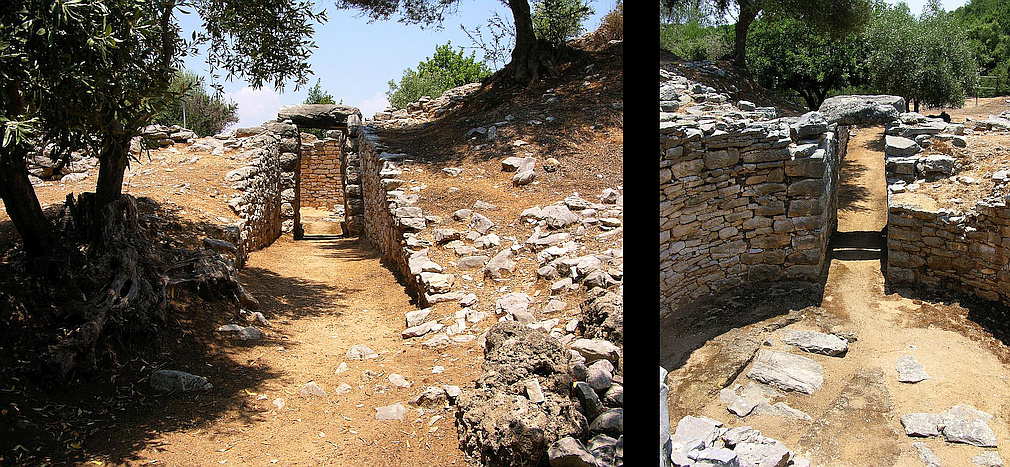
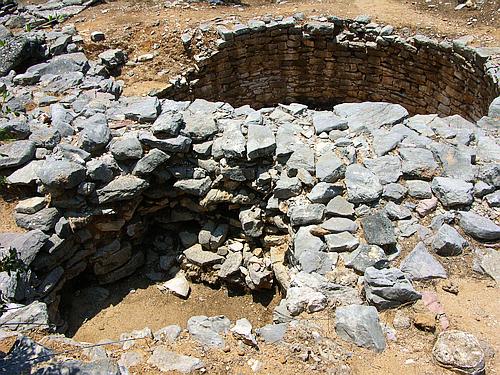
The first thing you notice when entering the site is the large "MME tholos" (so called because of the Minnesota Messenia Expedition). A number of other tholos tombs were excavated in Nichoria, but the MME tholos is by far the most important one: it lies conspicuously below the acropolis at the West end of the site, is the largest (with a diameter of 6.60 m) of the tholoi and apparently the richest. It was probably built early in LH IIIA:2 (or even before), and was used for the last time in LH IIIB:2. It has been shown that in this period the use of at least several of the tombs overlapped to a considerable degree (not one tomb being abandoned when the next one was built).
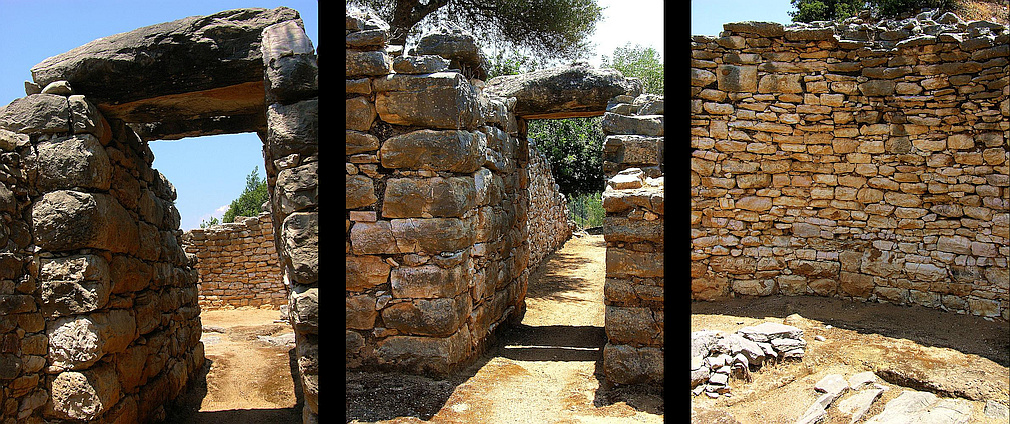
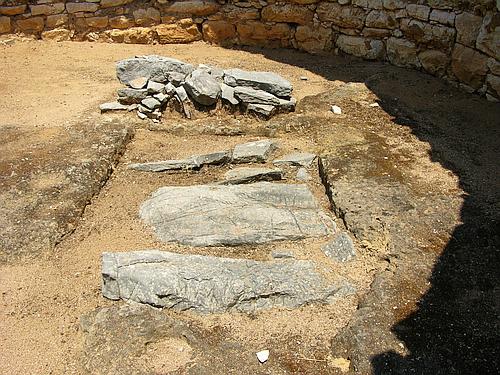
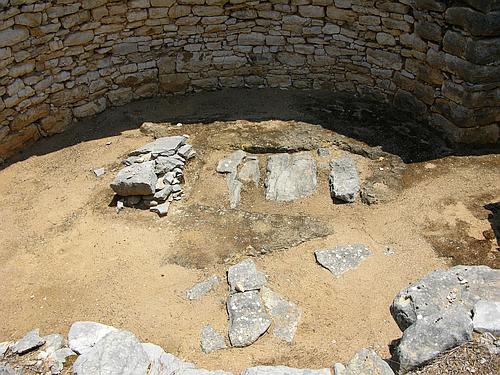
Above: Inside the dromos are two shaft graves dug into the floor of the tomb chamber. Each had a lower burial chamber roofed in the usual manner with limestone slabs. Although all graves were already plundered in ancient times, numerous objects could still be retrieved in the excavation.
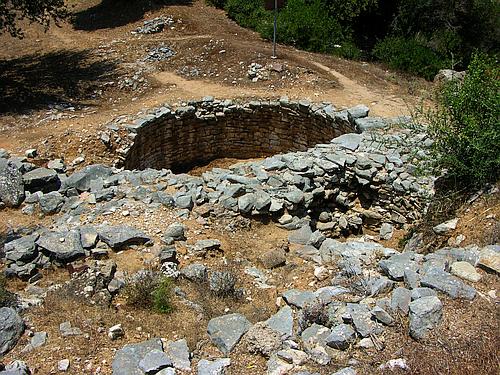
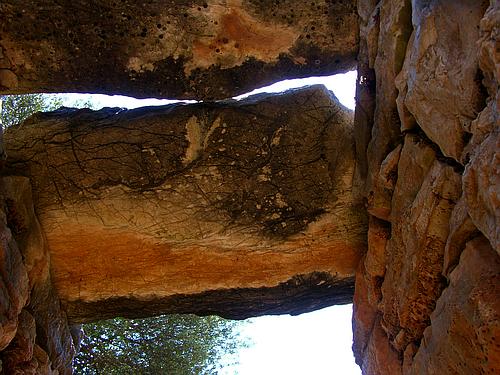
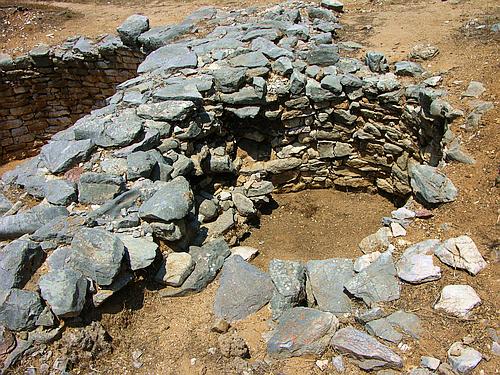
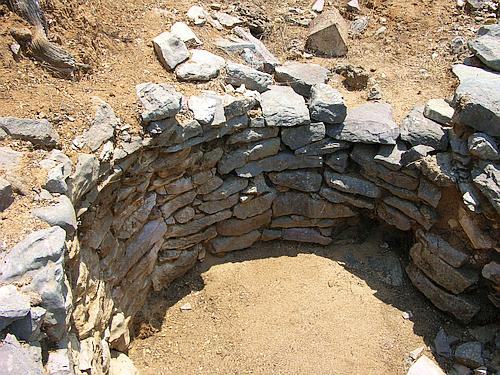
Left and below: Directly adjoining the MME tholos on the East is the Little Circle, a small (2 m diameter) "tholos" used for several primary and secondary burials of the LH II period and finally for a mysterious mass burial.
Not even in Mycenae did all tholoi belong to the "royal" family. Tholoi were "the preserve of the elite", but especially in Messenia they cannot have been reserved exclusively for rulers and their immediate kin. All of the tholoi at Nichoria were apparently family tombs being re-used whenever the occasion demanded. Therefore, the construction of new tombs was not due to lack of room for additional burials but rather because an individual or a family acquired power and/or wealth. It has been noted that tholos tombs were usually built in conspicuous locations along major roads. They were meant to be noticed both before their initial use and after the burial when the stomion was blocked and the dromos completely filled with earth (obviously to prevent the plundering of the tomb by man and beast rather than to hide the tomb from view).
Nancy C. Wilkie: "One might suppose that at a site such as Nichoria, where over twenty domestic structures belonging to the LH IIIA-B periods have been exposed in the settlement, a specific dwelling could be linked with the largest, richest and most conspicuously located tholos tomb there, based on the size, date, and nature of the contents remaining in each. However, this has not been possible. Numerous dwellings from the LH IIIA:2 period, when the MME tholos was probably built, have been identified throughout the settlement. However, none of these structures is exceptional, neither in its architecture nor in its contents. We may conclude, therefore, that the expression of status in the Late Mycenaean community at Nichoria probably centered on the construction of elaborate burial rather than domestic architecture."