GREECE
 PELOPONNESE
LAKONIA
VAPHEIO
PELOPONNESE
LAKONIA
VAPHEIO

2025-01-09
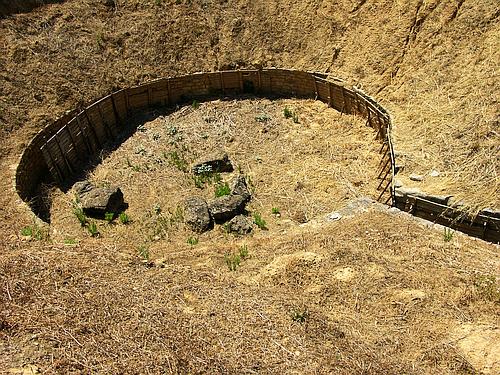
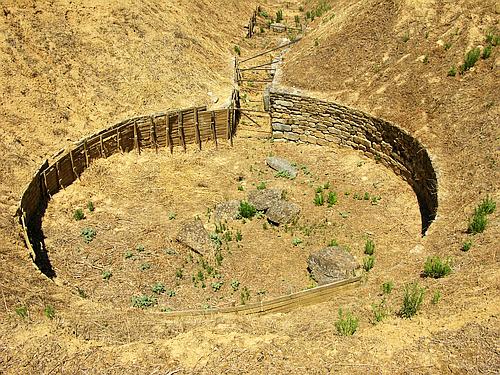
Taking the national road from Sparta south to Gytheion, a minor road to Vafio (Vaphio, Vapheio) branches off at Amikles. From the village it is less than a kilometer to the archaeological site (signposted) with its large tholos tomb. The site is surrounded by a surmountable fence but the tholos can be seen quite well from outside standing on the adjoining hillock.
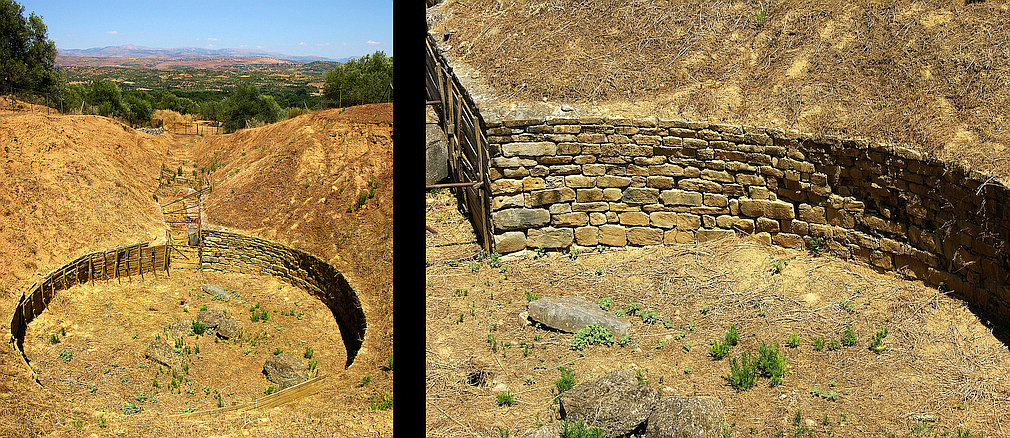
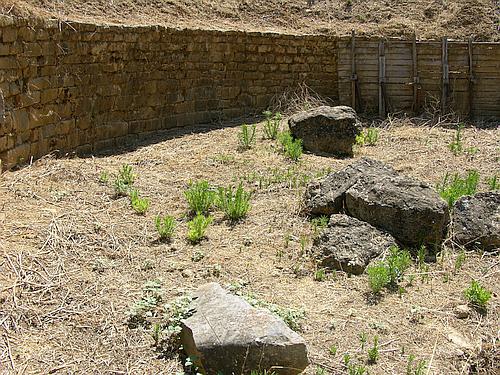
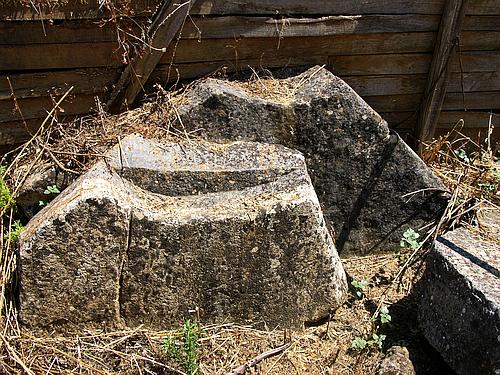
The Vapheio tholos, dated to the Early Mycenaean period (1500 BC), is really monumental: the dromos is nearly 30 meters long, the circular thalamos has a diameter of more than 10 meters. Its walls were built of somewhat smaller stones and not as precisely fitted (at least it appears so today) as those of the well-known "Treasury of Atreus" in Mycenae. They are only preserved to a height of less than 2 meters, part of it concealed behind stabilizing modern wooden constructions. Also most of the doorway has collapsed, with parts of the massive lintel blocks lying around.
The tomb was associated either with the Mycenaean settlement of Amyklai (Amikles) or Pharis, probably situated 300 meters North on a low hill, which has not been excavated yet.
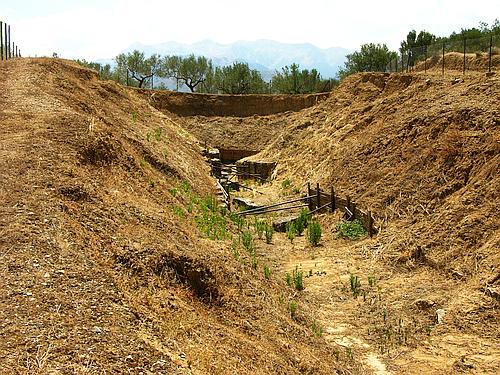
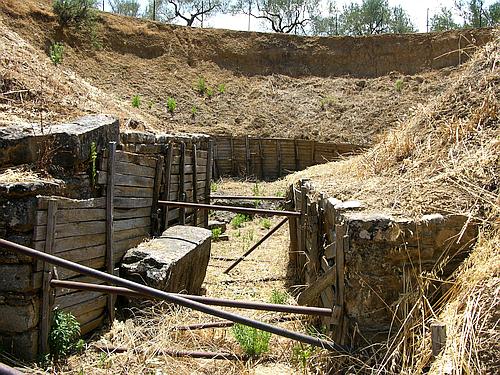
Known already in the early 19th century, the Vapheio tholos was systematically studied in 1889 by Christos Tsountas. Although the tomb had already been plundered, an oblong pit in the floor of the tomb produced numerous important finds, including a large number of gems and amethyst beads, together with articles in gold, silver, bronze, iron, lead, amber and crystal. By far the finest pieces were, however, two unique gold cups - perhaps imported from Minoan Crete - with repoussé scenes of bull-catching. They are now displayed in the National Archaeological Museum in Athens.