GREECE
 PELOPONNESE
KORINTHIA
ISTHMIA
MUSEUM
PELOPONNESE
KORINTHIA
ISTHMIA
MUSEUM

2025-01-02
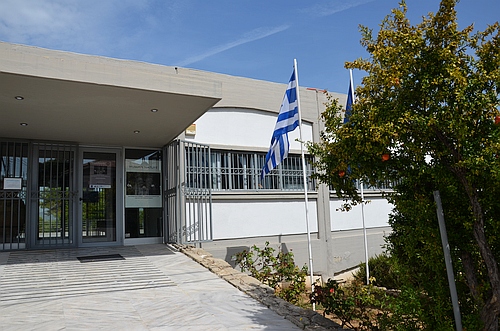
The museum of Isthmia is definitely not part of the must-see program of visitors to the Peloponnese. This is a pity because it is modern, well laid out and with plenty of well-written texts. It presents finds from eastern Korinthia dating from the 3rd millenium BC until the late Roman period.
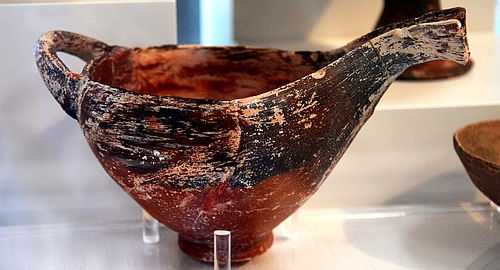
Below left: A large vase at the entrance of the museum without further specification. - Below right: Askos of a strange form, Tomb VI (where?), Late Helladic IIIA2-B1 (1350-1250 BC).
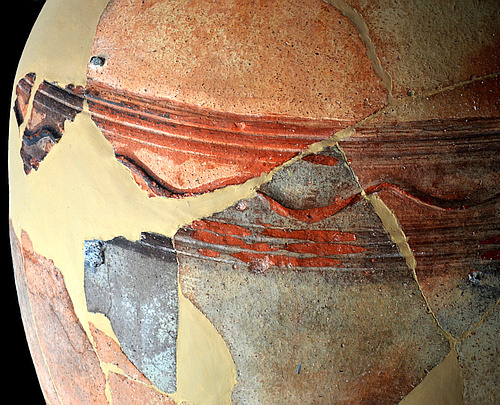
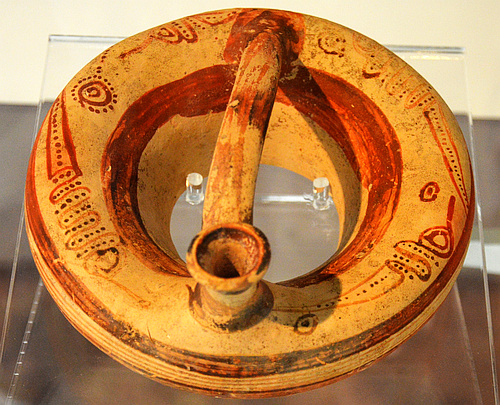
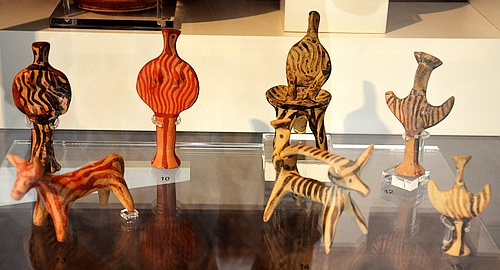
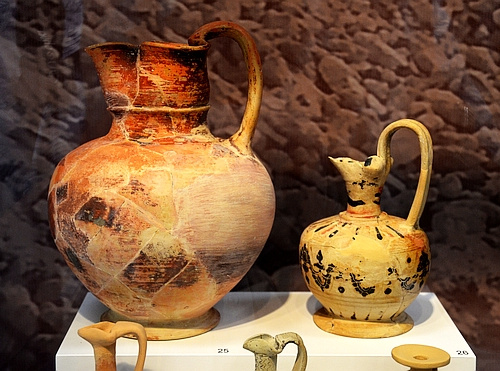
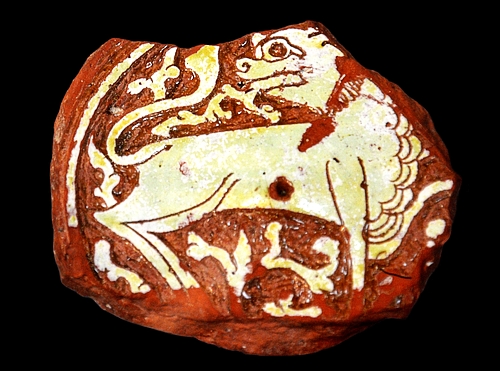
Above left: Sauceboat, found at Kalamaki, Athens-Corinth National Road, Early Helladic II, 2500-2100 BC. - Above right: Mycenaean figurines from Bechries. - Below left: Vases, apparently Mycenaean. - Below right: Incised ware, probably from Corinth. It was found near the South Gate of Isthmia's Byzantine Fortress, 12th century BC.
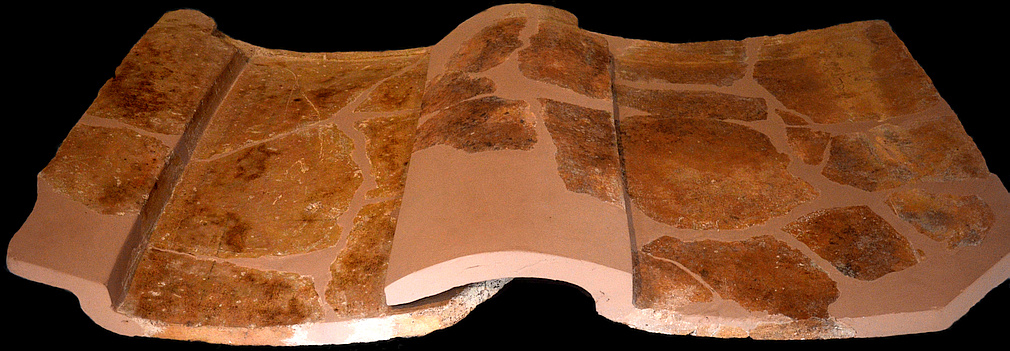
Above: Terracotta Corinthian roof tiles from the Archaic Temple of Poseidon, first half of the 7th century BC.
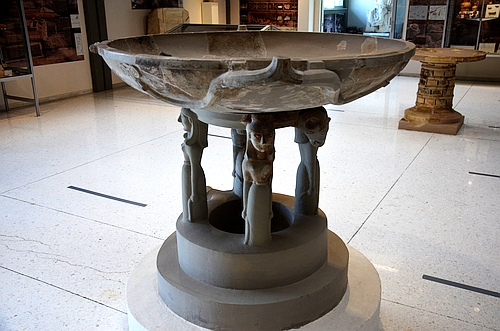
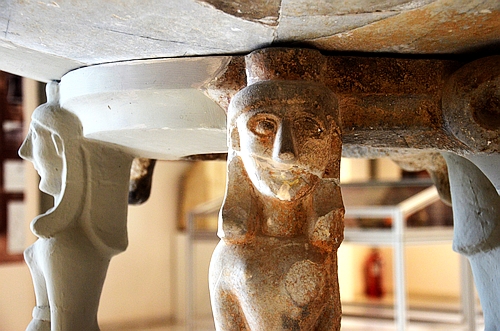
Above: Archaic marble perirrhanterion (partly restored) of the 7th century BC, one of the highlights of the museum. The great marble basin (perirrhanterion) was supported on an elaborate stand. The bowl, 1.24 m in diameter, rests on a ring supported by four women, each standing originally on the back of a lion and holding in one hand the lion's leash and in the other its tail. The ring between the women is decorated with rams' heads.
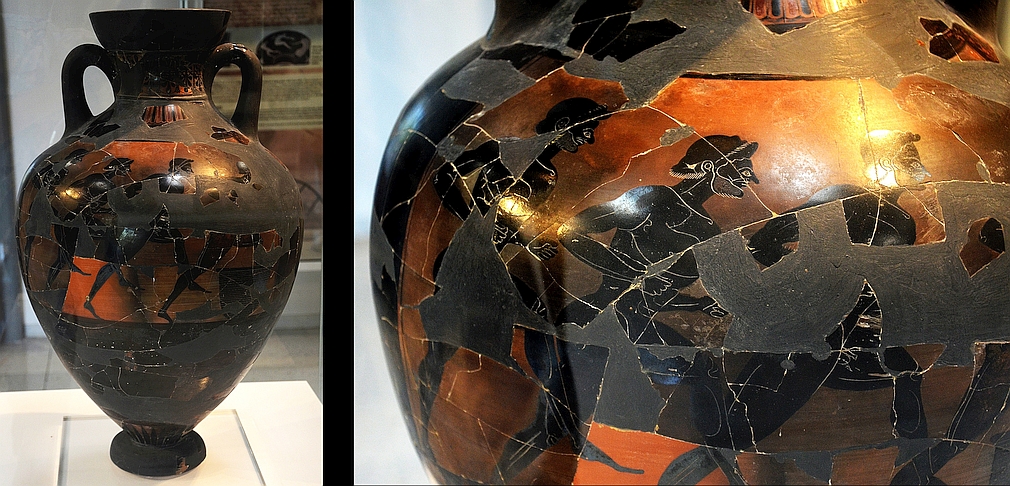
Below: Panathenaic amphora, from the North Temenos Terrace, burnt from fire in the Temple. - Side A: figure of armed Athena striding to the left. Below the panel is incised in Corinthian letters, the votive inscription. - Side B (shown here): four runners oriented to the right. Late 6th century BC.
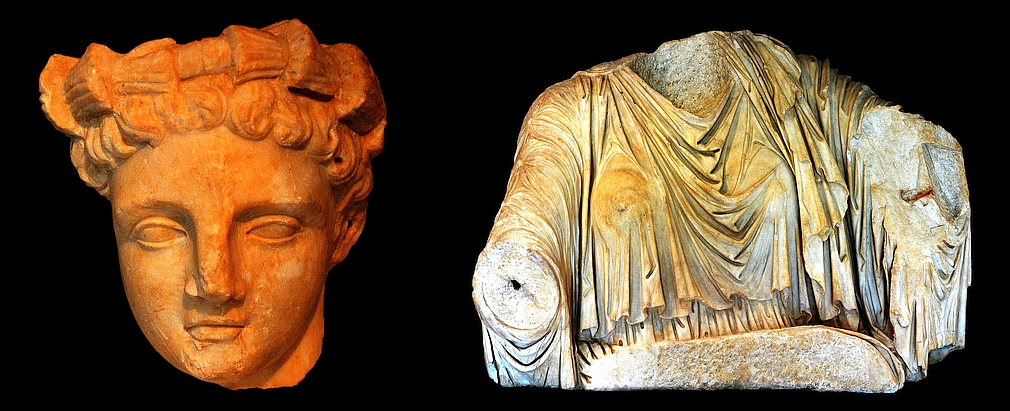
Below left: Marble head of a victor wearing the Isthmian pine wreath, from the theatre. 117-132 AD. - Below right: The colossal female torso, approximately three times life size, belonged to a cult statue group of the temple of Poseidon. These sculptures, the workmanship of which is of unusually fine quality, were probably made by Attic craftsmen using Pentelic marble. The statue group and base belong to the Antonine period (2nd century AD).
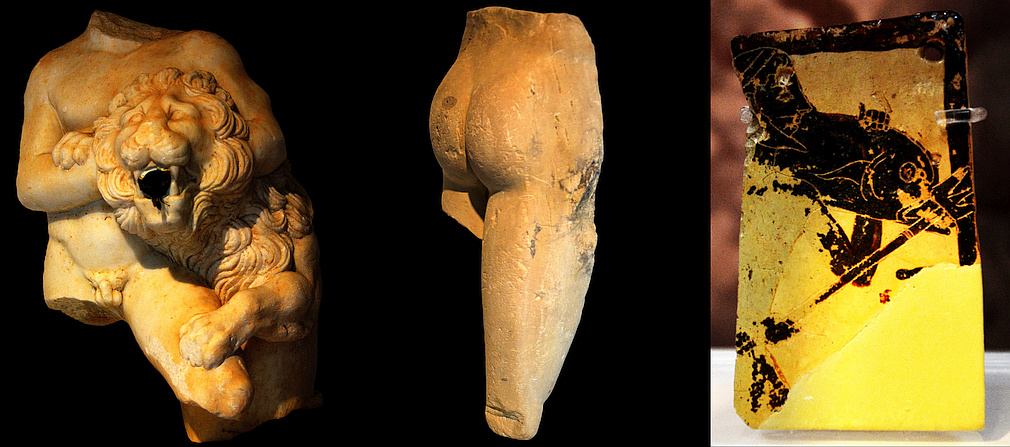
Above from left to right: Heracles and the Nemean Lion, a statuary group that was used as a fountain sculpture. It was found south of the theatre and is dated to ca. 150 AD. - Part of a limestone Kouros statue, dumped in the Large Circular Pit; 6th century BC. - Painted pinax showing Poseidon with a dolphin, 6th century BC.
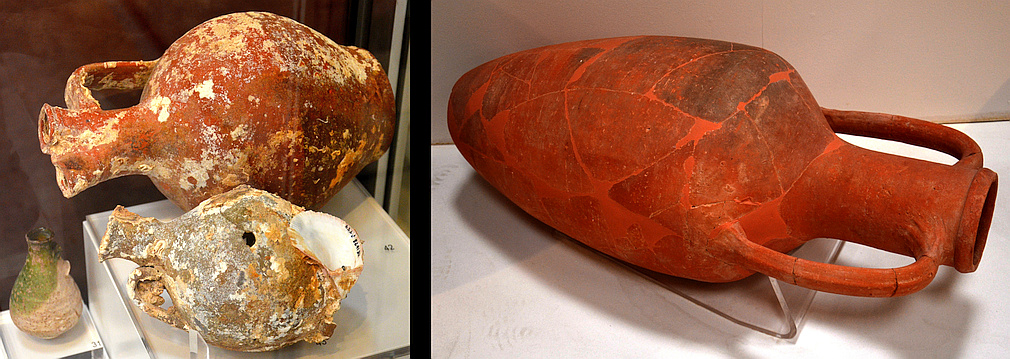
Below: Vases from Kenchreai, the busy eastern port of Corinth. They were retrieved from the sea to where they sank due to tectonic subsidence in Late Antiquity.