GREECE
 PELOPONNESE
KORINTHIA
DIOLKOS
PELOPONNESE
KORINTHIA
DIOLKOS

2025-01-01
Corinth canal
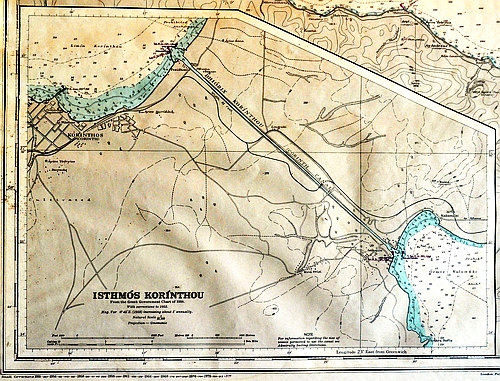
The Peloponnese peninsula is joined to the mainland of Greece by an isthmus of only 6 km at the narrowest point. In ancient times, ships were hauled across the isthmus on paved tracks, the "diolkos" (see below). This was not very satisfactory, so that already in ca. 600 BC, Periander of Corinth planned to build a canal. The Roman emperor Nero (or, more specifically, his working-men and slaves) was actually the first to start piercing a canal in AD 67, but the work was stopped because Roman forces were needed to put down the uprising of the Gauls. Construction was then only resumed in 1882, and the canal finally finished in 1893.
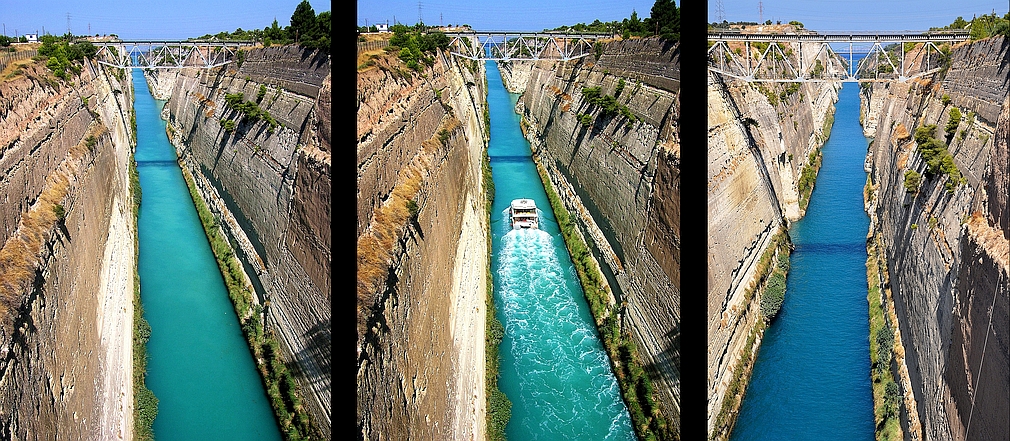
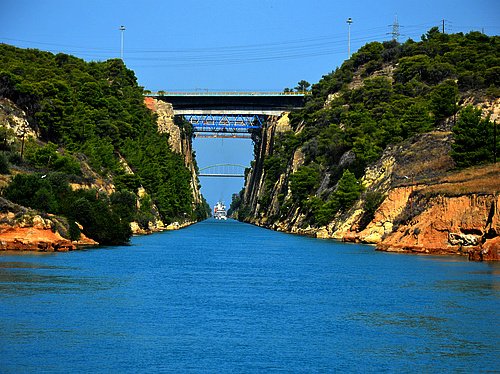
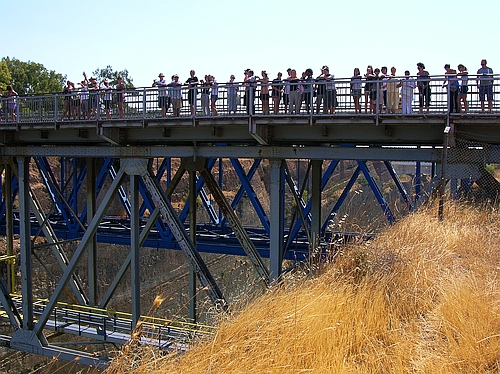
The Corinth Canal is 6.3 km long, 23 m wide and 8 m deep. Near its central part, it runs in a deep cutting through the rock, providing spectacular views down to passing ships (the view from the ship allegedly is even more spectacular). The passage through the canal shortens the distance between Italy and Piraeus by about 300 km but can not be used by the larger ships of present times.
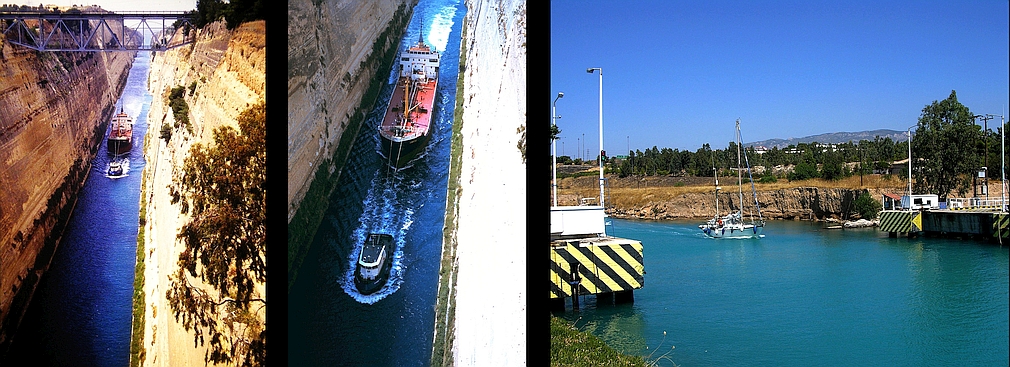
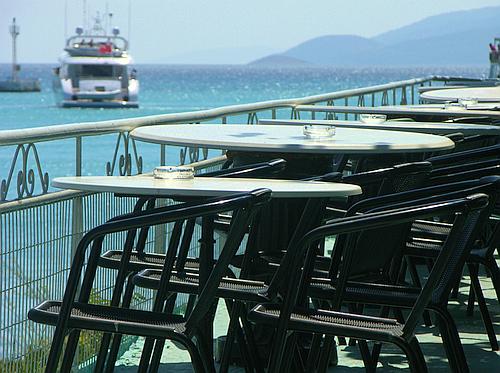
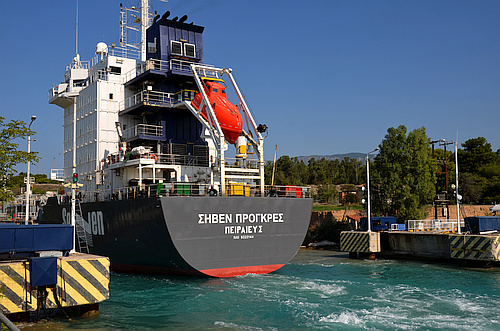
Above right: At the southern end of the canal a submersible bridge is lowered to the canal bottom to allow maritime traffic to pass. - Below: And in a café right by the canal you can watch the traffic. - Another submersible bridge is at the northern end of the canal.