GREECE
 PELOPONNESE
KORINTHIA
CORINTH
MUSEUM
PELOPONNESE
KORINTHIA
CORINTH
MUSEUM

2025-01-01
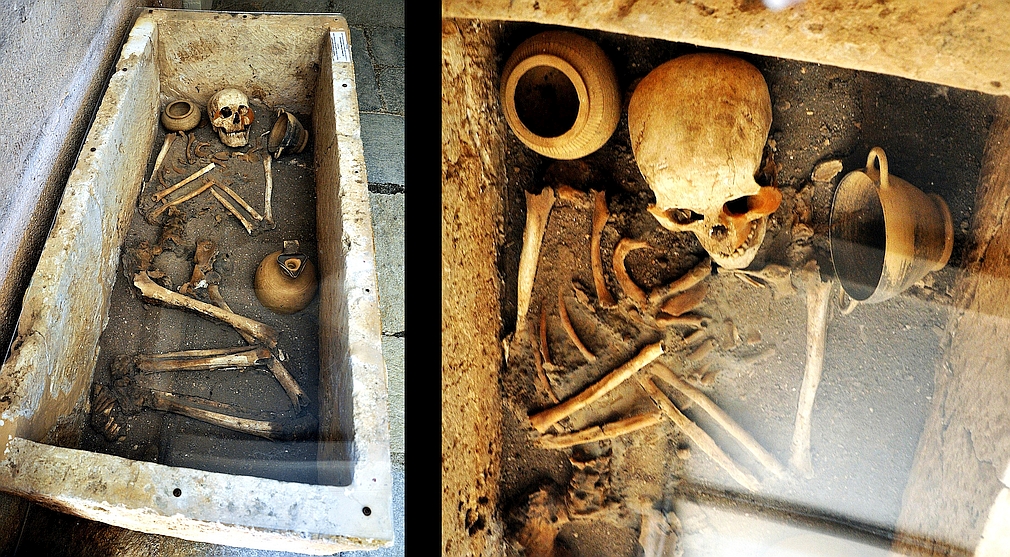
Above: Sarcophagus of the Middle Helladic period. Among the gravegoods is an oinochoe of the "Dodwell painter" (590-570 BC).
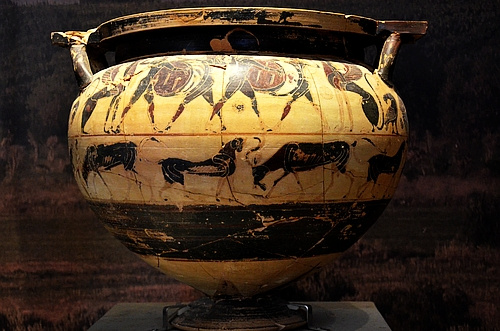
Left: Krater depicting a battle, 580-555 BC.
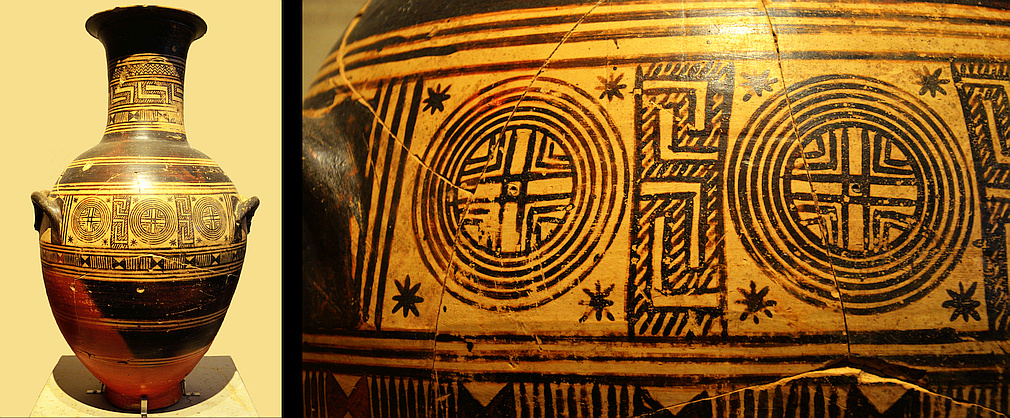
Below: Amphora with geometric decoration. It was used as a grave marker and is dated to 800-750 BC.
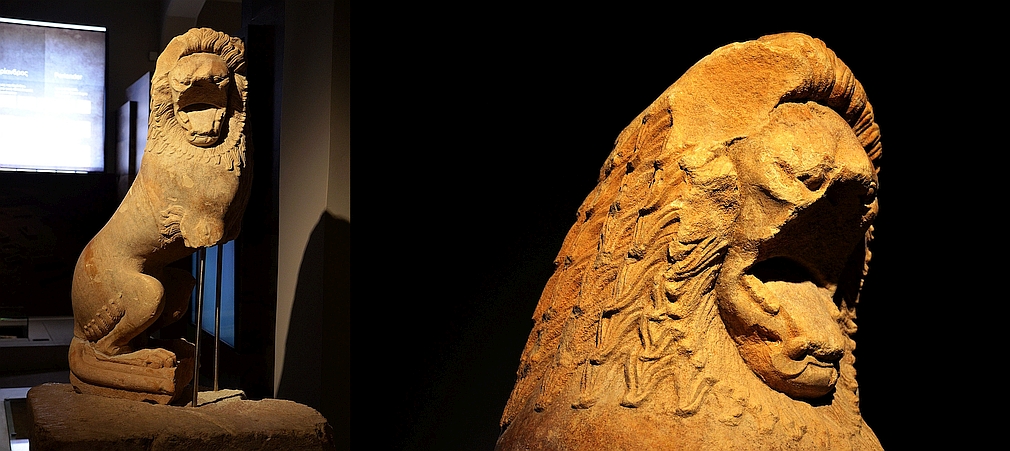
Above: In 2001, the police authorities confiscated this lion, made of poros limestone, from antiquity smugglers. Its base and capital had already been traced in 1995 on the Korakou Hill. The lion was painted in black and red, but its coloring has since worn away. The sculpture stood on a column and it was placed on a tomb, reaching a total height of 3.5m. It is dated to 580-540 BC. Interestingly enough, a lion devouring a ram, also resting on top of a column, once adorned the tomb of Lais, the famous courtesan of ancient Corinth.
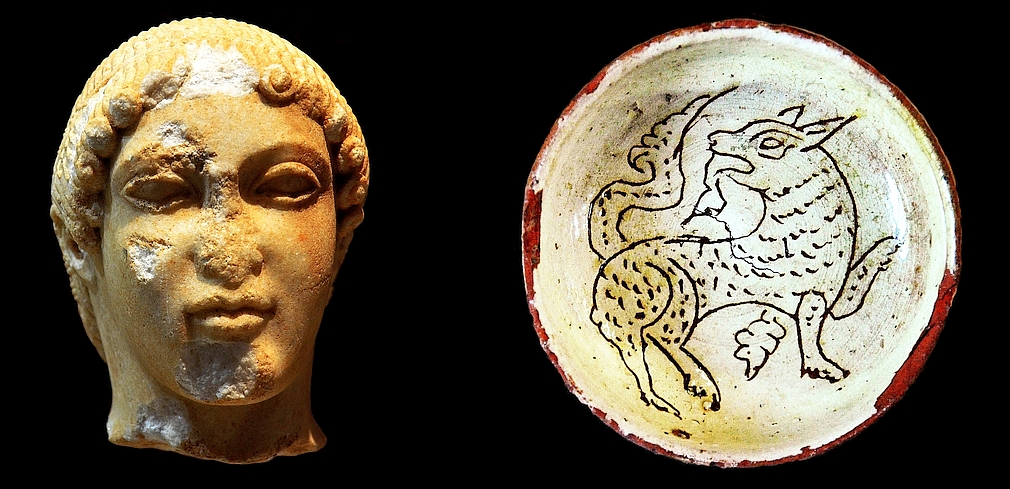
Below left: Head of a male figure, 575-550 BC. - Below right: Bowl with the representation of an animal, perhaps a chimaera.
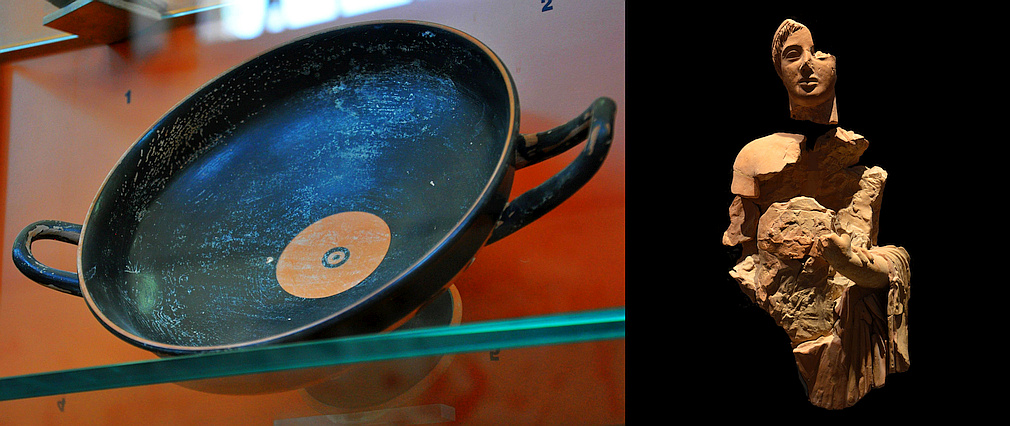
Above left: Ceramic vessel, a form known as kylix. - Above right: Terracotta male statue, 425-415 BC.
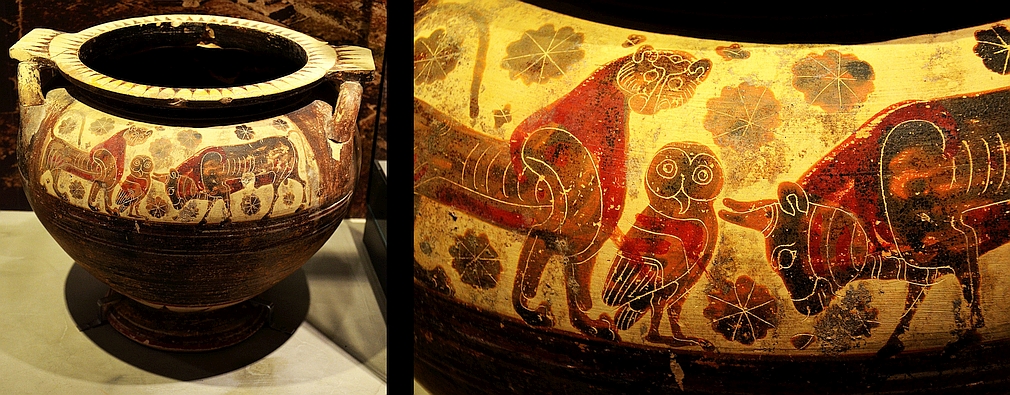
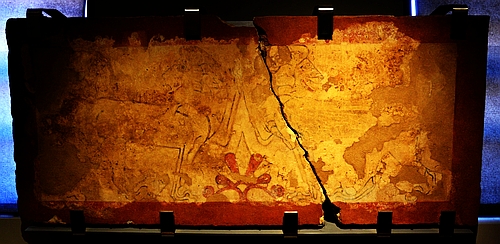
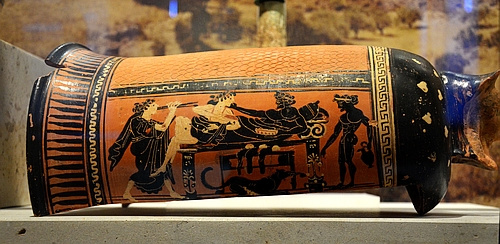
Above: A krater from Poseidonia, beautifully decorated. It is dated to the 6th century BC. - Below left: The sarcophagus from Chiliomodi is another fine example of Corinthian painting, 6th century BC. - Below right: An epinetron, an utensil for hackling wool, depicts a Dionysian scene and a representation of a banquet, 6th century BC.