GREECE
 PELOPONNESE
ELEIA
OLYMPIA
SANCTUARY
PELOPONNESE
ELEIA
OLYMPIA
SANCTUARY

2024-12-20
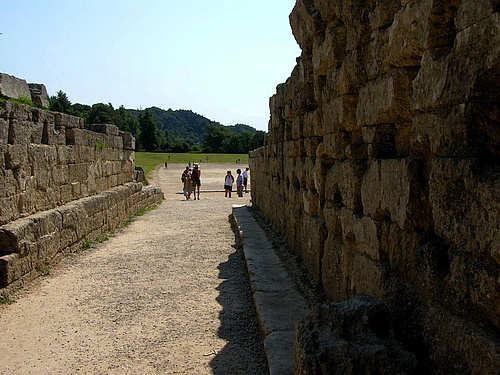
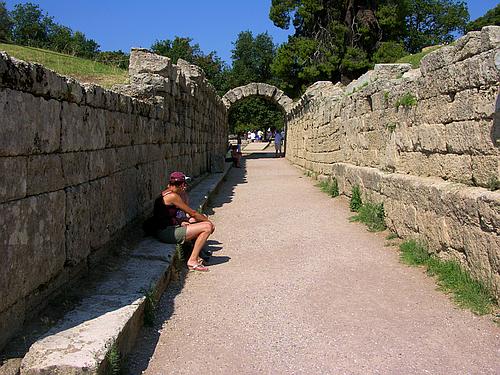
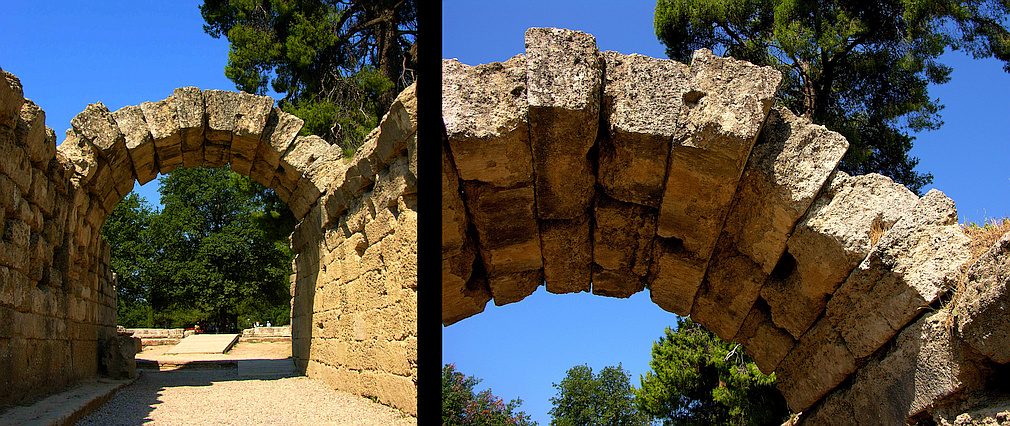
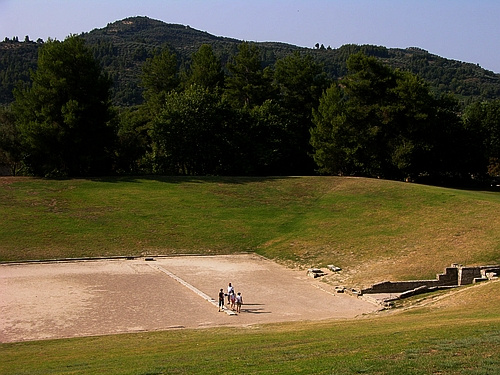
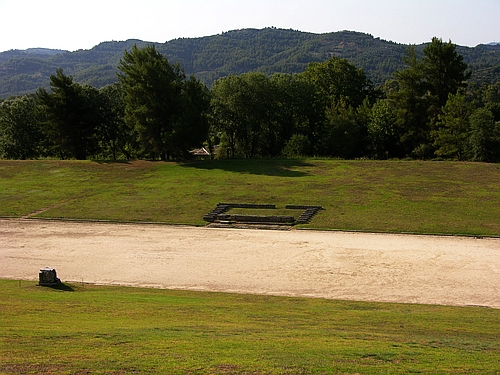
Above and below: The stadium in its present form with vaulted entrance dates from the early 5th century BC.
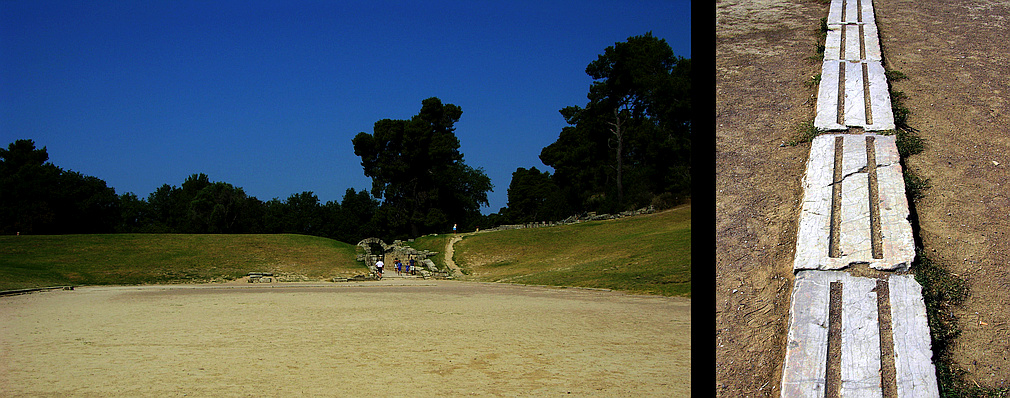
Above: View from the stadium to the entrance and the starting line. - Below left: looking down to the entrance and the starting line of the stadium. - Below right: On the stadium's southern slope there was a stone platform for the Hellanodikes, the judges. It probably only served ceremonial purposes since neither start nor finish can adequately be seen from here. Its fundaments are still preserved as well as the altar to Demeter Chamyne on the opposite side. Apart from that, the artificial banks never had permanent seats, but could accomodate 40.000 spectators.
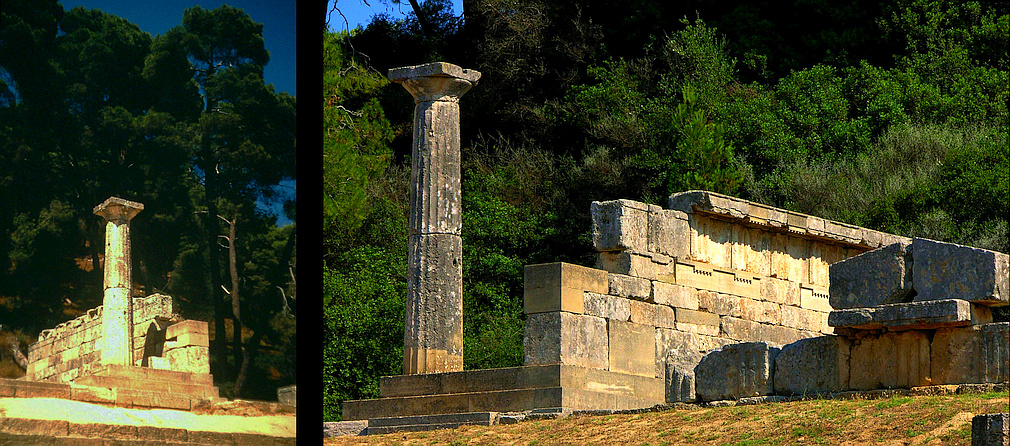
Above and below: The remarkably well preserved treasury of Sikyon, built in the 5th century BC. Such "treasuries" (thesauroi) - more or less camparable to those at Delphi - were erected by different Greek city-states on a terrace at the foot of Mount Kronion as depositories for votive offerings.
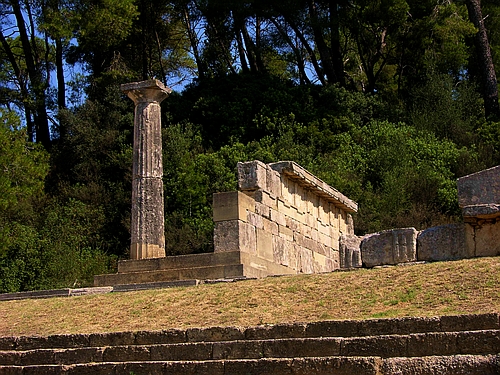
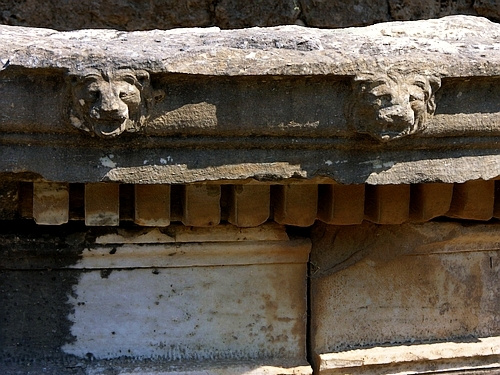
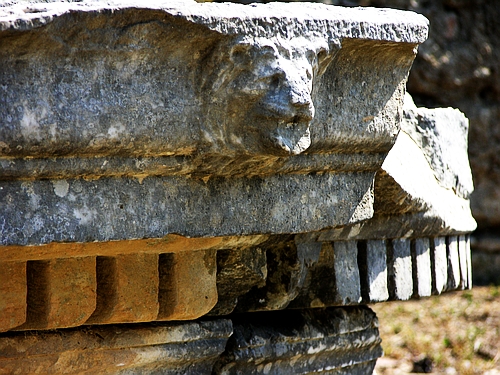
Above: Details of the Nymphaion or Exedra of Herodes Atticus, the termination of a 3 km aqueduct. The wealthy Athenian Herodes Atticus donated this much-needed supply of drinking water around 160 BC. The water was stored in a large semicircular tank, crowned with a half-cupola, from where it flowed through lion's-head spouts into a basin in front.
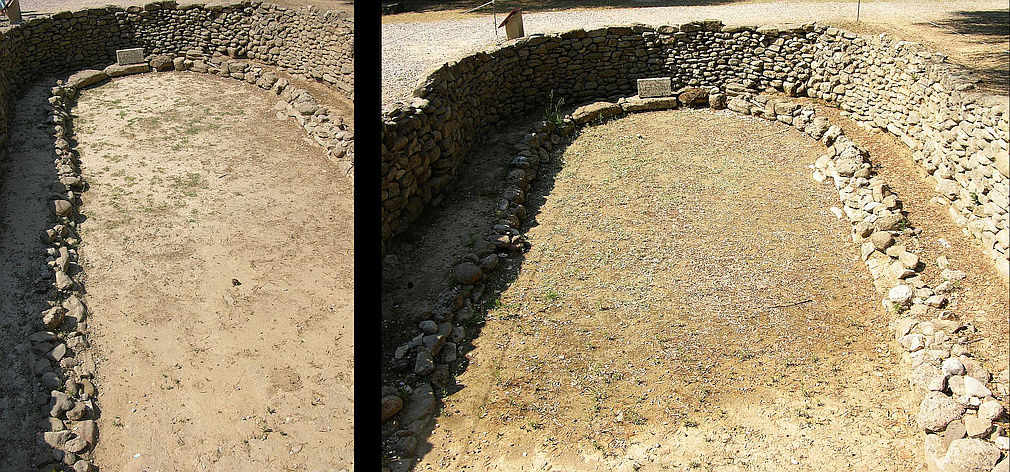
Below: West of the metroon, several free-standing apsidal "longhouses" have been uncovered by Dörpfeld. They are dated to an early phase of Early Helladic III (ca. 2200 BC). One of these prehistoric houses can still be seen, the others have been re-buried for protection.