GREECE
 PELOPONNESE
ARGOLIS
FRANCHTHI
CAVE
PELOPONNESE
ARGOLIS
FRANCHTHI
CAVE

2024-11-25
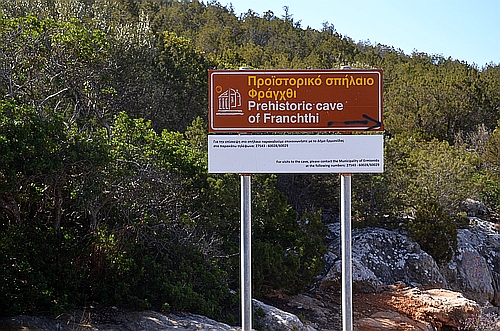
Quite off the beaten track and far away from the famous sites of Argolis, on the southern coast of Argolis, is the prehistoric site of Franchthi cave.
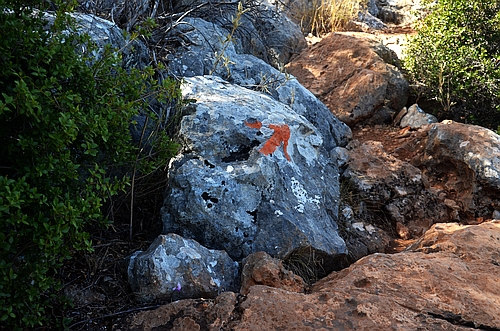
Arriving from the North and heading to Fourni, the way is well signed on the road. You will finally arrive at a parking on the beach, at the far end of which starts a 20-minutes coastal pathway to the cave, clearly marked with red arrows.
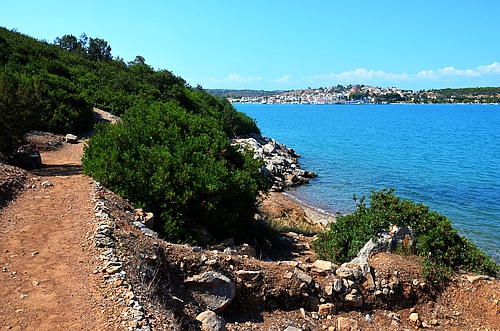

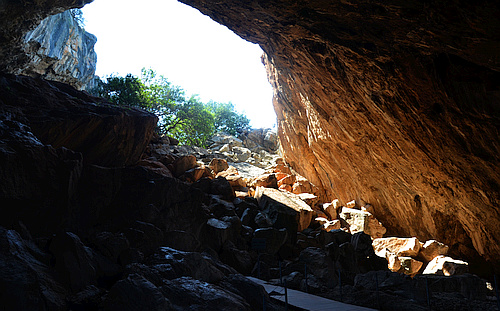
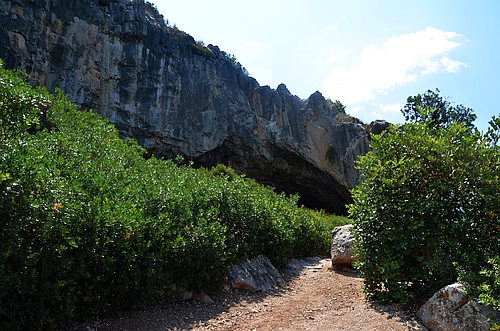
Above left: On the way to the cave, Koilada in the distance. - Below: First views to the large entrance of the cave.

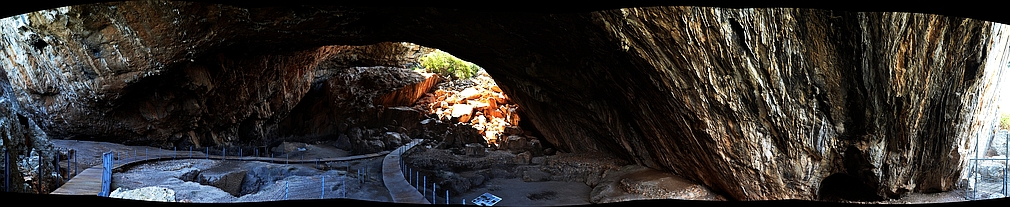
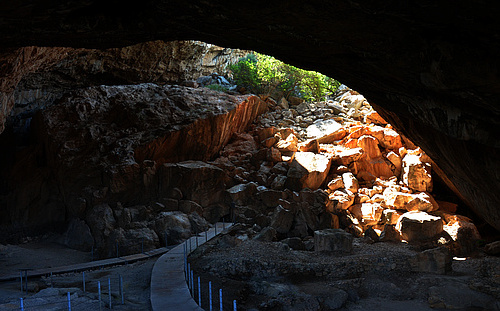
Above: Panorama of Franchthi cave as seen from the entrance. It is quite spacious and bright since the ceiling at the rear end has collapsed, posing a problem for the excavations carried out in 1967-1976.
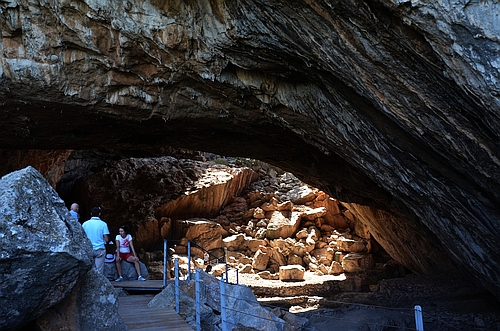
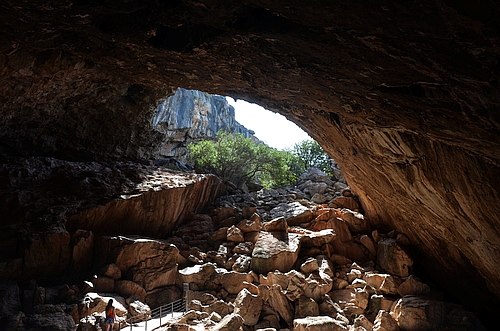
Franchthi Cave is unique in Greece in having an essentially unbroken series of deposits spanning the period from ca. 38,000 BC (and possibly even earlier) down to ca. 3000 BC. This is by far the longest ever recorded continuous occupational sequence from any site in Greece. It is here that the oldest complete human skeleton was found, dating back to 23,000 BC, and in 2014 it was finally confirmed that Franchthi Cave is the oldest human settlement in the world.