GREECE
 PELOPONNESE
ARCADIA
MEGALOPOLIS
PELOPONNESE
ARCADIA
MEGALOPOLIS

2024-11-16
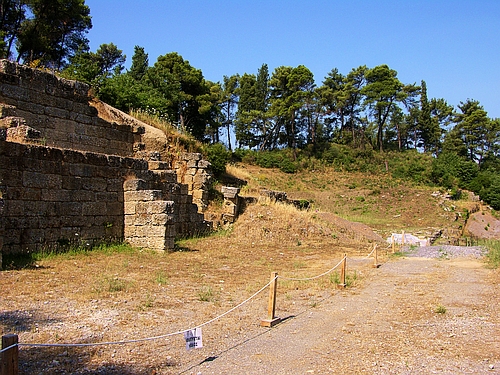
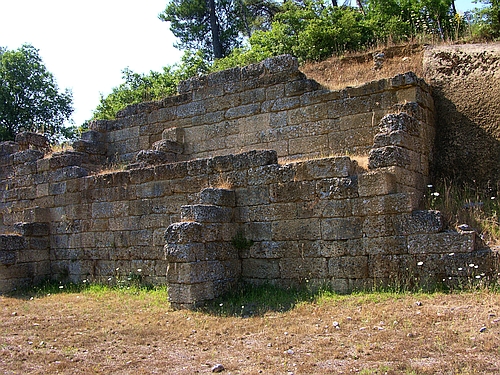
Above: Retaining walls of the ancient theatre on the south bank of the Helisson river.
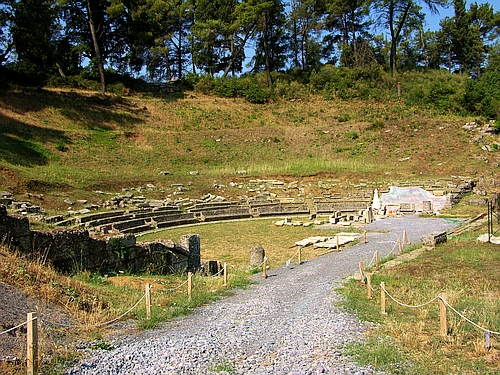
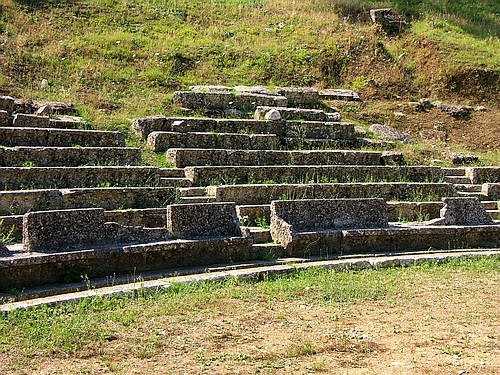
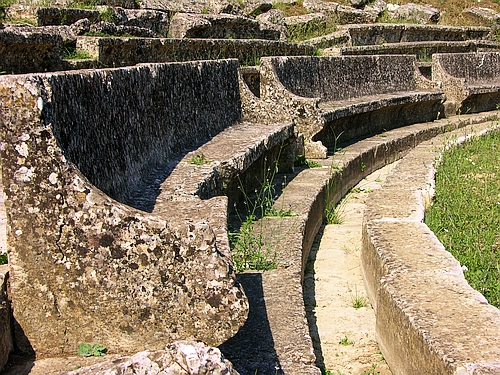
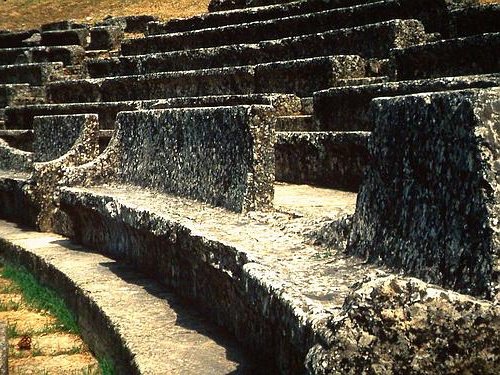
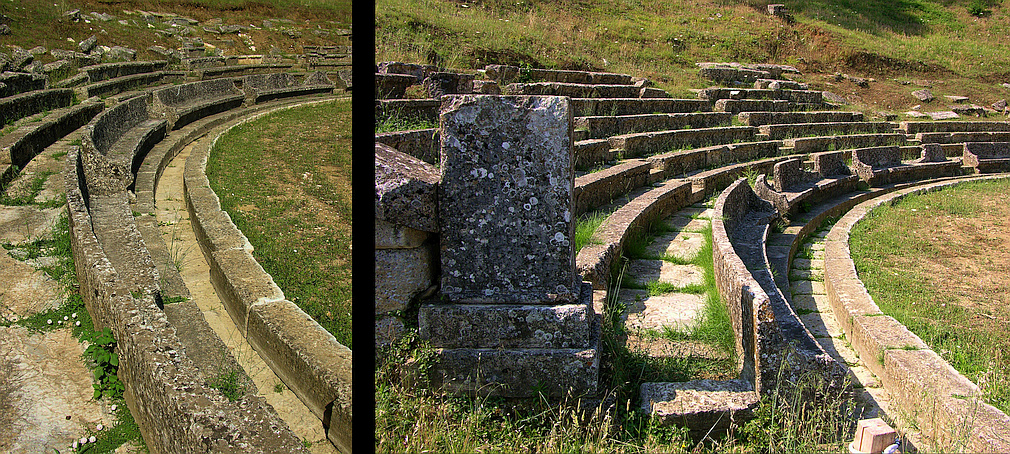
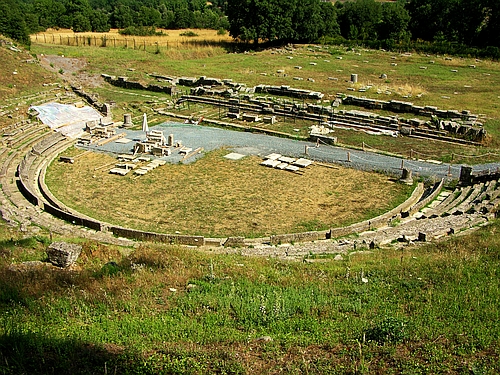
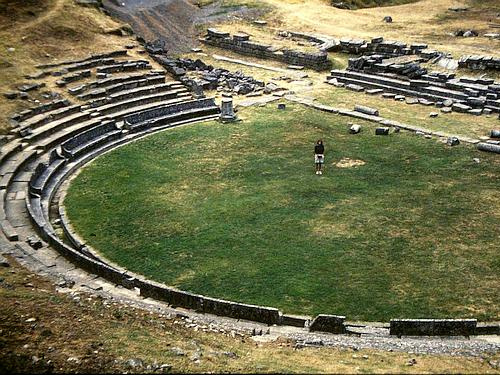
The ancient theatre of the 4th century BC was, according to Pausanias, the largest Greek theatre. It has a capacity of 20,000 - hence built on the same scale as those of Argos and Dodona. Initially the spectators sat directly on the hill side, but around 300 BC the colossal stone theatre was built. Originally, there must have been 55 to 59 rows of seats in the auditorium. Of these, only the first few rows are excavated, but the rest are clearly visible as stepped tiers to the summit where, from the back rows, trees look on like immense spectators. The first row are the "seats of honour", shaped like thrones, for priests and other officials. To gain easier access to the higher tiers of seats, the auditorium is divided into 9 wedges by 10 scales radiating from the centre of the orchestra. Two horizontal passages, the diazomata separating the auditorium into three sections, can only be guessed. At its extremities the auditorium was supported by massive retaining walls, of which the eastern one is still very impressive (see above). The circular orchestra has a diameter of 30 m, larger than in any other Greek theatre. It is surrounded by a stone gutter to prevent it from being flooded in times of rain.