GREECE
 PELOPONNESE
ARCADIA
MANTINEIA
SITE
PELOPONNESE
ARCADIA
MANTINEIA
SITE

2024-11-15
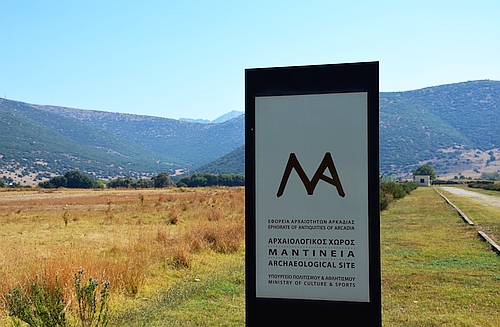
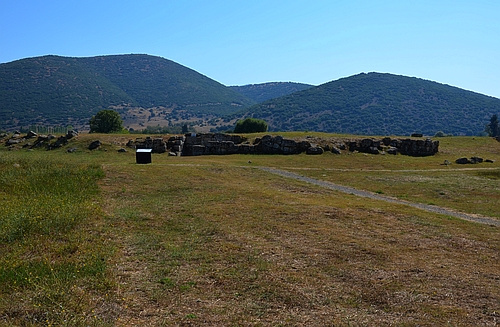
Above: The entrance to the archaeological site, closed in 2019, amd I could just look across the fence. In 2020 I was more lucky and even had free access.
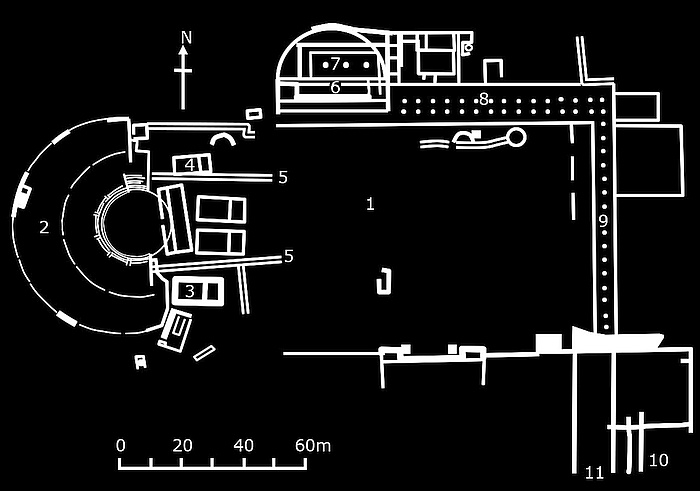
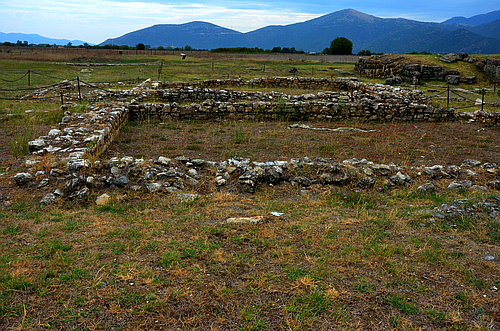
Above: Plan of the central area of the site. - 1. Agora - 2. Theatre - 3. Heraion (?) - 4. Podareion (?) - 5. paved road - 6. Exedra of Epigone - 7. Old market (?) - 8. "Baite" of Epigone - 9. Peristyle of Epigone - 10. Portico of Euryclea - 11. street.
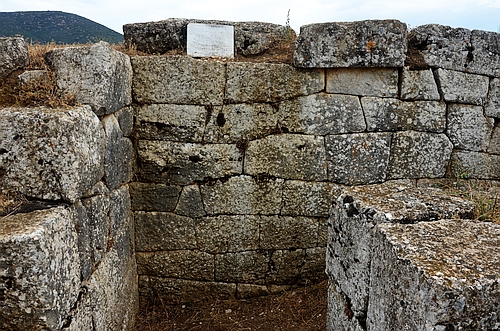
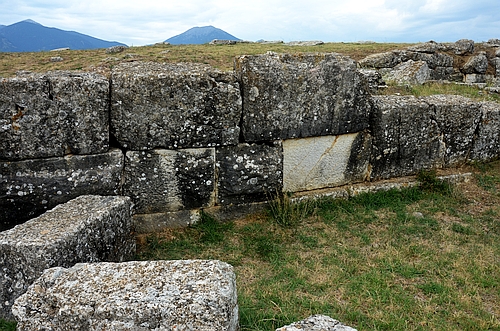
Ancient Mantineia and its territory, the Mantinike, occupied the northern part of the Tripolis plateau. The hills to the North and a narrow valley to the South separated the Mantinike from the Arcadian territories of Orchomenos and Tegea respectively. Mount Artemision constituted the eastern boundary between the Mantineian territory and Argolis. A defensive network of observatories on top of hills ensured the overall control of this flat territory.
Ancient Mantineia was founded in the Geometric and Archaic period and is especially known as the site of two decisive battles: in 418 BC the Spartans defeated the Athenians here in the largest land battle of the Peloponnesian War. And in the Second Battle of Mantinea, in 362 BC, Thebes was victorious over the allied forces of Athens and Sparta, but lost its prominent general Epaminondas and finally its hegemony. In 223 BC the Macedonian king Antigonos III Doson conquered and plundered the city which was then called Antigoneia. In the second century AD the Roman emperor Hadrian restored the former name of the city that was finally abandoned during the 6th-7th century AD due to Slavic invasions.
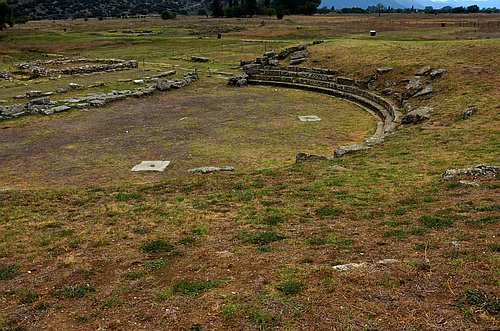
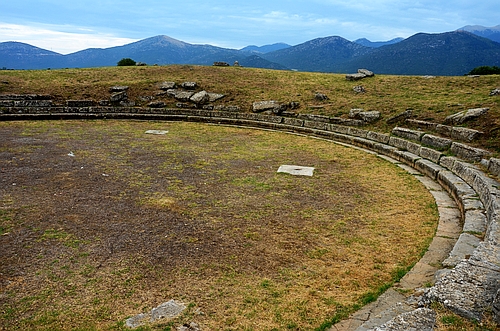
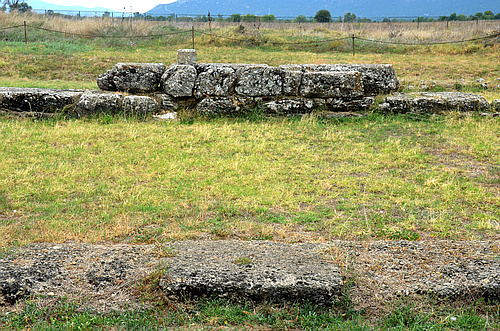
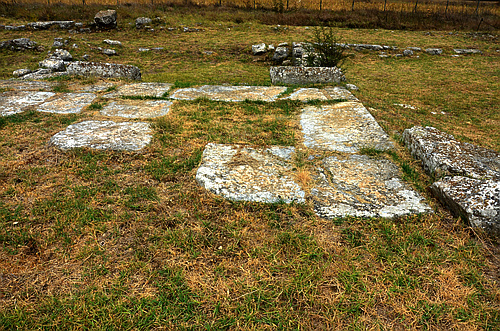
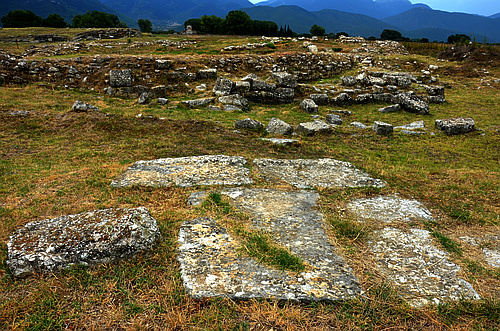
Known from descriptions by Pausanias, traveler of the 2nd century AD, Mantineia was excavated by a French archaeological expedition under the direction of G. Fougères at the end of the 19th century. Most prominent was the ancient theatre - but to be honest, it is petty in comparison with those of Orchomenos, Argos or Epidaurus. - And the rest? "Most of the building material was removed soon after the excavations and was reused in other constructions." Really? Ancient material used for what other constructions?
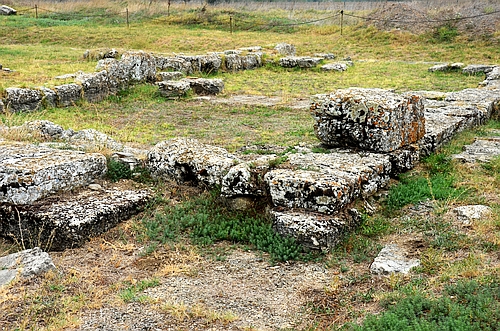
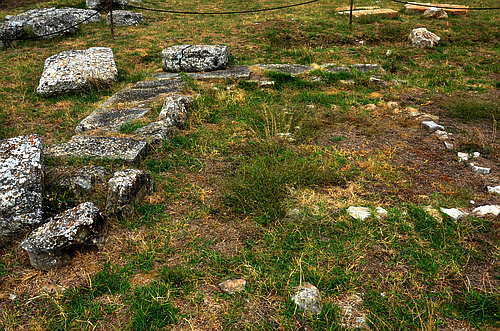
There are some information panels at the site with details about the areas, but there are no signs indicating the individual buildings. This makes an orientation difficult.