GREECE
 MACEDONIA
EMATHIA
NAOUSSA
MACEDONIA
EMATHIA
NAOUSSA

2025-10-18
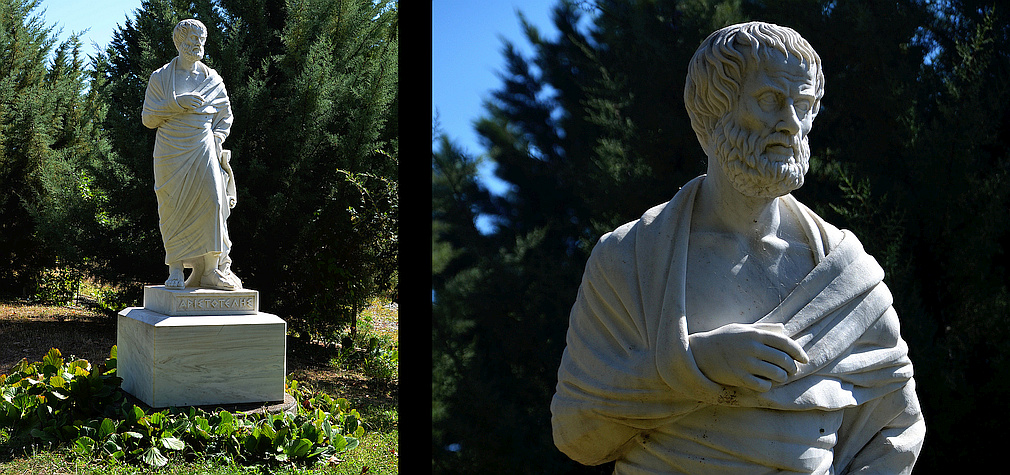
Above: modern statue of Aristotle near the nymphaion.
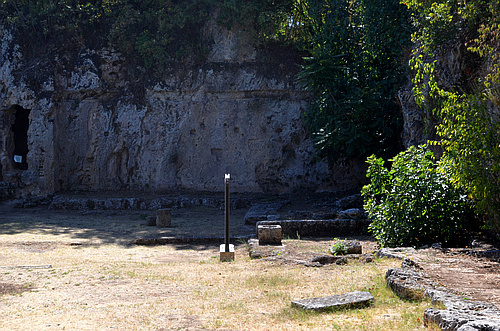
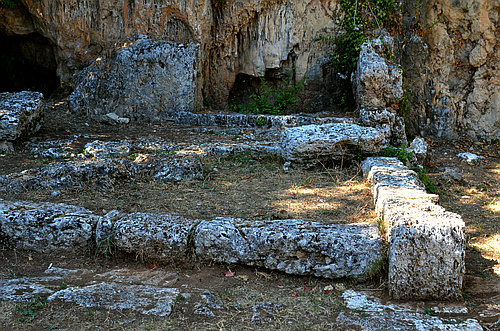
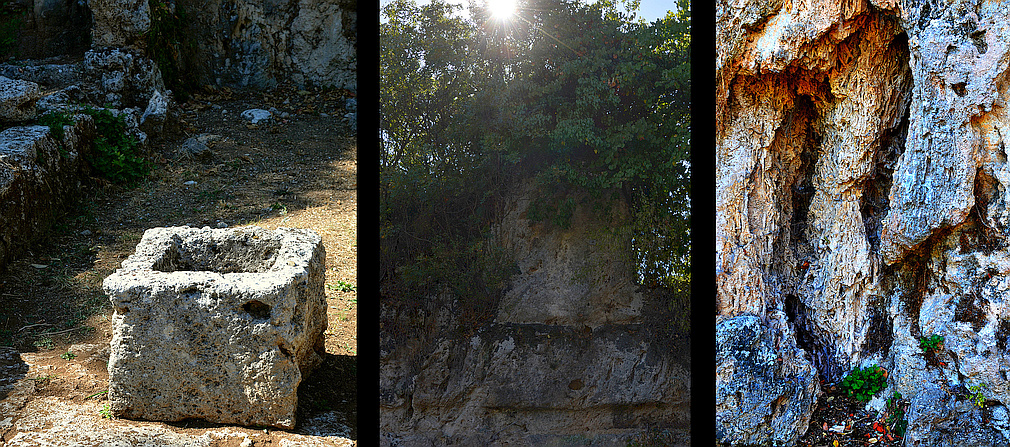
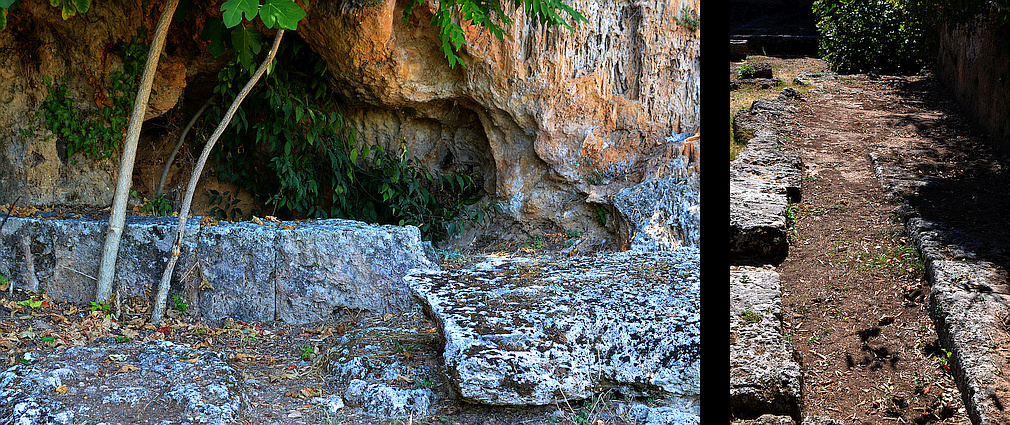
For the education of his son Alexander, the Macedonian king Philip II hired the greatest philosopher of antiquity, Aristotle. In return, Philip was to rebuild and free the citizens of Stagira, Aristotle's hometown, which he had razed in a previous conquest. As school, Aristotle received the nymphaion of Naoussa where the rock between two caves was carved in a rectangle and an ionic colonnade was added to form a shady, roofed, gamma-shaped stoa.
"As a place for the pursuit of their studies and exercise, he assigned the sanctuary of the Nymphs, near Mieza, where, to this very day, they show you Aristotle's stone seats, and the shady walks."
(Plutarch, Vita Alexandri, 7.4)
It was the ideal setting, far enough from the busy royal court, in a tranquil surrounding, where Aristotle and his students took walks along the riverbank trails and through the woods.
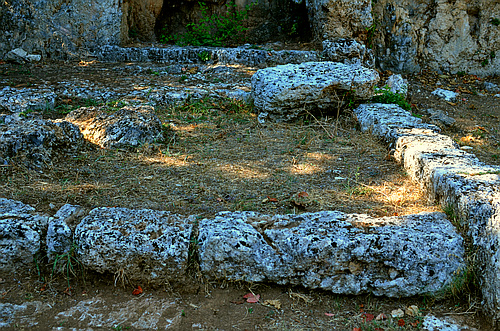
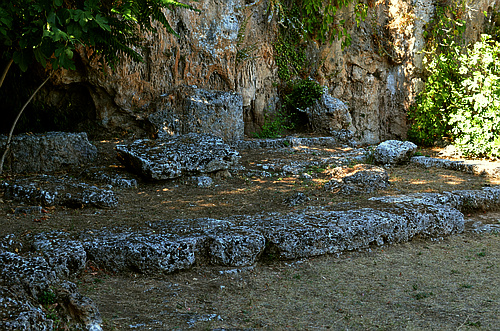
The educational activities in this school took place in the three years between 343/342 and 340/339. It is not known exactly who the students were, but next to Alexander it included Hephaestion, Ptolemy I Soter, Kassandros, and Kleitos the Black.
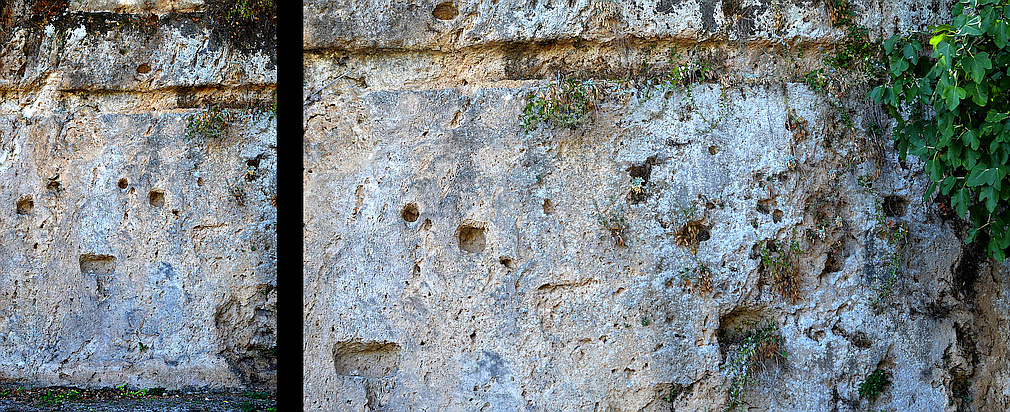
Above: The vertical surface of the rock, back-end of the shady stoa (built in 350 BC and later) shows openings for supporting the roof's girders and other beams.