GREECE
 EPIRUS
THESPROTIA
GITANA
EPIRUS
THESPROTIA
GITANA

2024-10-28
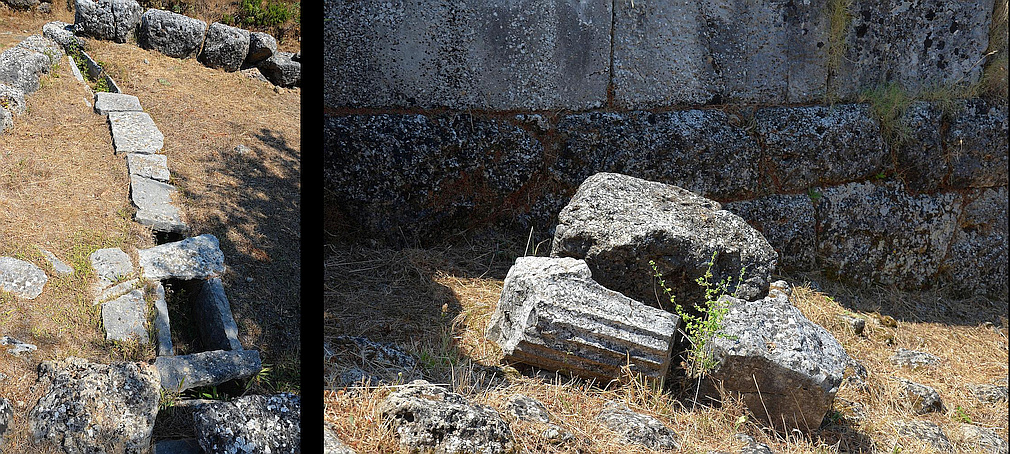
Above left: A stone-built duct extending towards the nearby slab-paved road was used for rainwater drainage. - Above right: Architectural members in Doric Order near the gate of the fortification wall next to the Prytaneion.
Below: Around the mid 3rd century BC, when the Koinon of the Epirotes was governed by the descendants of Pyrrhus, building activity in Gitana was significant, including the erection of the theatre. West of the fortified settlement, a bailey was erected to protect the theatre and the entire riverside area. - Excavation surveys in the 1990's revealed part of this theatre, and restoration work is still going on (2014).
The koilon (cavea) has a diameter of 65 m and consists of 28 rows of benches, formed in two tiers, for 5000 to 6000 spectators. Four narrow stairs divide the construction into five cunei. Two additional ones at the sides are nowadays half-destroyed.
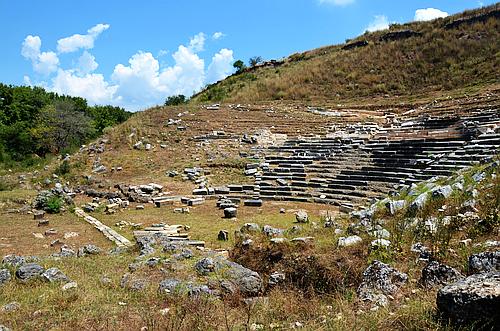
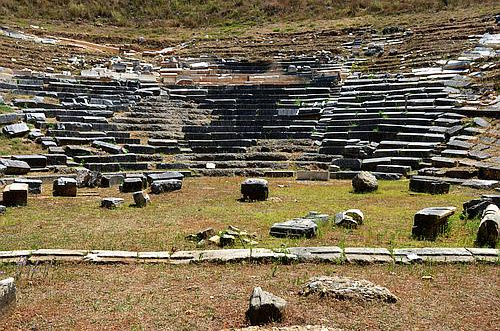
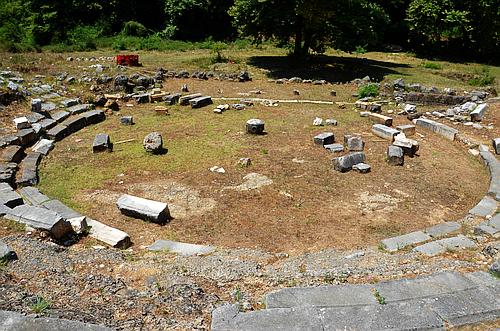
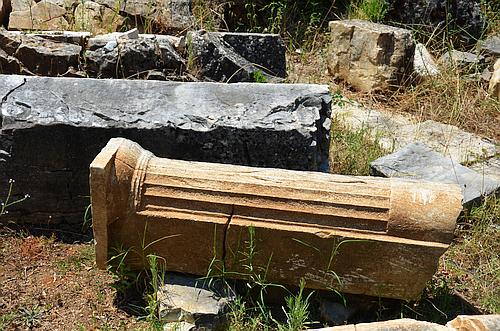
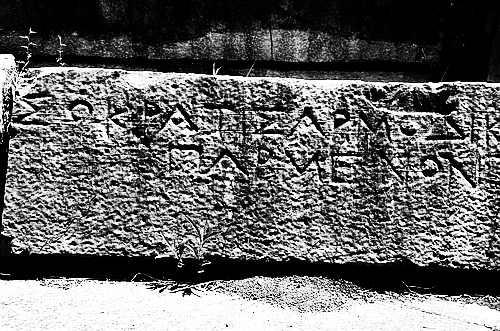
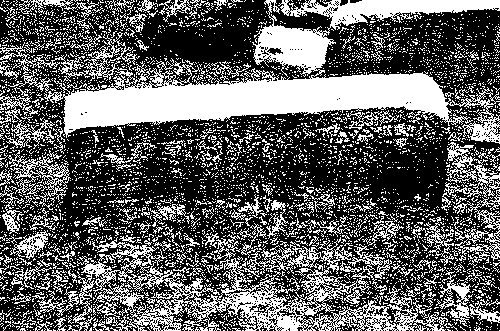
Above left: View to the orchestra. - Above right: Half-column of the front stage. - Below: Stone benches of the cavea, showing engraved inscriptions with names of persons at the front side.
Below: The archaeological site of ancient Gitana lies in a remote landscape of great natural beauty.