GREECE
 CRETE
LASITHI
SITIA
TRYPETOS
CRETE
LASITHI
SITIA
TRYPETOS

2024-10-28
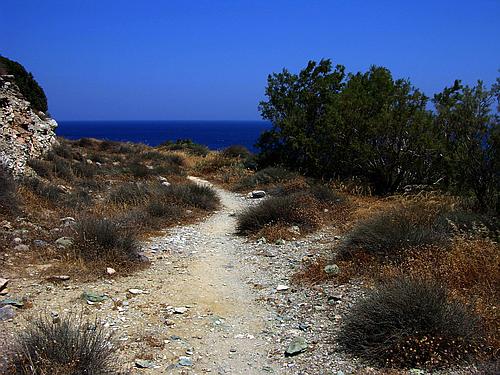
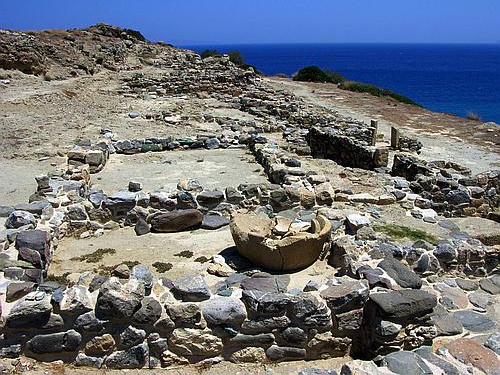
About 3 km to the east of modern Sitia lie the remains of a Hellenistic city, which flourished from the middle of the 4th to the middle of the 1st century BC. It is usually identified with ancient Eteia (modern Sitia), and covers the whole headland known as "Trypetos". The city was built on terraces behind a massive wall separating the peninsula on its south side from the mainland.
Since 1987 systematic excavations have been conducted and are still (2006) continuing, but earlier cultivation in this area and the use of digging machines had already caused considerable damage.
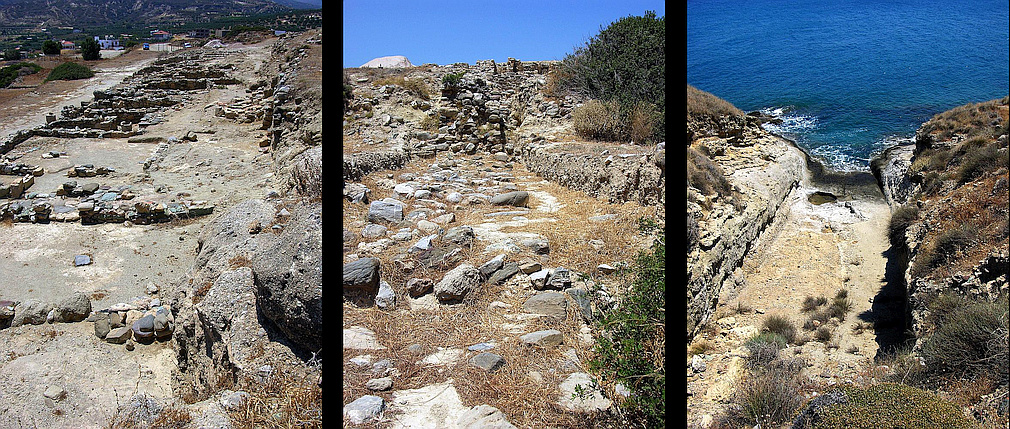
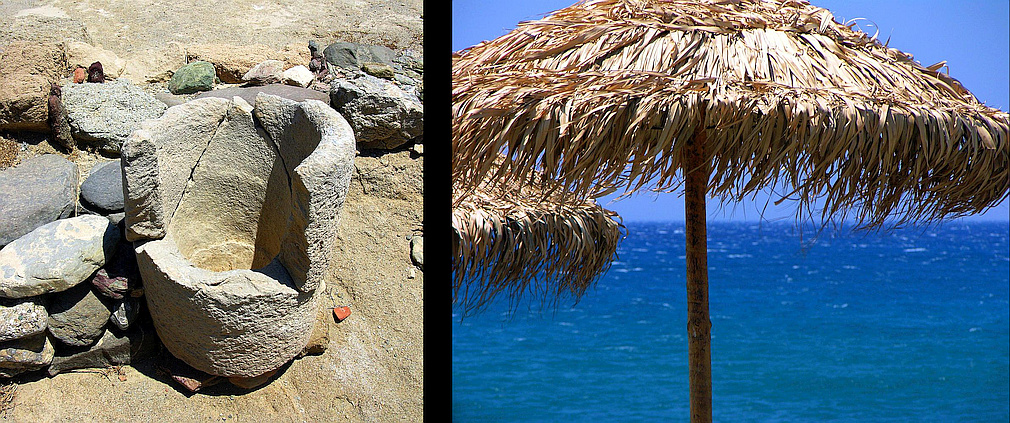
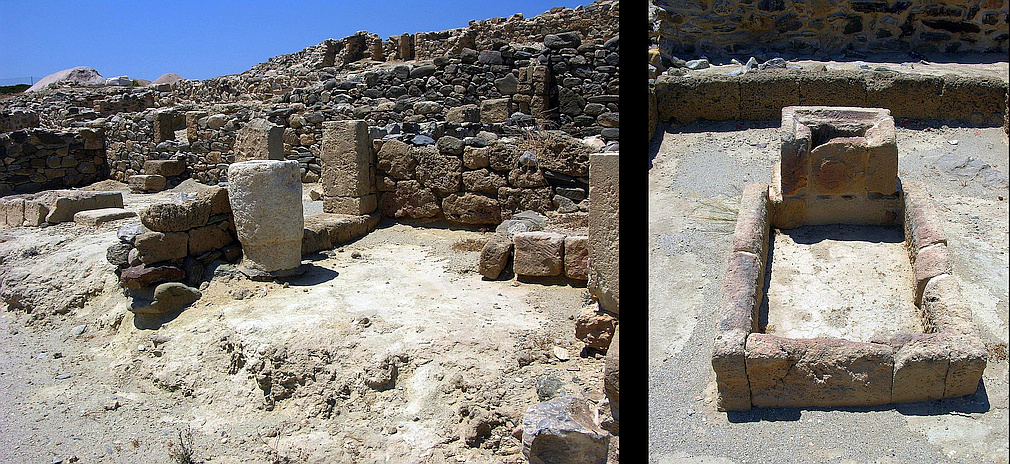
A number of ancient houses, parts of buildings, military installations and other structures have been uncovered. The most important room appears to be a hall (photos above), measuring 7.5 x 5 m, with a rectangular hearth at its centre and a small poros bench besides it. Movable finds included numerous clay pots, coins, jewels and lead weights.
One of the most interesting discoveries at Trypetos is that of a Hellenistic dockyard (below right) - an artificial shelter for ships during winter time - on the south-east coast of the headland. It is 30 m long, 5.5 m wide, and 5 m deep, hewn out of the rock. Its floor is slightly inclined, but due to geological changes does not extend under the sea level (which in Hellenistic times it probably did).