GREECE
 CRETE
LASITHI
KRITSA
LATO
CRETE
LASITHI
KRITSA
LATO

2024-10-28
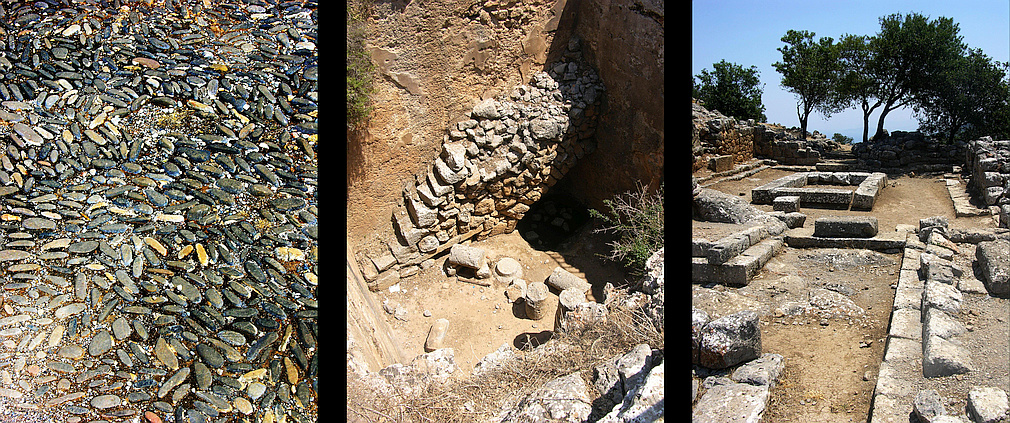
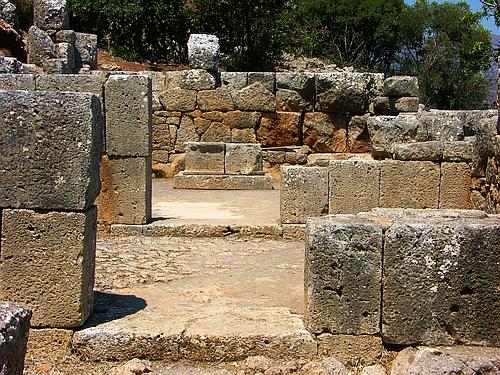
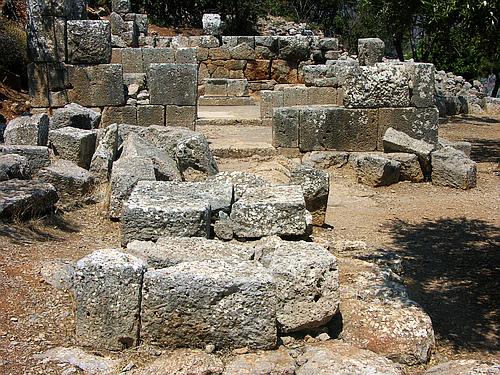
Above: Pebble floor of the stoa (portico). The deep cistern next to the agora was essential for the water supply since there is no spring at Lato. The Prytaneion of the 4th-3rd century BC (above right) was the administrational centre of the city-state, where the notables of the city held their meetings, where the city's archives were kept, and where a hearth ("eschara") burned day and night in honour of Hestia, demonstrating the city's continuity with its tradition.
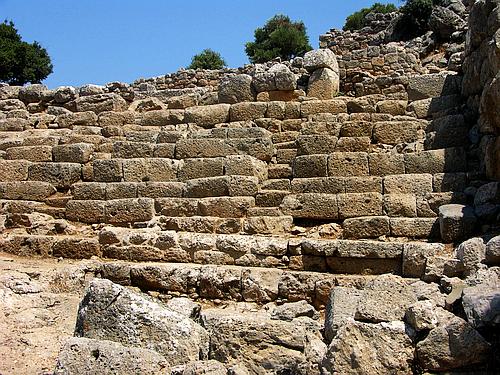
Below left: Remains of Doric columns in the stoa. - Below right: Monumental steps lead from the northern side of the agora to the upper terrace. But this is not only the access to the Prytaneion: It is a (rectangular) theatre where the tiers are divided by narrow staircases into three wings. Nearly 80 people could sit here for public assemblies or to watch performances. What makes this architecture so fascinating is its Minoan inheritage (see the L-shaped theatral areas in Minoan palaces) combined with the foreboding of the Classical Greek theatre.
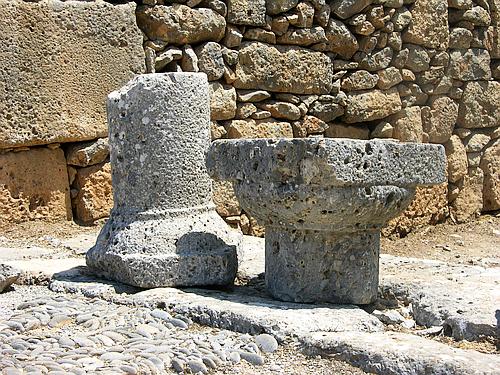
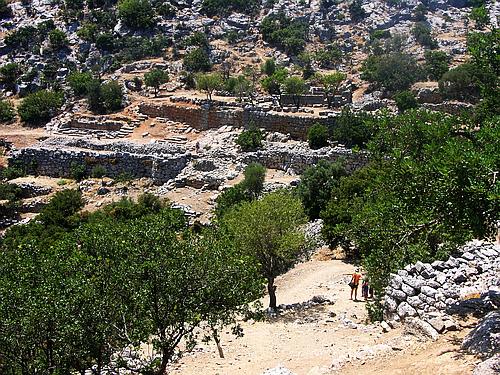
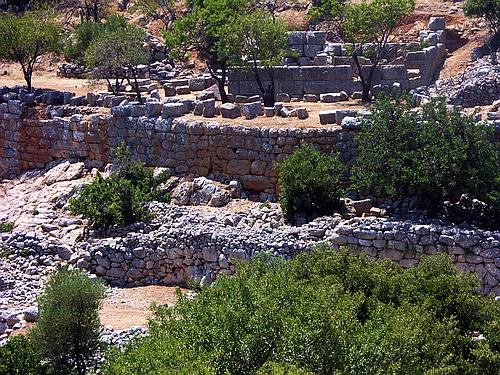
Above: Overall view of the southern acropolis with heavy retaining walls and the Large Temple. - Below: The Large Temple, measuring 10x16 m, was built in the late 4th, early 3rd century BC. It consists of a rectangular pronaos (antechamber) in the east, and a square cella. There are no columns, but the inscribed - though illegible - base of the deity's cult statue (near the centre of the picture below left) and a two-stepped altar (below right) in front of the temple.