GREECE
 CENTRAL GREECE
FOKIS
DELPHI
MUSEUM
CENTRAL GREECE
FOKIS
DELPHI
MUSEUM

2024-11-07
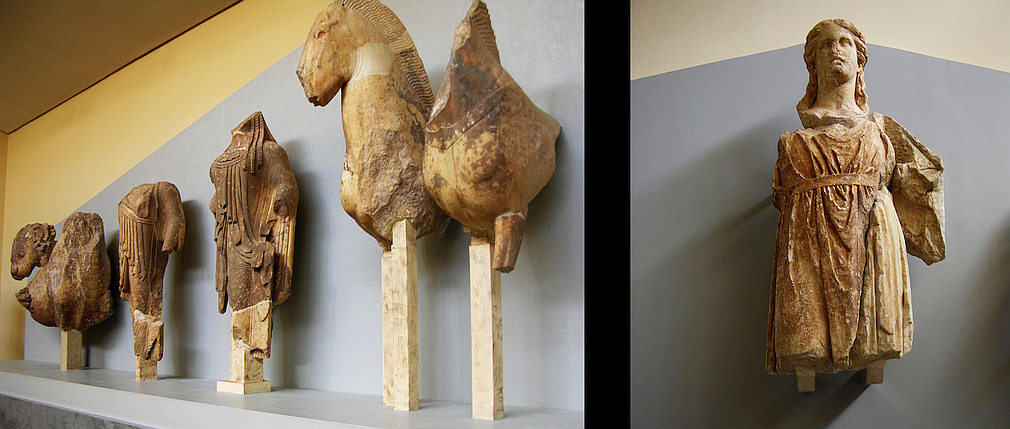
Above left: The east pediment of the archaic temple of Apollo, worked in Parian marble, shows in the centre Apollo's four-horse chariot framed by Kouroi and Korai. In both corners are animal groups depicting a lion mauling a gentle beast. - Above right: The west pediment of the classical temple of Apollo depicts Dionysos among the Thyiads. Dionysos stands in the rare iconographic type of the cithara player, which places him on equal terms with the god of music, Apollo, and reconciles the different realms of the two deities who are both depicted on the same temple. Dionysos wears a chiton girt below the chest, a himation draped over his shoulders and the characteristic mitra (headband) of the initiated. The pediment is the work of the Athenian sculptors Praxias and Androsthenes, about 330 BC.
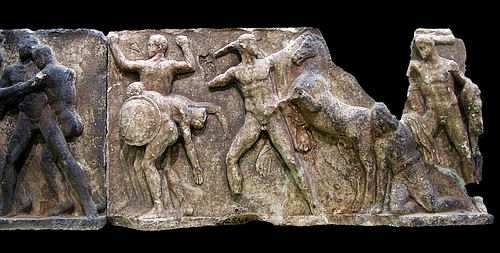
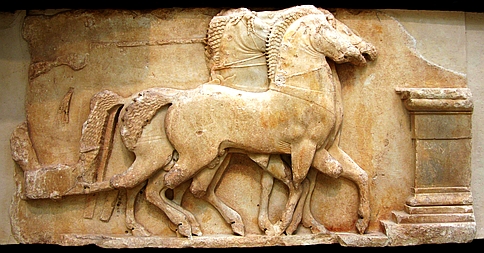
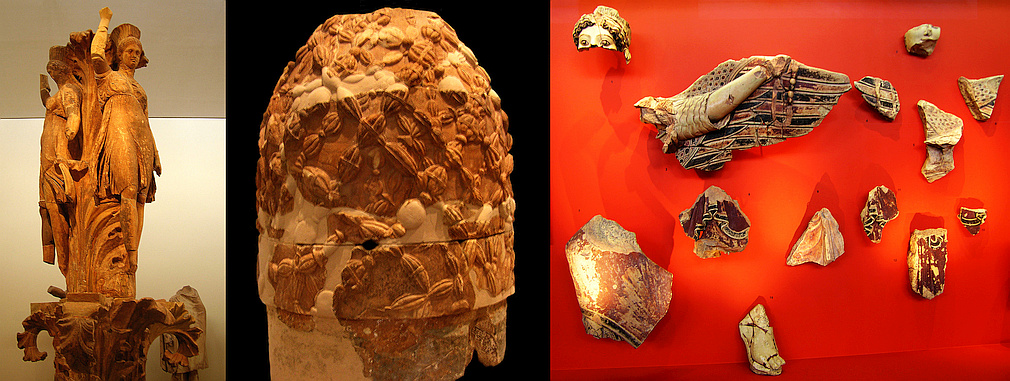
Above: Relief details. - Below: the "Column of Dancers", three female statues on top of a column representing an acanthus stalk, an Athenian votive offering of about 330 BC. The figures were possibly Thyiads, who celebrated orgiastic feasts in honour of Dionysos. - The Omphalos, a sculptured stone that stood in the temple of Apollo, anciently believed to mark the point where the eagles of Zeus met at the centre of the known world. The cultic ribbons with which the stone was decorated are chiseled in stone in this Roman replica. - Parts of a painted sculpture.
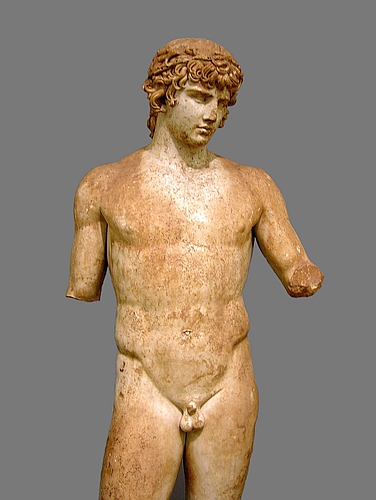
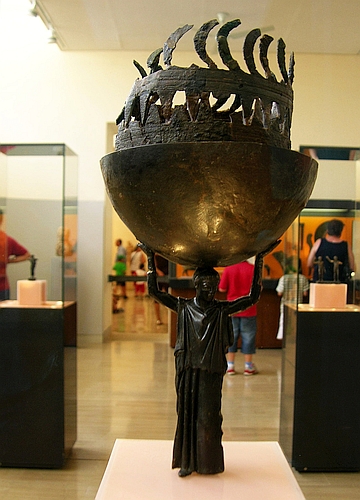
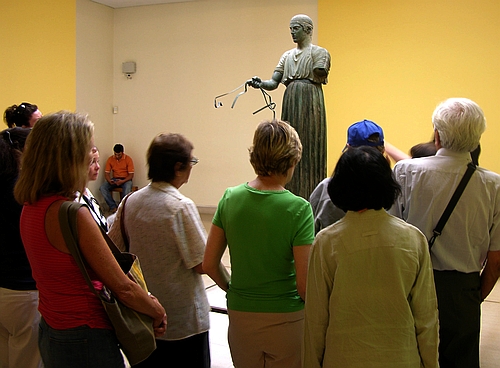
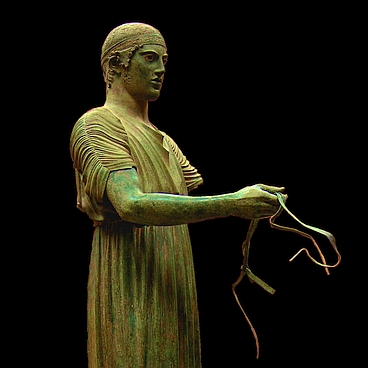
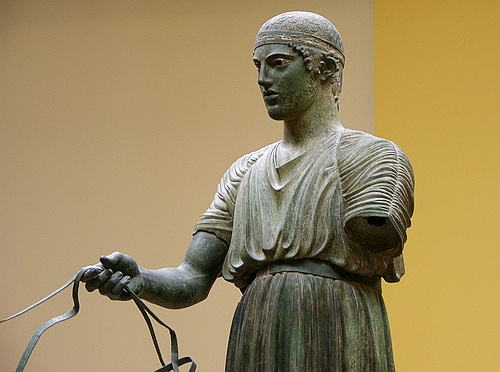
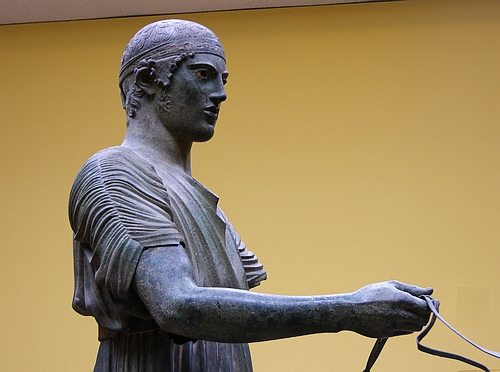
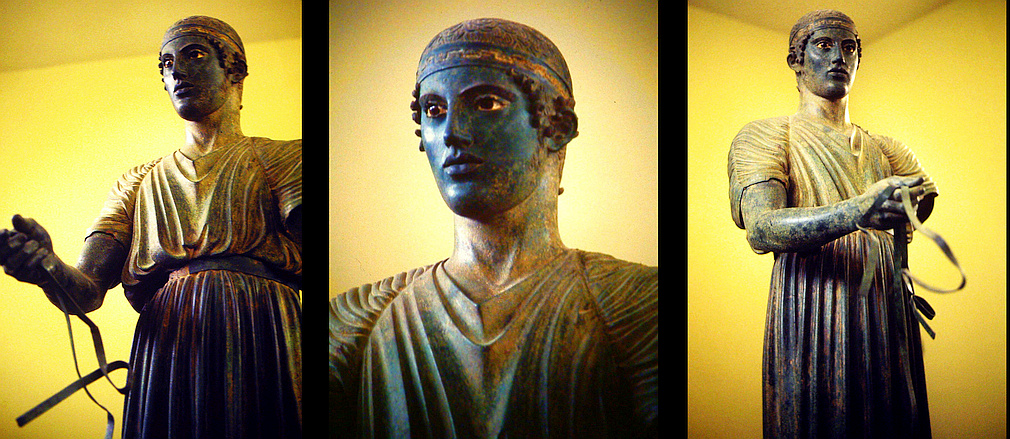
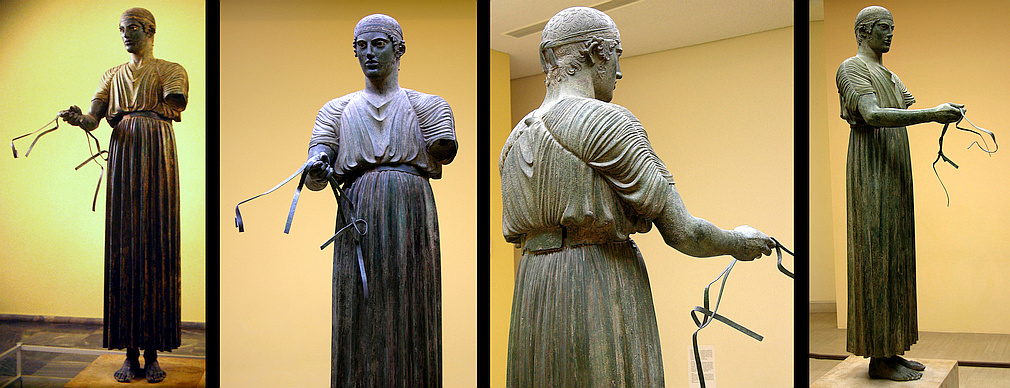
Above left: Statue of Antinoos, a favourite of emperor Hadrian, in polished Parian marble of the 2nd century AD. It is a particularly good specimen of its genre. - Above right: Black bronze incense burner, an intriguing work of art. - Below: One of the major attractions of the museum is the Charioteer. The life-size bronze statue was part of a quadriga, dedicated by Polyzalos, the tyrant of Gela, in 478 BC after his victory in the chariot-race at the Pythian Games. The sculptor has not been identified with certainty, but it must have been one of the major artists of his time. The calm pose, aware of his object, the retained force - this is all perfectly rendered. A really magnificent work of art.