
GREECE
 CENTRAL GREECE
FOKIS
DELPHI
SANCTUARY
CENTRAL GREECE
FOKIS
DELPHI
SANCTUARY

2024-11-06
the Sacred Way (2)
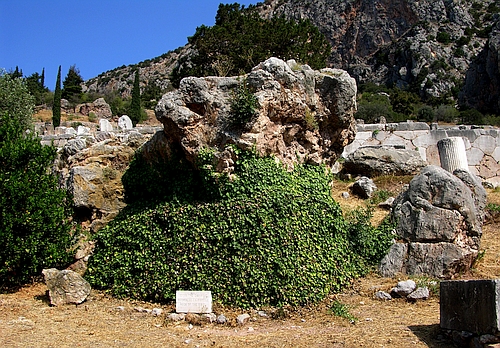
Continuing on the Sacred Way, climbing steadily, we pass more monuments. Quite inconspicious is the "Rock of the Sibyl" on the left, part of the pre-hellenic cult of Gaia, Mother Earth.
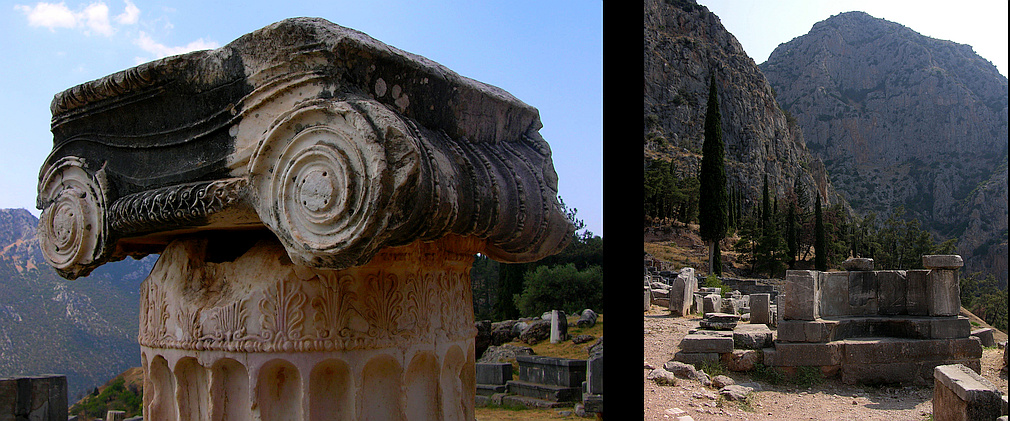
the Stoa of the Athenians
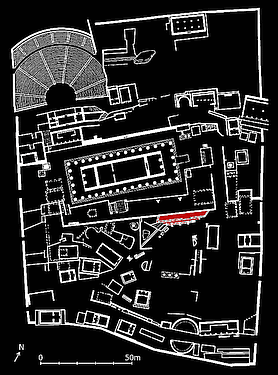
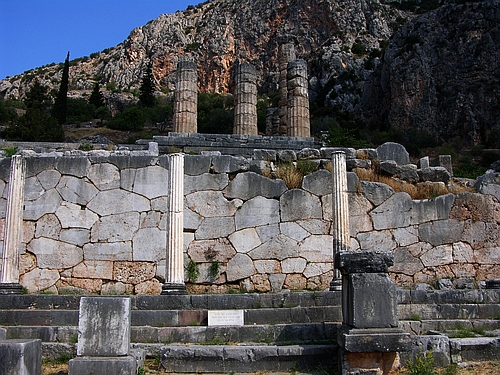
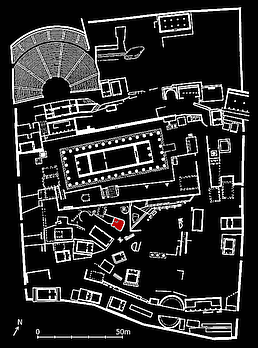
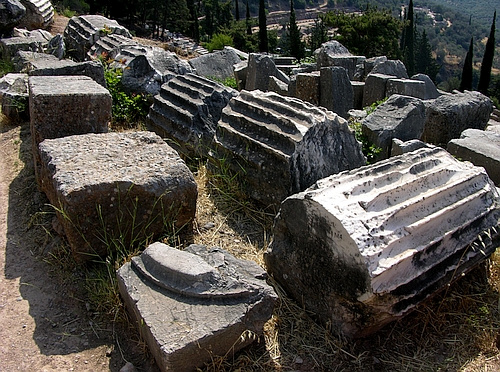
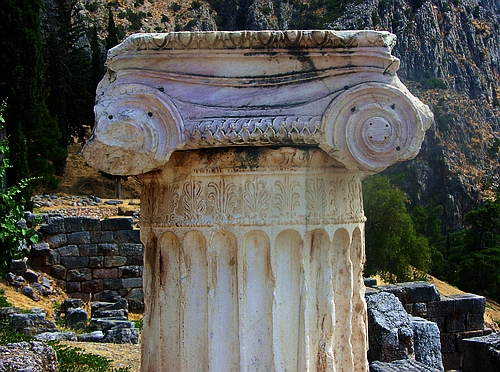
The "Stoa of the Athenians" in front of the polygonal wall and below the temple of Apollo was dedicated by Athens in 478 BC, after the end of the Persian Wars to their victory over the Persians in the deciding naval battle of Salamis. This is documented by inscriptions on the monument. Originally eight Ionic columns in Parian marble stood on the three-stepped limestone basement.
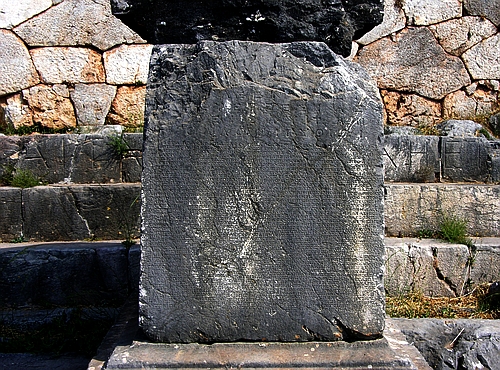
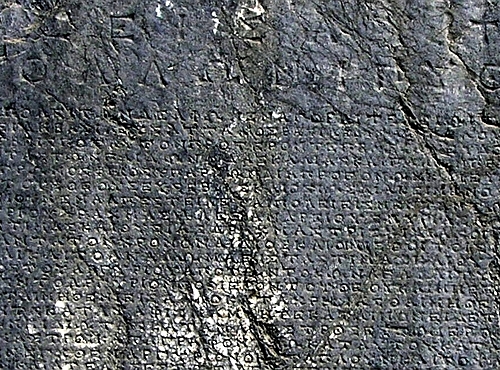
the Polygonal Wall
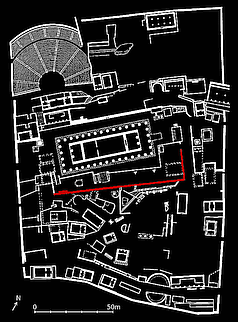
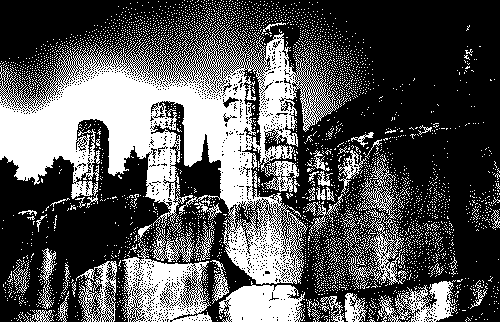
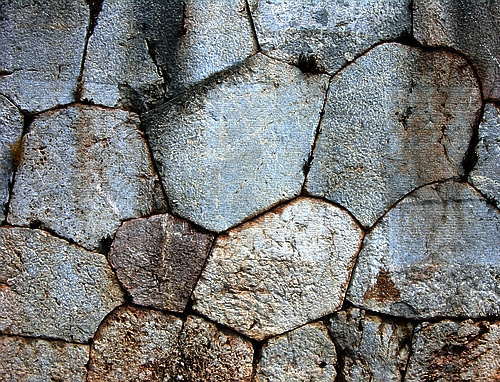
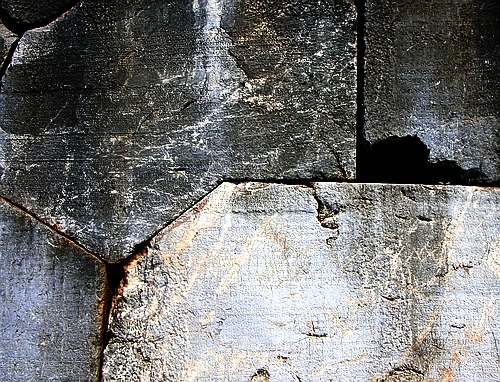
Above the stoa stretches the "Polygonal Wall", the more than 90 m long and up to 4 m high southern retaining wall of the temple. Its superb polygonal masonry, dating to about 548 BC, combines aesthetics and usefulness. The interlocking irregular stone slabs guarantee the highest possible stability, important in this area of seismic activity. On this wall more than 800 inscriptions have survived to tell about historic events and private matters.
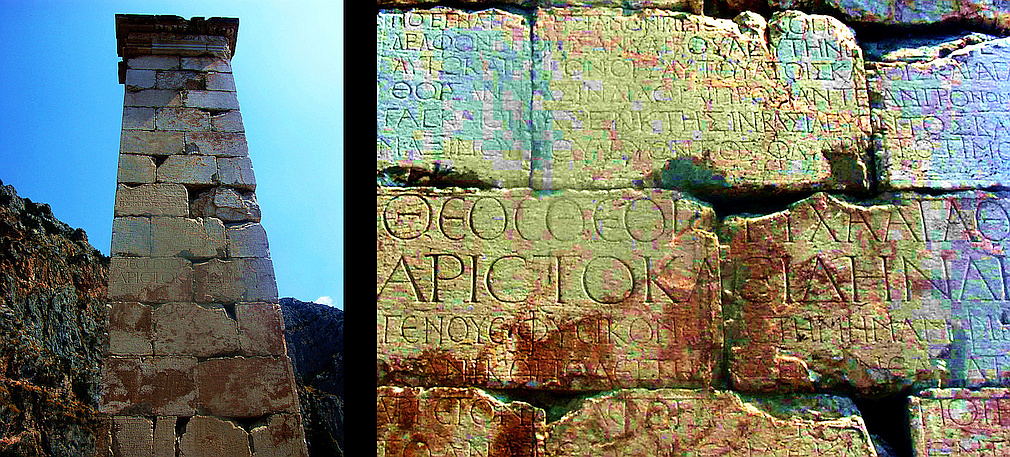

Above: After another turn the Sacred Way now reaches its steepest part, leading past numerous monuments - among them this huge inscribed pillar, the Monument of Prusias II, a monumental statue base.
