GREECE
 CENTRAL GREECE
EVVIA
ERETRIA
MUSEUM
CENTRAL GREECE
EVVIA
ERETRIA
MUSEUM

2024-11-04
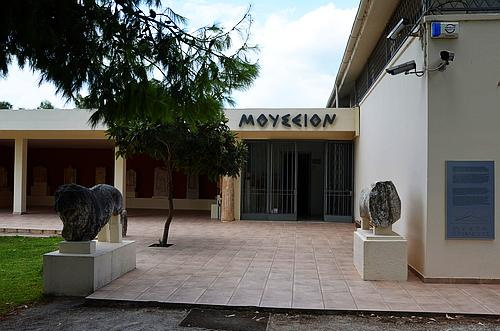
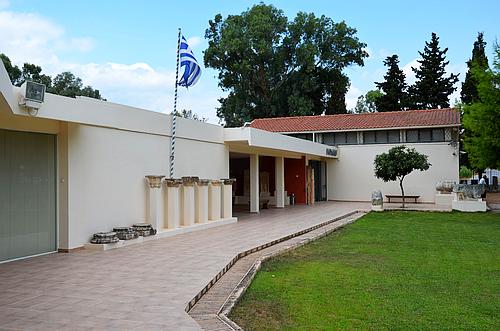
The archaeological museum of Eretria, next to the main road from Chalkis, was established in 1960, later enlarged and renovated. It contains artefacts unearthed at various sites on Evvia, and is actually more impressive than the museum in Chalkis because of the number and the quality of the exhibited objects. But: explanations only in Greek and French.
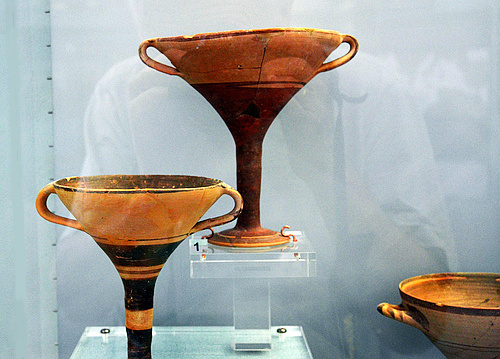
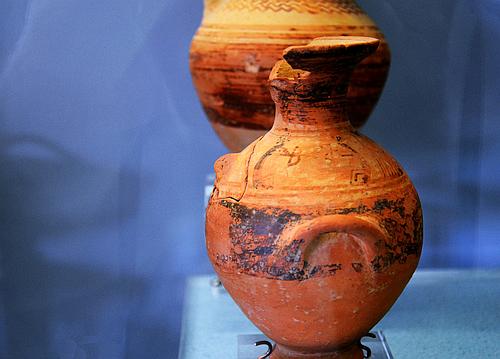
Below left: Mycenaean (?) vessels, 12th century BC. - Below right: Painted jugs, the one in front with the depiction of a bowman.
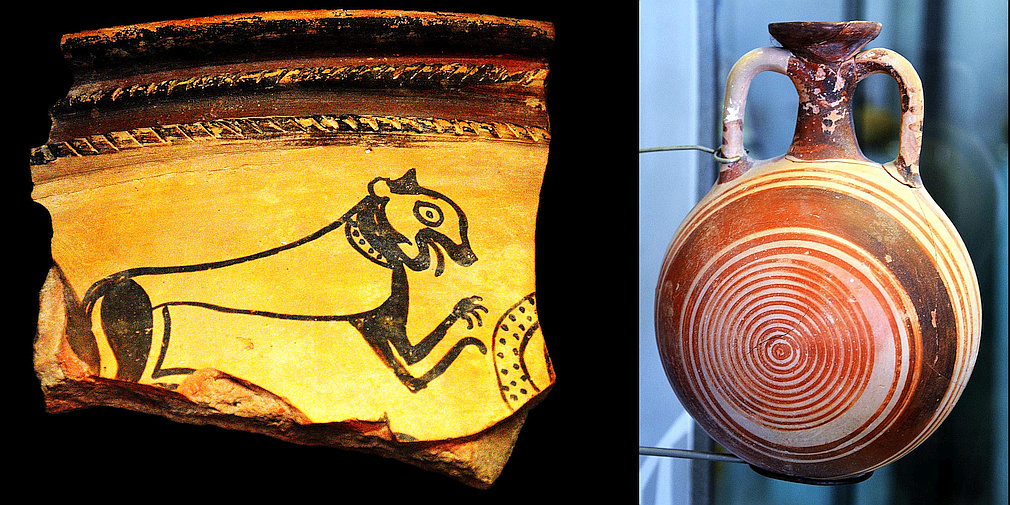
Above left: Sherd with the depiction of an animal which may be a dog. - Above right: Vase with a circular pattern.
Below: The famous "Centaur from Lefkandi" is one of the highlights of the museum. It is an incredible work of art of the 10th century BC, thus being among the earliest representations of a centaur known from the Aegean area and one of the largest known terracotta centaurs (length 36 cm, height 26 cm). It was found deliberately broken in two pieces in two different graves of the Toumba cemetery in Lefkandi. The eyes appear to have been punched out and the groove across the forehead indicates the edge of the hairline.
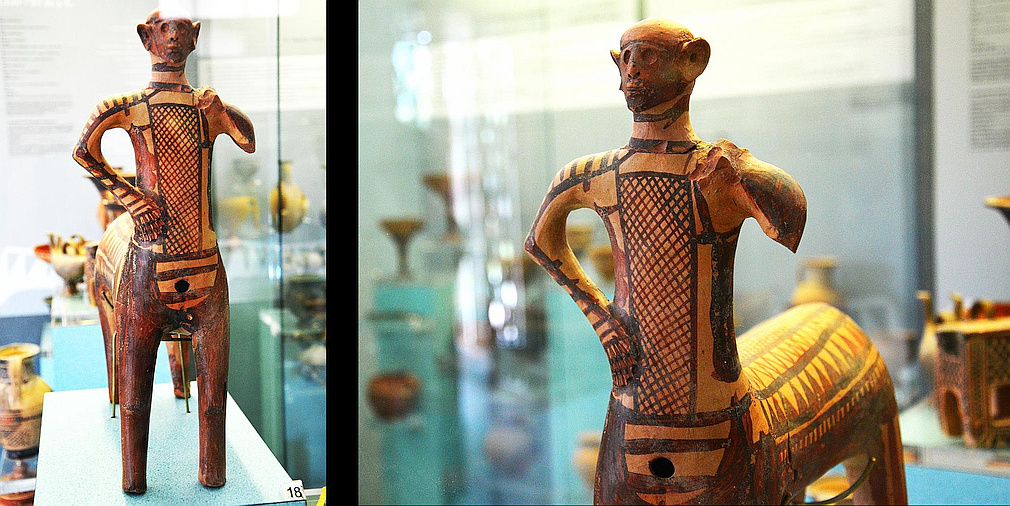
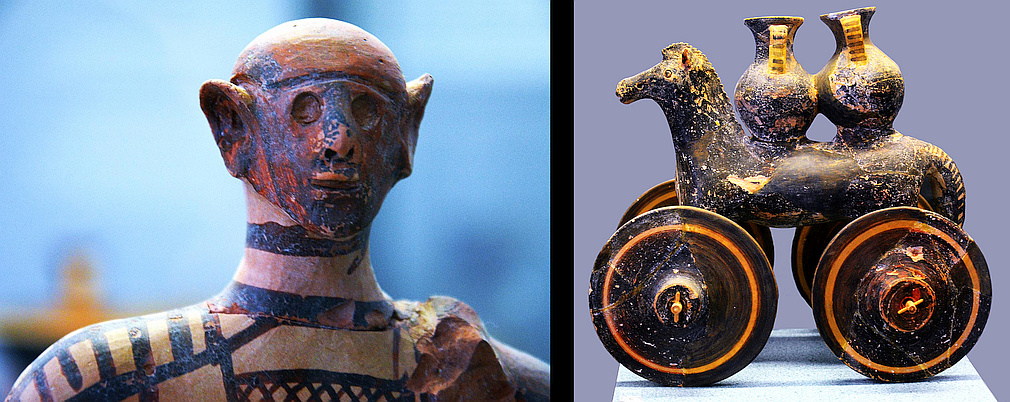
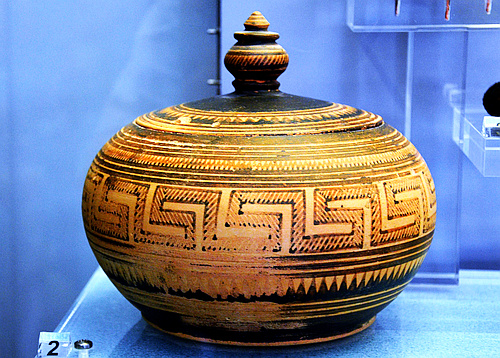
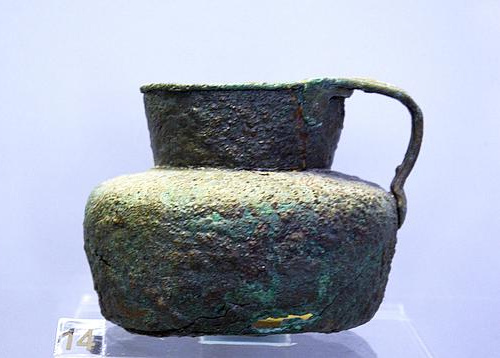
Above left: Another view of the "Centaur from Lefkandi". - Above right: Clay horse on wheels, a Mycenaean toy. - Below left: Pyxis with fret decoration, from Lefkandi (?), 950-800 BC. - Below right: Oinochoe, 950-800 BC.