GREECE
 PELOPONNESE
MESSINIA
BASSAE
PELOPONNESE
MESSINIA
BASSAE

2025-01-11
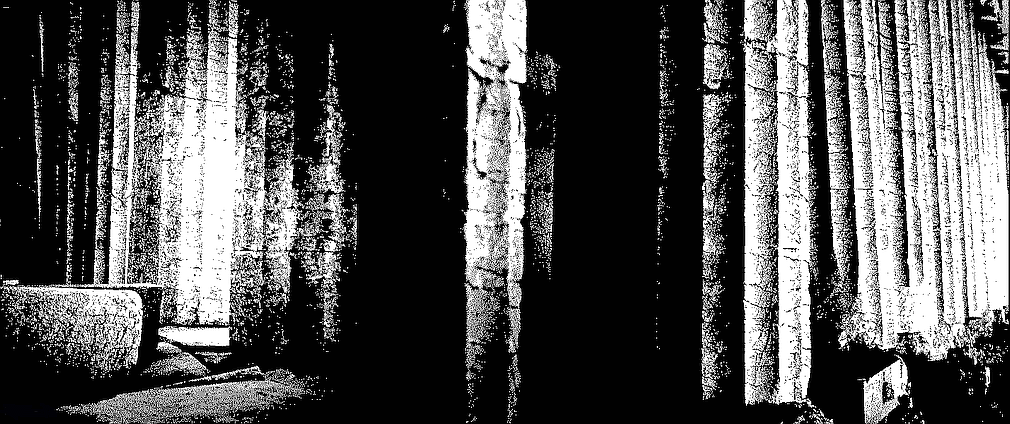
The "Temple of Epicurean Apollo", built over an older temple, has an unusual North-South orientation, probably due to the peculiarities of the terrain. Its proportions (14.5 x 38.2 m) correspond, reduced by one third, exactly to those of Apollo's venerable temple at Delphi. But unlike this model the temple at Bassae combines the Archaic style and the serenity of the Doric order with some daring architectural features.
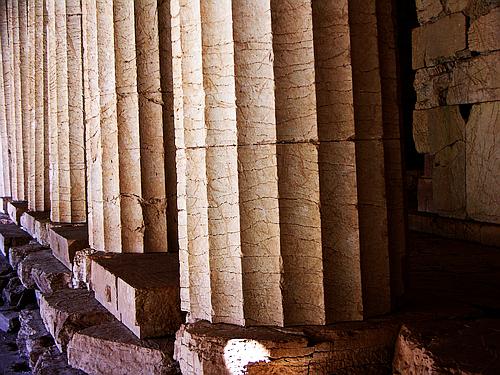
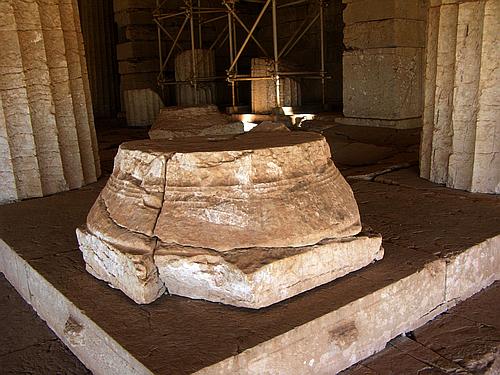
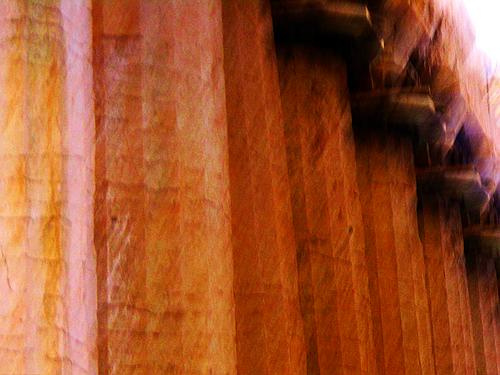
From the outside, it is a Doric hexastyle peripteral with 15 columns of local limestone on the long sides. But it also had Ionic inner columns, and in the naos - the inner sanctuary - stood a single column with Corinthian capital, the oldest known example of its kind. It thus combined all three architectural styles, which alone would make this temple unique. The building material is a hard, fine-grained grey local limestone, but marble was used for the more decorative parts.
The Ionic entabulature had a celebrated frieze with marble figures representing the battles of Greeks and Amazons, and of Centaurs and Lapiths. The frieze was looted in 1811-12, the sculptures now being displayed in the British museum.
Pausanias named Iktinos, who worked with Phidias on the Parthenon, as the architect, but this has been questioned.
The "Temple of Epicurean Apollo" was discovered by the French J. Bocher already in 1765. British archaeologists studied (and looted) it in the 19th century, before the 1st Archaeological society of Athens began systematic archaeological research of the area in 1902. This was continued in 1959, 1970 and 1975-1979. Presently, conservation and restoration work is being done under the supervision of the Committee of the Epicurean Apollo, based in Athens.
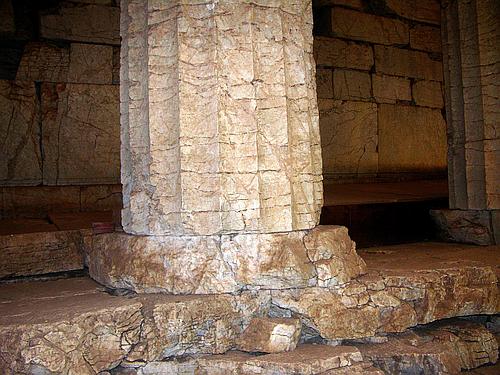
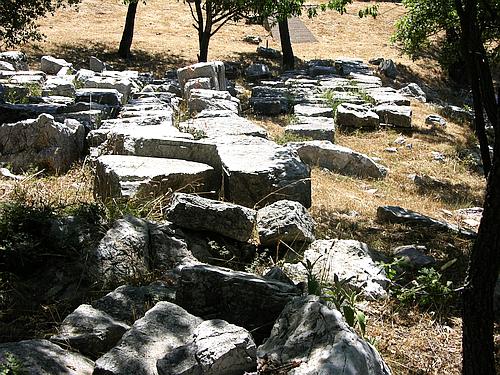
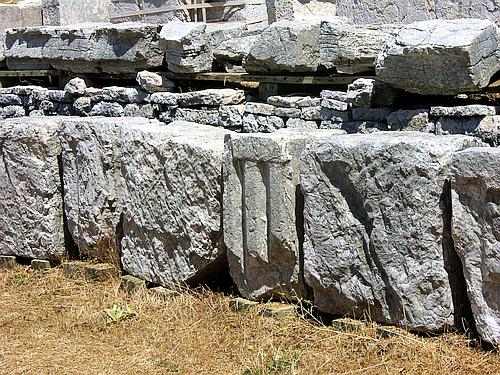
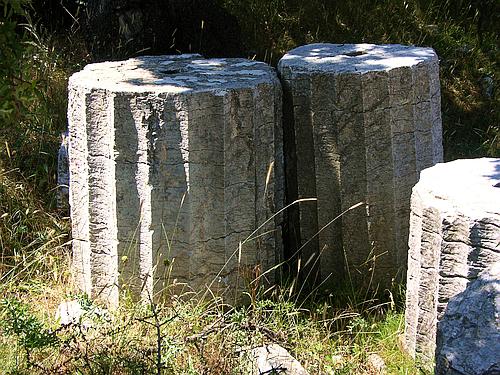
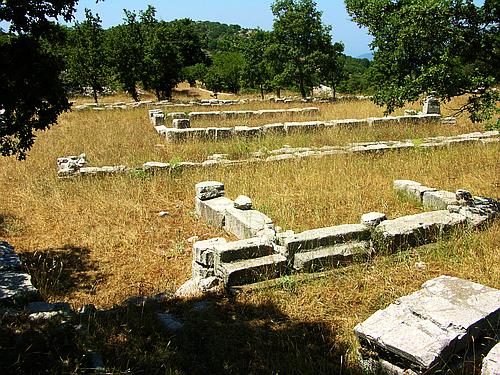
Outside the large tent, there are many architectural parts of the temple of Apollo, as well as remains of two smaller temples in the North-West (below right), dedicated to Aphrodite and Artemis.