GREECE
 PELOPONNESE
ELEIA
PLATIANA
PELOPONNESE
ELEIA
PLATIANA

2024-10-28
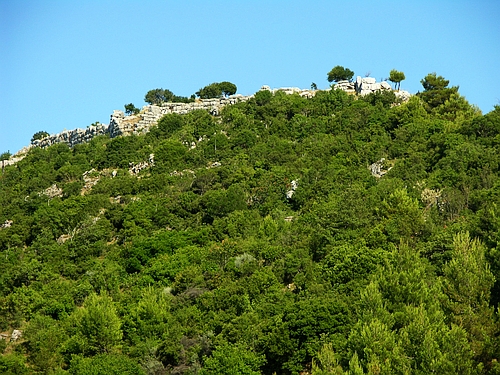
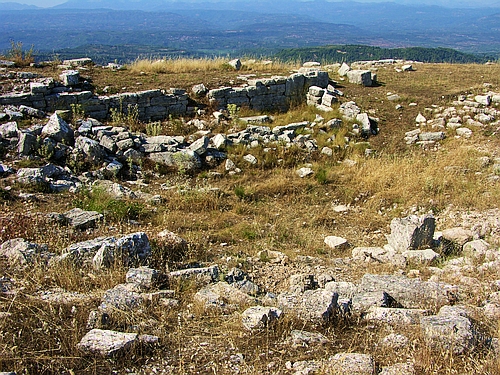
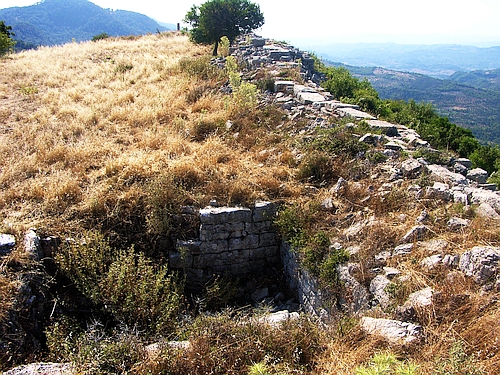
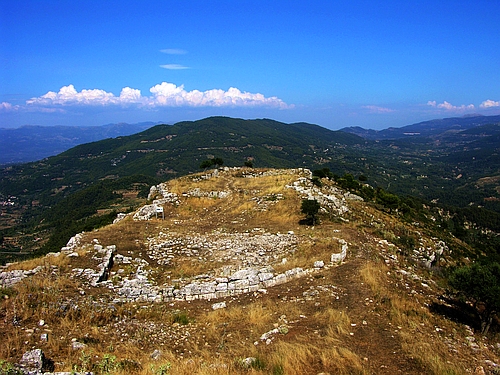
A seemingly endless road winds up from Platiana to a steep hill (600 m above sea level) at the eastern end of Mount Lapitha, where the acropolis of Homeric Aipi (or Tipanai) is located.
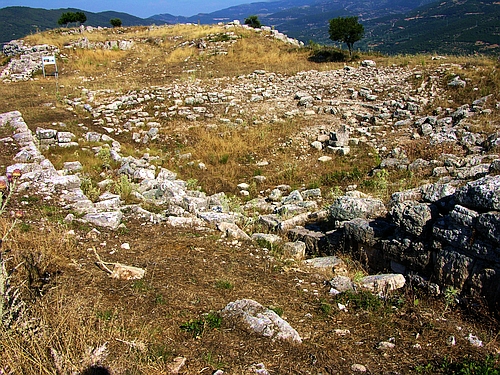
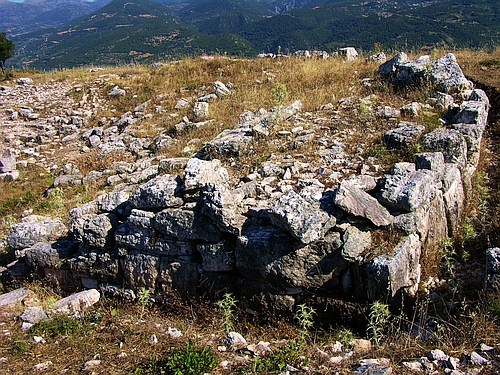
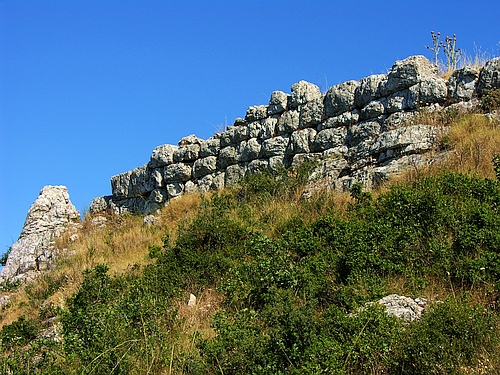
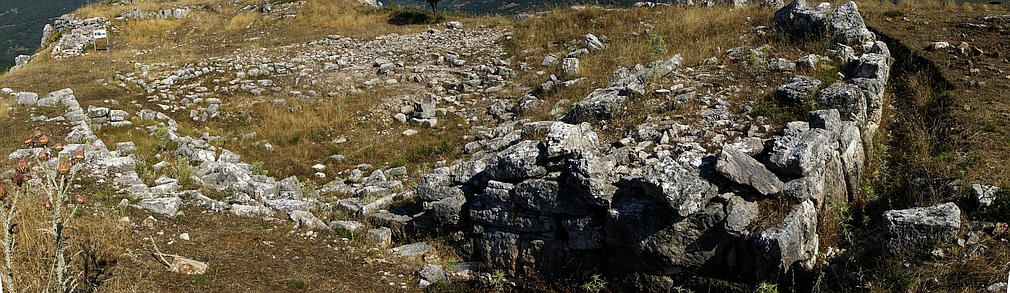
The massive walls of the 4th or 3rd century BC in polygonal or rectangular type masonry are quite well preserved and in some places reach a height of 5 m. They surround an oblong city (length 600 m, width 60-80 m) that stretches out on several terraces secured by retaining walls. The main gate was in the East, two other gigantic gates were in the Northwest and in the Southwest. Several defensive towers complete the heavy fortification of the city.
The naturally fortified site was inhabited since prehistoric times, but the city thrived especially in the Late Classical and Hellenistic periods. By the 2nd century AD, it was probably abandoned since Pausanias does not mention it in his travel reports.
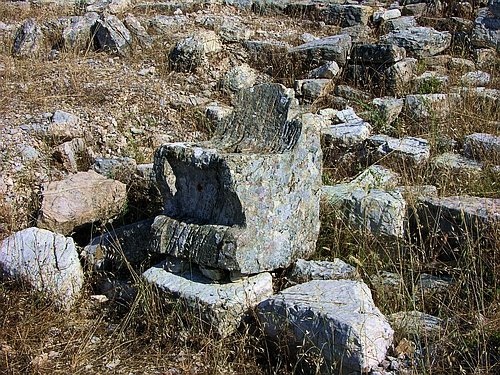
Above and below: The city's theatre east of the acropolis. Although only part of the cavea and the skene have survived, its remoteness and grandeur are impressive. It is one of the only two surviving ancient theatres in Eleia - the other one being that of ancient Elis.