GREECE
 PELOPONNESE
ARCADIA
TEGEA
MUSEUM
PELOPONNESE
ARCADIA
TEGEA
MUSEUM

2024-11-19
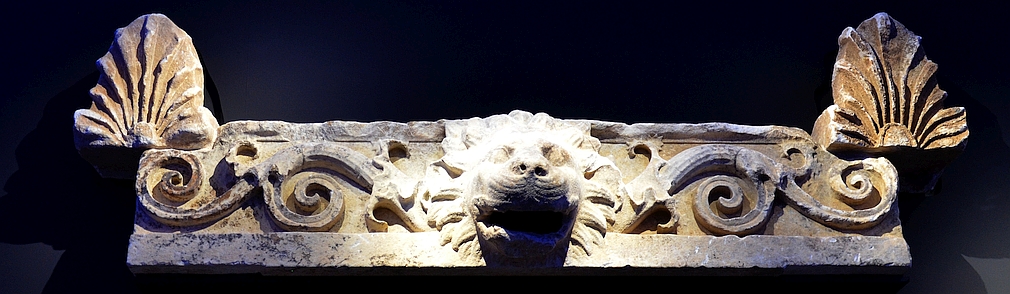
Above: Marble sima or gutter, temple of Athena Alea (350-330 BC). - Below: Marble epikranitis block, temple of Athena Alea (350-330 BC).
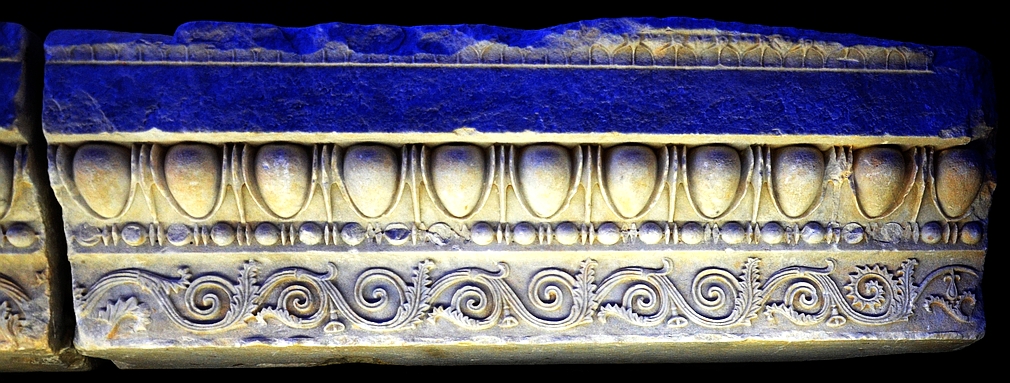
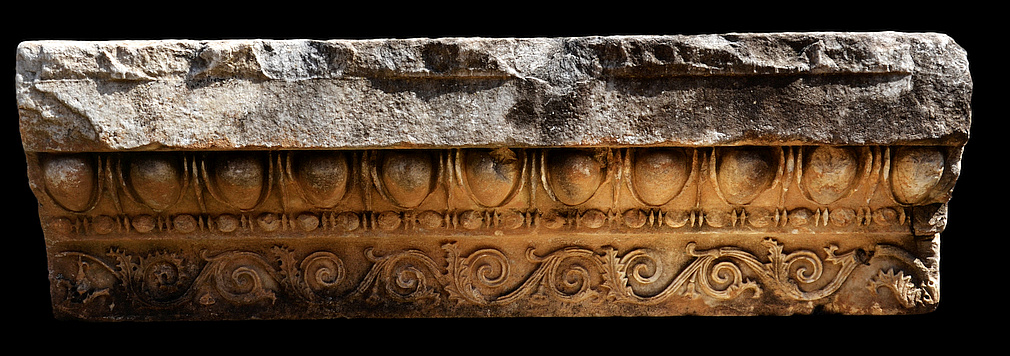
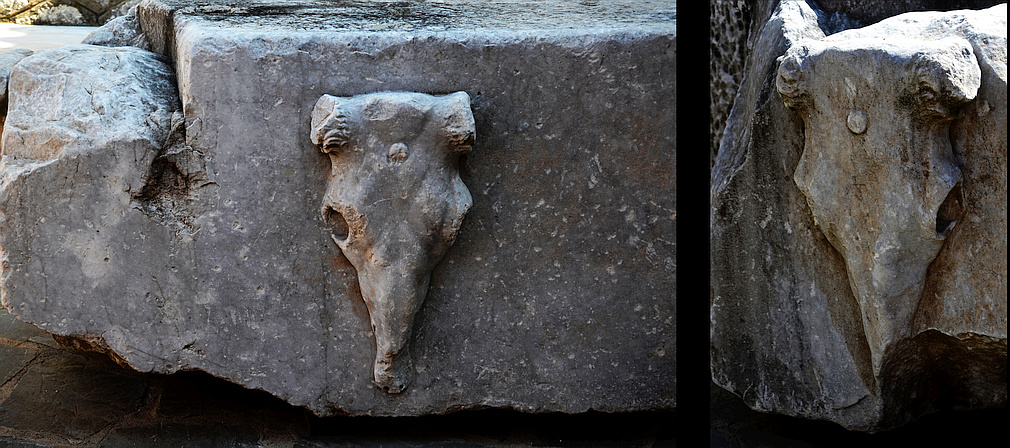
Above: Another architectural fragment from the temple of Athena Alea (350-330 BC). - Below: Marble relief bucrania from the sanctuary of Athena Alea (350-300 BC). A bucranium refers to the skull of an ox and was a form of carved decoration commonly used in Classical architecture. It is generally considered to originate with the practice of displaying garlanded, sacrificial oxen.
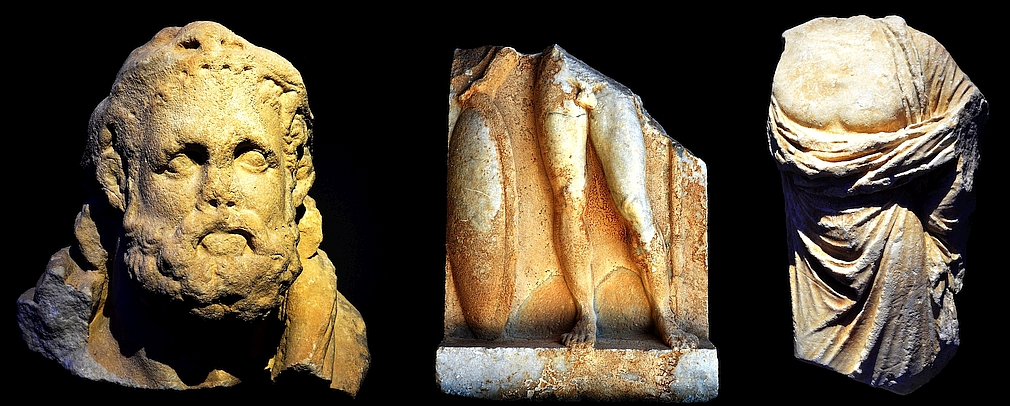
Below left: Marble head of Heracles, Tegea (350-300 BC). - Below center: Marble funerary stele, Tegea (late 4th century BC). The deceased soldier is depicted nude, facing the spectator with a nearly frontal view. Nudity and frontal view symbolise heroic status. He is flanked by his shield and spear. - Below right: Marble torso of Asklepios, extracted from a house at Alea (323-275 BC).