
GREECE
 MACEDONIA
EMATHIA
VERGINA
TUMULUS
MACEDONIA
EMATHIA
VERGINA
TUMULUS

2025-10-09
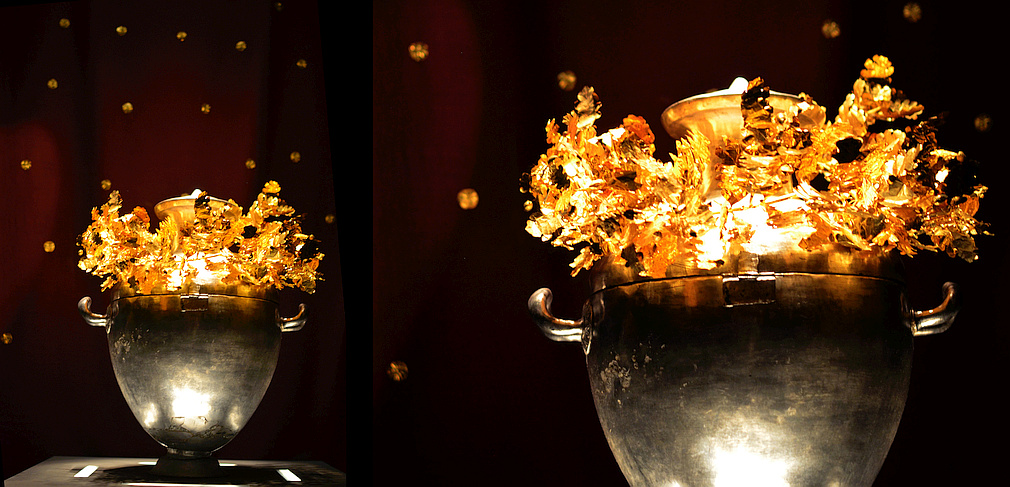
Tomb III, discovered in 1978 near the tomb of Philip, was also unplundered and consists of two rooms. In the main room behind the empty antechamber a fine silver hydria stood on a stone pedestal, containing the bones of a cremated body and a golden oak wreath placed on top of it. This and other precious grave-goods point to a royal status. It is believed that this is the tomb of Alexander IV, son of Alexander the Great and Roxane, murdered by Kassandros 25 years after Philip's assassination.
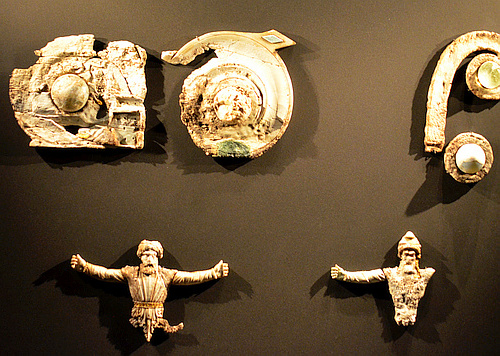
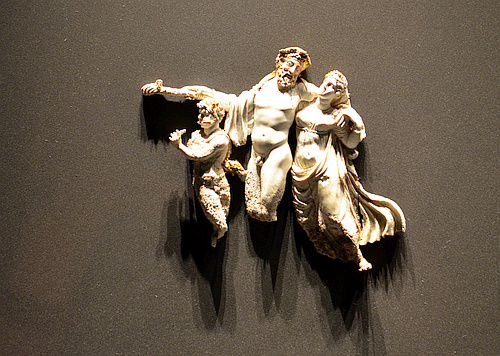
Here was also a wooden mortuary couch adorned with gold and consummate ivory reliefs. - Above left: Details of the decoration with an ivory gold miniature of Sabazios. - Above right: The relief representation of a Dionysiac scene. The bearded Dionysos, torch in hand, moves forward, grasping his female companion around the shoulder, following a young Pan playing his pipes. A unique masterpiece of ancient Greek minor art.
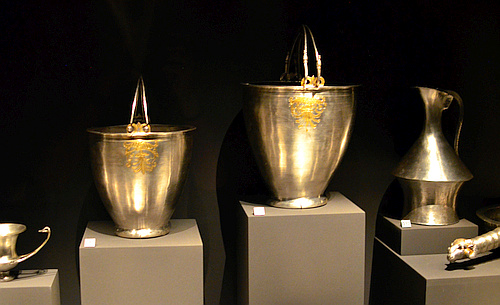
Below: Silver vessels and a black-glazed clay askos used as perfume jar, found in a sacrificial pyre above rthe vault of tomb III.

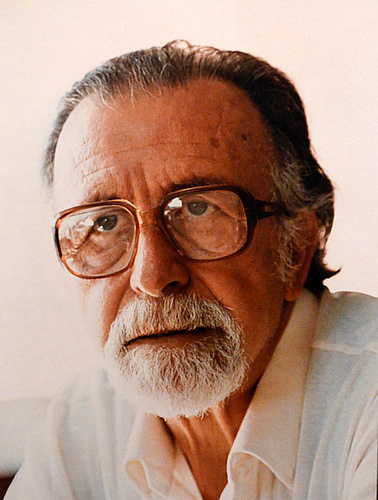
Before leaving the royal tumulus, visitors are reminded of Professor Manolis Andronikos, the archaeologist from the University of Thessaloniki, who brought these tombs with all their treasures to light.