
GREECE
 MACEDONIA
EMATHIA
MIEZA
JUDGEMENT
MACEDONIA
EMATHIA
MIEZA
JUDGEMENT

2025-10-18
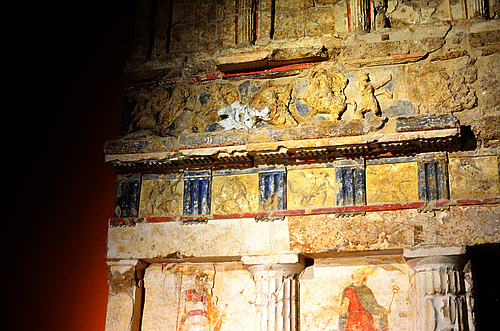
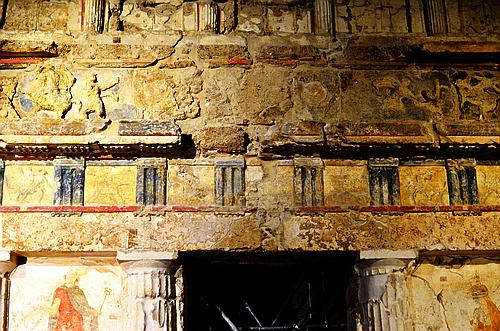
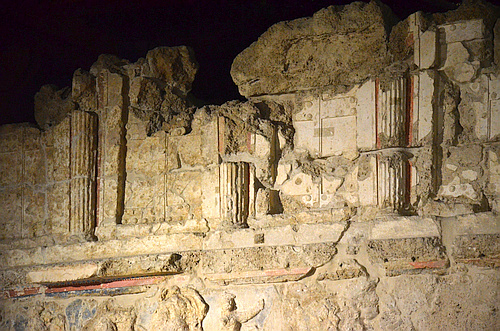
The two-storeyed façade combines both Doric and Ionic elements. The 'ground floor' is Doric with the painted panels between four engaged columns in antis supporting a Doric entablature of triglyphs and metopes. Above this is a band that separates it from an Ionic frieze above. Then the 'second storey' has six Ionic engaged columns, 1.46 metres high, alternating with false doors, and was surmounted by a pediment, of which only fragments survive.
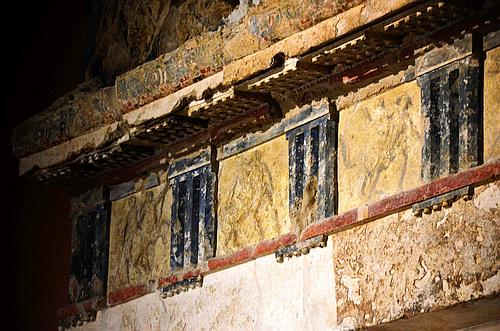
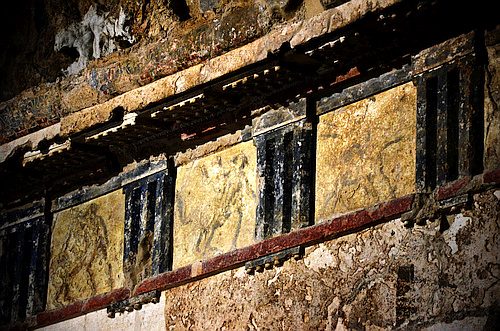
Above and below: The eleven metopes preserve part of their polychrome representations of the battle of the Lapiths and Centaurs, a popular subject.
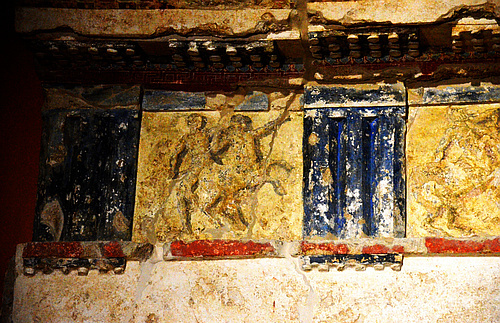
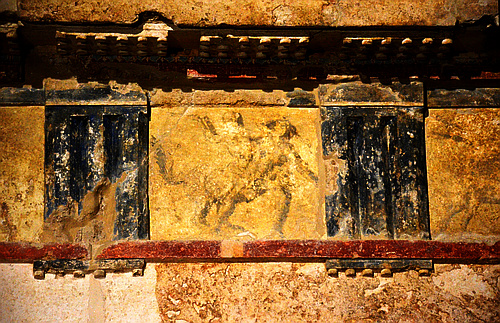
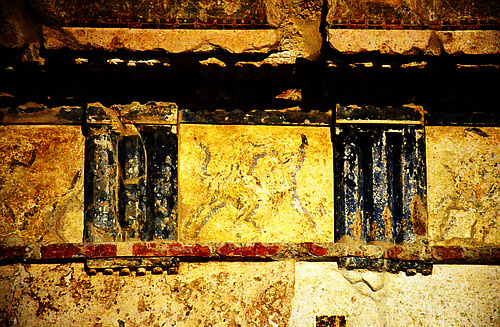
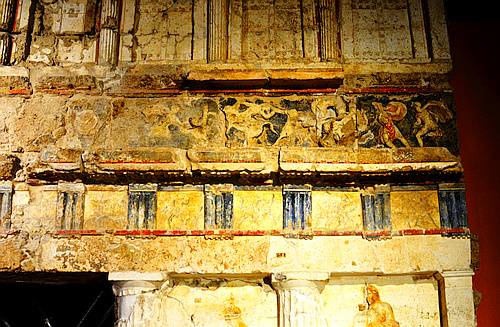
Above right and below: The Ionic bas-relief frieze with stucco figures above the triglyphs and metopes depicts a battle between Greeks and barbarians (Persians).
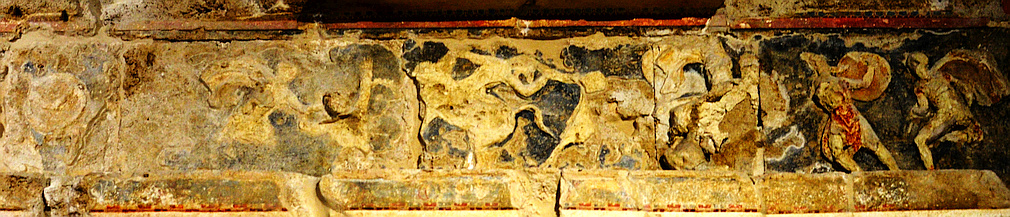
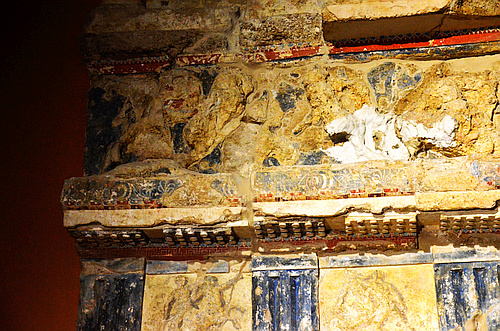
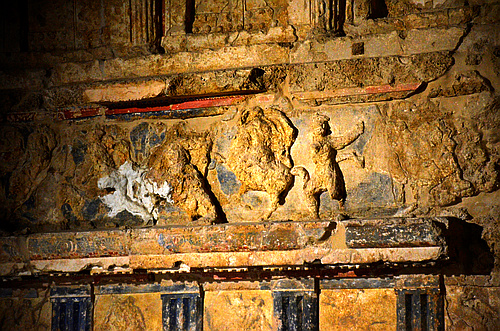
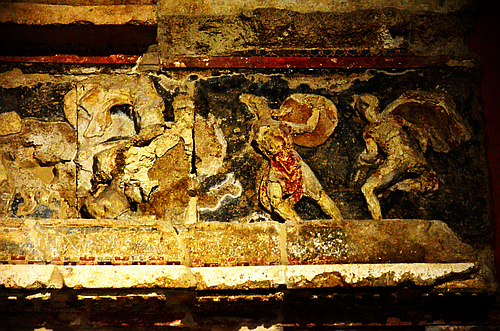

Monumental burial structures like this tomb were founded during the return of the veterans of Alexander's campaign to the East (last decades of the 4th century BC). One of them was the nobleman Peukestas who was born in Mieza, became a most distinguished officer in the service of Alexander the Great and was awarded the rule of Persia. The depiction of a warrior in the painted panel and the martial iconographic themes of the friezes clearly refer historically and ideologically to the victory over the Persians. It is therefore conjectured that this tomb could belong to Peukestas.
Above right: The severely damaged upmost part of the façade.
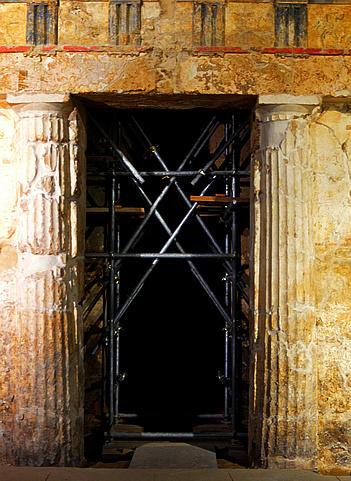
Left: The central door leads to the ante-chamber and the actual burial chamber, but there is no access for visitors.